Tuesday, January 01, 2019

The 2018 Tony Awards

Welcome to another edition of the Tony Awards! Annually since 2002 I've dedicated one column to naming what was, for me, some of the most outstanding journalism and/or commentary of the year. I operate from no automatic set of criteria when deciding what media to honor, but in general I am drawn to:

*insightful works that shed light on some important public issue.
*creative works that deserve a wider audience.
*informative works that provide eye-opening education on a difficult topic.
*courageous works that speak truth to power.
*humorous works that skillfully provoke laughter and thought at the same time.
*local works that promote community and civic engagement.


Over the years I've received much private feedback on the Tony Awards column. It tends to be most popular with independent thinkers who appreciate being alerted to media creations they might have missed and/or reminded of media creations they too thought were worthwhile. The column tends to be least popular with those who have little use for anything that does not reinforce their point of view and/or lend itself to being shared for partisan purposes. For them my advice is simple: make and share your own list! 

And now the 2018 Tony Award recipients. Drum roll please. 

*Best Local Journalist: Mile Maguire. For the second consecutive year, Miles Maguire earns the Tony for  best local journalist. Oshkosh is served (?) by full-time journalists working for the Gannett press and corporate television, yet when critical issues face the city few citizens trust that those outfits can be counted on to cover them completely or accurately. Instead, I constantly hear people say things like, "has Miles written about this yet?" In 2018 he debuted a space for local reporting called the Oshkosh Examiner. He also continues to edit the Oshkosh Independent Magazine, which you should subscribe to today if you have not already done so. 
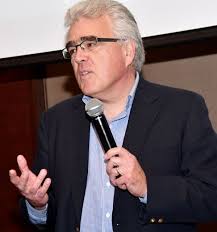
Miles Maguire
For the second year in a row, Miles Maguire receives the Tony for best local journalist. Few local writers can match Miles' ability to cover important issues with depth and intelligence.
*Best New Local Media: The Oshkosh Herald. In the 21st century we've become accustomed to hearing about hard copy newspapers forced to scale back production or fold altogether. We almost never hear about successful attempts to start new ones. In 2018 Oshkosh was fortunate to welcome The Oshkosh Herald, an informative newspaper delivered weekly to 28,500 Oshkosh households.
Karen Schneider
Oshkosh Herald  Publisher Karen Schneider  says that the paper wants to "contribute to becoming a more well informed community." 
The Oshkosh Herald
Publisher Karen Schneider and the entire Herald team are working hard to prove that a quality hard copy paper can survive in this digital age. Here's hoping that in 2019 the Herald not only survives, but expands its reach. 

*Most Compelling Local Media Creation. Fit Oshkosh Color-Brave Photo Project: Black and Brown Faces, A New Narrative


Lots of people talk about making Oshkosh into a place that welcomes, treasures, honors, and recognizes its strength in diversity. Fit Oshkosh and its Executive Director Tracey Robertson walk the talk. In 2018 Fit Oshkosh worked with local photographer Colleen Bies to create a remarkable traveling exhibit of magnificent portraits highlighting personal narratives of some extraordinary people of color living in Oshkosh. The project is brilliant on many levels, from its aesthetic beauty to the way it proudly and honestly asserts the lived realities of people of color in Oshkosh. Kudos to The Wisconsin Humanities Council, Candeo Creative, The Oshkosh Area Community Foundation, The Paine Arts Center and Gardens, University of Wisconsin-Oshkosh, First Congregational Church, The Draw, Ebony Vision, Inc., Marion University, and Esther of the Fox Valley for their sponsorship and support of the project. 
Tracey Robertson
Fit Oshkosh Executive Director Tracey Robertson is a tireless advocate for racial justice in the Fox Valley and  beyond. 
*Best #MeToo Inspired Media: 
-Ella Dawson, "To Read In Case I am Ever Murdered By A Man" 
-Kerry Howley, "How Did Larry Nassar Deceive So Many For So Long?"
-Maggie Astor, "For Female Candidates, Harassment and Threats Come Every Day" 
-New York Times Obituaries of Unjustly Forgotten Women, "Overlooked" 


The #metoo movement is rightly recognized for removing douchebags like Harvey Weinstein from positions of power and sparking necessary conversations about the connection between gender and power in the workplace, politics, relationships, and other areas. But the movement has also produced some of the most eye-opening, dazzling writing of the decade, much of which provokes "why the hell are we only learning about this NOW" reactions. 

Writer Ella Dawson's "To Read In Case I am Ever Murdered By a Man" should be must-reading in a society that is still largely in denial about the reality of men's violence against women. She writes in part:
 
Writer Ella Dawson in 2018 wrote a powerful piece on how we should think about men's violence against women. 
How many lives would we save if we listened to women’s fears? How many lives would we save if we taught people how to recognize the red flags of abuse and misogyny before they can escalate to domestic violence? How many lives would we save if we treated domestic violence as a warning sign for murder and mass shootings?

Kerry Howley's piece on how Larry Nassar deceived so many for so long paints a disturbing picture of how the disgraced former Olympic gymnastics team doctor got away with abusing hundreds of athletes for decades. In painful detail, Howley shows how Michigan State University and USA Gymnastics bureaucrats simply refused to take women's complaints seriously. She also reveals that had a police officer not found child pornography in the external hard drive Nassar had thrown to the curb, there's a strong possibility that he would still be a doctor in good graces with the bureaucrats and still abusing girls and women. 
Kerry Howley
Kerry Howley uncovered the bureaucratic nightmare that enabled Larry Nassar for decades as he abused hundreds of gymnasts. 
We all know that female candidates for public office get judged by standards much harsher than what their male counterparts experience. Maggie Astor's "For Female Candidates, Harassment and Threats Come Every Day" demonstrates the sheer extent to which this is true, for candidates on all sides of the political spectrum. 

The New York Times in 2018 unveiled "Overlooked," a feature that should have a positive impact in history, political science, communication studies, and a variety of additional curricula in K-12, colleges, and universities. Introducing the feature earlier this year, the Times wrote: "since 1851, obituaries in the New York Times have been dominated by white men. Now, we're adding the stories of other remarkable people." Every week the Times adds a new entry, each one featuring in-depth looks at female abolitionists, scientists, political leaders and many others who've never received the proper amount of recognition from establishment media sources. 

*Editorial of the Year: "America Needs A Bigger House," New York Times. I'm actually shocked at how many New  York Times pieces are receiving Tonys this year, as the paper disappoints more often than not. But truthfully, the paper derisively called "failing" by the POTUS really produced some remarkable pieces this year. (Note to POTUS: The "failing" New York Times now has 1,500 journalists employed compared to 1,100 in 2014. That doesn't sound like failure.). 

"America Needs A Bigger House" is an important editorial because it dares to challenge one of the most destructive beliefs in the modern USA: the belief that our government is too large. As the editorial shows persuasively and with ample evidence, our government is TOO SMALL: 

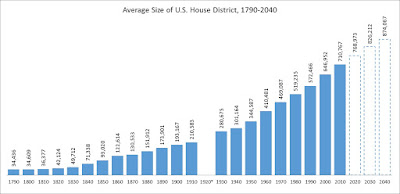
The House’s current size — 435 representatives — was set in 1911, when there were fewer than one-third as many people living in the United States as there are now. At the time, each member of Congress represented an average of about 200,000 people. In 2018, that number is almost 750,000 . . . how does a single lawmaker stay in touch with the concerns of three-quarters of a million people? The answer is she doesn’t.


Size of US House of Representatives Districts
In 1910 each member of the US House of Representatives on average represented just under 211,000 people. In 2011 the Congress fixed the number of Representatives at 435, and so today each member represents around 750,000--making a mockery of the idea of the US truly being a representative democracy. In 2018 the New York Times provided a valuable public service in trying to get some discussion going about the urgent need to increase the size of the legislature. 
Applying the "cube root law" of apportionment that's followed by most of the world's democracies and used to be followed here until the Congress fixed the amount of representatives at 435, the Times writers conclude that we should be adding 158 new members to the House of Representatives. I don't anticipate that this will happen in the next 10 years, but it will eventually and when it does the Times will be recognized for giving the matter prominent attention when few other mainstream sources would. 
*Rock-and-Roll Activist of the Year: Roger Waters. This is a new Tony Awards category, and is inspired by the great work of Roger Waters, the legendary co-founder of Pink Floyd. At the age of 75, Waters travels the globe in a never ending quest to "tear down the walls." In 2018 he was a leading voice in opposition to the rise of global fascism, putting his own life at risk to campaign against the fascist Bolsonaro in Brazil. In a great interview with TeleSur he challenges the Western obsession with wealth accumulation and says, "What makes you happy is communicating with other human beings, helping them if you can, and letting them help you." 

*Twitter Thread of the Year: Derek Johnson Bursts Our Precious Bubble. Twitter is of course a mostly horrible social medium over saturated by bots, trolls, hyperpartisan assclowns, self-serving hucksters, and assorted other forms of shitheadism. But every now and then something really important hits the screen. In 2018 my favorite tweet thread was from Derek Johnson, the Executive Director of Global Zero, an organization that advocates for the elimination of all nuclear weapons from the face of the Earth. After Secretary of Defense Jim Mattis, the alleged "adult in the room," announced his resignation from the Trump Administration, Johnson put forth this 16-part thread that should be a wake-up call for anyone interested in the survival of humanity: 

1/ With Mattis and Kelly heading for the door and the myth of “adults in the room” evaporating, now feels like a good time to remind everyone that, yes, We The People really did hand a flailing, impulsive ignoramus the unadulterated power to end life on Earth as we know it.

2/ On a daily basis folks insist to me this isn’t how it works. They need to believe that someone — Sec Def, the Joint Chiefs, or a general, somewhere, surely — has to agree. Because the alternative sounds too insane to be real life. Allow me to burst your precious bubble.


3/ Everywhere Trump goes, the nuclear briefcase follows. Inside it are levers to weapons made to wipe cities off the map. At any moment he can open it up, flip through its black book of targets, pick up the phone, and tell the Pentagon which armageddon on the menu he likes best.

4/ The officer in charge of the National Military Commander Center (the “War Room”), who may not be any more senior than a colonel, will be on the other end of the line. A small group of senior advisors/commanders may or may not be patched in depending on their availability.


5/ This is where folks assume top brass has to agree. Nope! This is a "consultation" only to the extend POTUS wants to have a conversation. He can end discussion immediately. Sure, people can refuse/resign, but a disobedient officer in the War Room will be immediately replaced.

6/ Once given the order must be verified. It's the only “check” in the process. The War Room officer reads a challenge code and POTUS reads the matching response on a little card he carries w/ him always. Then, like magic, the order is imbued w/ full power of the presidency.

7/ A verified order has presumption of legality and the pressure to obey will be massive. Executing officers in the chain of command have no legal/procedural grounds to defy it no matter how inappropriate it seems. If POTUS's identity is confirmed, the order is considered legit.


8/ From there the order speeds through the system, encrypted in a message half the length of a tweet. This happens FAST. By the time it reaches its final destination — launch officers in underground silos — only a few minutes will have passed since POTUS opened the briefcase.

9/ Five launch crews w/ 2 officers each, spread miles apart underground and overseeing 50-missile squadrons, receive these orders. The 20-something-year-old officers open their safes and make sure the War Room's codes match. If they do, they unlock the missiles and target them.

10/ Each pair of officers then inserts their twin launch keys and turns them together. (The “2-man rule” is at the bottom of the chain, not the top.) Each crew turning their keys generates a “vote” to launch. 5 crews means 5 votes. It only takes 2 votes to launch the missiles.


11/ To block the launch, 4 of the 5 crews would have refuse to obey what seems like a legitimate order from the commander-in-chief, without the benefit of any outside info. If that mutiny is where you pin your hopes for all of human civilization, good fucking luck with that.

12/ When those keys turn the nuclear weapons will launch instantly. The whole process, from POTUS cracking open the briefcase to city-killing missiles climbing into the air, takes less than 5 minutes. There are no take-backs. There's no way to stop or cancel a launched missile.


13/ Bear in mind these weapons are 10-20x more powerful than the bombs dropped on Japan, and travel at 22x the speed of sound. They'll obliterate target cities in 30 mins or less. Hundreds of millions of people will be dead faster than POTUS can get a big mac sent into the Oval.


14/ I don’t blame you for refusing to believe. I’m not sure I’d believe it myself, had I not heard directly from nuclear command and control experts, veteran launch officers, and the 4-star general who commanded all US nuclear forces. But this is real. This is how it works.

15/ Trump may be the most unfit person to ever hold the office, but this is the vast, terrible power we bestow on every American president. At the heart of our democracy is an undemocratic nuclear monarchy that holds the whole world hostage to one man's decision-making.


16/ The system is bonkers — but it doesn't have to be. There's a bill in Congress *right now* that would make it impossible for any president, Republican or Democrat, to start a nuclear war on their own. can fix this. Hard to imagine anything more urgent or obvious.


*Investigative Journalism of the Year: David Barstow, Susanne Craig and Russ Buettner, "Trump Engaged in Suspect Tax Schemes as He Reaped Riches From His Father." This meticulously researched New York Times investigation required the authors to dig through more than 100,000 documents related to the Trump family financial empire. The authors note: 

What emerges from this body of evidence is a financial biography of the 45th president fundamentally at odds with the story Mr. Trump has sold in his books, his TV shows and his political life. In Mr. Trump’s version of how he got rich, he was the master dealmaker who broke free of his father’s “tiny” outer-borough operation and parlayed a single $1 million loan from his father (“I had to pay him back with interest!”) into a $10 billion empire that would slap the Trump name on hotels, high-rises, casinos, airlines and golf courses the world over. In Mr. Trump’s version, it was always his guts and gumption that overcame setbacks. Fred Trump was simply a cheerleader . . . The reporting makes clear that in every era of Mr. Trump’s life, his finances were deeply intertwined with, and dependent on, his father’s wealth . . . 

By age 3, Mr. Trump was earning $200,000 a year in today’s dollars from his father’s empire. He was a millionaire by age 8. By the time he was 17, his father had given him part ownership of a 52-unit apartment building. Soon after Mr. Trump graduated from college, he was receiving the equivalent of $1 million a year from his father. The money increased with the years, to more than $5 million annually in his 40s and 50s.

If Mr. Trump's fraudulent telling of his own personal narrative had been revealed before the election, would he still have won? We will never know. But from this point forward, any media (including sources friendly to the POTUS like Fox) that allows him to continue spinning the false personal narrative deserves condemnation and advertiser boycotts. 

*Speech of the Year: Michelle Wolf's Address at the White House Correspondent's Association (WHCA) Dinner. Thanks to Ms. Wolf, The WHCA will no longer have a comedian perform at their annual event. Donald Trump, the most thin-skinned POTUS in the history of the universe (or as Wolf put it in her speech, Trump is "the one pussy you're not allowed to grab"), now says he might attend. What did Wolf say that got establishment types so upset? Publicly they claim Wolf went over the line in her jibes at Sarah Sanders and others--but those jokes were hardly any more pointed or cruel than what many other comics have presented at the event since Stephen Colbert's take down of Bush #43 in 2006. I think it had more to do with Wolf's insightful exposure of the pathetic nature of the mainstream press in the Trump years:


There’s a ton of news right now, a lot is going on, and we have all these 24-hour news networks, and we could be covering everything. Instead, we’re covering three topics. Every hour is Trump, Russia, Hillary, and a panel full of people that remind you why you don’t go home for Thanksgiving. Milk comes from nuts now all because of the gays.
You guys are obsessed with Trump. Did you used to date him? Because you pretend like you hate him, but I think you love him. I think what no one in this room wants to admit is that Trump has helped all of you. He couldn’t sell steaks or vodka or water or college or ties or Eric, but he has helped you. He’s helped you sell your papers and your books and your TV. You helped create this monster, and now you’re profiting off of him. If you’re going to profit off of Trump, you should at least give him some money, because he doesn’t have any . . . 
And her brilliant closing line: Flint still doesn’t have clean water.
When the WHCA announced the comedian ban, Wolf tweeted more truth: “The @whca are cowards. The media is complicit. And I couldn't be prouder.”
*Best Bo Diddley Beat: Richard Thompson's "The Storm Won't Come." As someone who teaches a course on rock music, I am in perpetual search for new and creative uses of the Bo Diddley beat. In 2018 the legendary Richard Thompson (co-founder of pioneering folk-rock group Fairport Convention) released an outstanding collection of new songs called "13 Rivers." The opening track, "The Storm Won't Come," includes a raw sounding Bo Diddley beat and a searing guitar solo from Thompson. In 2019 Thompson will turn 70 and he shows no signs of slowing down. But because contemporary FM music radio sucks beyond belief, most Americans will never get a chance to hear this music. That's sad. 

*Rallying Cry of the Year: Emma Gonzalez' "We Call B.S." The young survivors of the Marjory Stoneman Douglas High School massacre in Parkland, FL are owed our gratitude for a number of reasons. In 2018 not only did they provoke a meaningful national conversation about gun violence that led to new laws passed in a number of states, but they also helped increase youth voter turnout, shamed advertisers into abandoning toxic media, organized a huge and successful march on Washington, and defied every single millennial generation stereotype. If these young people represent the majority of people in their age group--and I think that they do--then we do have reason to be optimistic about the future of the country. 
Emma Gonzalez' "We Call B.S." is already an iconic statement of defiance aimed not just at the elected cowards who shrink in the face of the slightest pressure from the National Rifle Association, but to all people in positions of authority who pollute our public discourse with lame, self-serving talking points designed to pacify their masters instead of address in an honest way the critical issues of our time. 

There you have the 2018 Tony Awards. For 2019, let us all resolve to create, use, and consume media in responsible ways that elevate public discourse, provoke critical reflection and positive change, and/or hold the powerful to account. In very different ways, all of the 2018 Tony recipients did some or all of those things.
 

Friday, December 07, 2018

From Otis R. to Lenny K.: My Top Tunes of '18

The Spotify music streaming service provides users with end-of-year data on their listening habits, including your top 100 songs based apparently on how many times you played them. Like everything else in our algorithmic Brave New World, Spotify's data sparks controversy. Apparently the listening profile for each individual user is not completely accurate. Imagine that--a corporate, profit driven behemoth like Spotify providing inaccurate data. Who would have thought?

Especially because I teach a course called "The Rhetoric of Rock and Roll" every other year, I tend to listen to a shit-ton of popular music. Spotify tells me that I listened to 23,389 minutes of tuneage in '18, a huge portion of which occurs during my walks from home to UWO and vice-versa. Below are short commentaries on 20 of my top-100 most listened to songs of 2018. In looking at my listening habits, I've noticed that I tend to be drawn to songs that meet one or more criteria:

1. The song is an especially good example of a pop music genre.
2. The song subtly or overtly makes a provocative sociopolitical comment in support of humanity.
3. The song is an excellent representation of a particular time period.
4. The song is performed by an artist making a sincere attempt to communicate meaningfully with his or her or their audience; the tune is not mere "product" to line the pockets of the artist or record label execs.
5. The song evokes positive, transformative emotions like love and compassion as opposed to toxic ones like hate and selfishness.

Against that backdrop, here's twenty of my top-100 most listened to songs of 2018 in chronological order:

Otis Redding (1966). Fa-Fa-Fa-Fa-Fa (Sad Song). From the classic and groundbreaking album "Complete and Unbelievable: The Otis Redding Dictionary of Soul." "Sad Song" and the entire album are probably the best example of "Memphis Soul," a brand of African-American music that was more edgy and Afrocentric than the popular Detroit Motown sound of the same time period.
The Hollies (1967). Stop Right There. Many if not most fans of the classic rock super group Crosby, Still, Nash, and Young don't realize that Graham Nash was prolific songwriter with The Hollies before joining CSNY. "Stop Right There" has got a kind of lyrical and musical maturity clearly inspired by the groundbreaking "Pet Sounds" album by the Beach Boys and "Rubber Soul" by the Beatles (both of which made it okay for rock lyrics to be reflective and for male rockers to express vulnerability.).
Eric Burdon and the Animals (1968). Closer to the Truth. Spotify tells me that I spent 15 hours listening to Eric Burdon in 2018. I've loved his music forever, but the enhanced hours in '18 were because of this review I wrote of his 1968 album "The Twain Shall Meet." It didn't occur to me at the time I wrote the review, but "Closer to the Truth" is arguably unique in the way it blends rhythm and blues instrumentation with a kind of Eastern consciousness. Others have done it, but probably not as well.

Taj Mahal (1968). She Caught the Katy (And Left Me A Mule To Ride). Lots of rockers in the 1960s were inspired by Howlin' Wolf, Muddy Waters, Bo Diddley, and other old-time blues gods. But Taj Mahal was one of the few to compose a blues tune that became a standard inits own right. "She Caught the Katy" is from Taj's "The Natch'l Blues" album, a must listen for anyone who really wants to understand the roots of rock-and-roll.
The Kinks (1970). Powerman. The Kinks were railing against greedy music company executives, but "Powerman" could apply to certain contemporary politicians, in both Washington and Madison.
Little Richard (1970). Freedom Blues. "Freedom Blues" was somewhat of a comeback recording for Little Richard, one of the founding fathers of rock-and-roll. Stylistically the song mixes Rhythm and Blues with Nina Simone/James Brown type soul of the period. With all the activism going on this decade, it's a damn shame the rock radio stations can't find a way to revive songs like this.
Manu Dibango (1972). Soul Makossa. Anyone of a certain age will remember the excitement that the Cameroon born Dibango's "Soul Makossa" brought to music radio in the 1970s. Michael Jackson brought the song back into circulation in the 1980s when he stole the "Mama-say, mama-sa, ma-ma-ko-sa" hook for his song "Wanna be Startin' Somethin'." I'd forgotten about the song and then rediscovered it while doing some research for the rock music course on the use of saxophone in soul-rock fusion.
Focus (1974). Harem Scarem. Supreme Court Justice Potter Stewart once famously said that he could not define obscenity, but "I know it when I see it." I'm kind of like that when it comes to "progressive" rock: can't define it, but I know it when I hear it. "Harem Scarem" is IT.
Stevie Wonder (1976). Have a Talk With God. The album "Songs in the Key of Life" in 2005 was inducted into the National Recording Registry by the Library of Congress, an honor reserved for recordings that are "culturally, historically, or aesthetically significant." "Have a Talk With God" for me is extraordinary in that it's sermonic and spiritual without the self-righteous posturing that is found in so much Christian and other religious rock.If sermons were more like this, more young people would probably think about going to church.
Tom Waits (1980). On the Nickel. Another tune that I had not listened to for many years. Early this year I just happened to read a social media post about homelessness in Oshkosh, and "On the Nickel" just popped into my head. I've always been a huge fan of wistful tunes that grab your heart, but I fell in love with this song the first time I heard it almost 40 years ago strictly because of the line "even Thomas Jefferson is on The Nickel over there." I just find that to be a remarkably creative and memorable use of language. May we all come up with at least one memorable line in our lives.

Kool Moe Dee (1989). Knowledge is King. Few musical genres are as powerful as hip-hop when it carries a socially conscious message delivered by a rapper who is credible in the social critic role. "Knowledge is King" got lots of plays from me in 2018 because I assigned it to a student to review and ended up being reminded of its power.
Primal Scream (1991). Movin' On Up. This one has another connection to the rock music class: there's a part of the class where we get into the issue of whether the late Bo Diddley should have been compensated for the scores of songs that use the "Bo Diddley beat" with no attribution to the original. "Movin' On Up" is one of the more creative and inspiring uses of the beat (though the band themselves apparently thought they were influenced by the Who's "Magic Bus," perhaps not realizing that THAT song borrows the Bo Diddley beat.).
The White Stripes (1999). Do. Jack White wrote "Do"long before social media, and it has nothing overtly to do with that, but when I found myself trolled online in 2018 I kept coming back to a line from it: "Can't take it when they hate me, but I know there's nothing I can do."
The Kills (2008). Cheap and Cheerful. I've never been a huge fan of punk, grunge, and much indie-rock that's punkish/grungeish, but one thing I find appealing about all those genres is the revulsion it expresses toward conformity, sucking up, and various other forms of human fakery. I always have a bunch of songs like that on my playlist--"Cheap and Cheerful" got the most plays this year.
Lorde (2013). Buzzcut Season. Lorde's 2013 album "Pure Heroine" for good reason made many "best of" lists the year it came out. The teen New Zealander defied all pop industry conventions and created a recording that featured mature lyrics and catchy melodies that could fit as comfortably on college radio as top-40. "Buzzcut Season" is a digital age anthem and one of the songs of the decade.
 Imelda May (2014). Tribal. In 2018 there was so much talk about American politics becoming "tribal" that I could not stop listening to "Tribal" by Irish rocker Imelda May.
The Hillbilly Moon Explosion (2015). My Love For Evermore. The rockabilly era of the 1950s is for me one of the greatest periods of rock-and-roll in terms of establishing the art form as rebellious and anti-establishment. The Swiss band Hillbilly Moon Explosion represent one of the best attempts to keep the genre alive in this century.
Jeff Beck and Bones (2016). Live in the Dark. Guitar god Jeff Beck has become a kind of elder statesman of rock, continuing to tour in his 70th decade while recording new music with a variety of younger artists. His 2016 collaboration with indie rockers Rosie Bones and Carmen Vandenberg went back to his hard rock roots to produce a socially conscious album of protest tunes. "Live in the Dark" mixes soaring guitar riffs, old-school guitar solos, and punk vocals with lyrics appropriate for a rally.
John Prine (2018). Lonesome Friends of Science. In 2018 folk singer John Prine released "The Tree of Forgiveness, his first album of all new songs since 2005. Hard core Prine fans will find it to be one of the best recordings he's ever made, as it includes his trademark brand of personal narrative, humor, and the unique raspy vocals. "Lonesome Friends of Science," a kind of satirical lament of Pluto's demotion from planet status, I think is one of the funniest tunes ever recorded.
Lenny Kravitz (2018). Raise Vibration. When Lenny Kravitz released "Let Love Rule" in 1989, I found it to be one of the most refreshing recordings of that year--a rock and soul masterpiece in fact. Almost 30 years later Lenny is at it again. If you like rock-and-roll with a kind of early 1970s Rolling Stones edge mixed with homages to the great soul artists of the past, Lenny is your guy. The song "Raise Vibration" deserves nominations for song of the year, as it captures the tense moment we are in and calls for us to love our way out of the madness. It even has a cool Native American chant at the end. Great stuff.

Well there you have it. That's just some of what I have been listening to this year. What about you?

Saturday, December 01, 2018

The Media Missed The Youth Wave

Media pundits love to talk about so-called "wave" elections. The wave narrative dominates coverage of congressional races. Watch this typical example: CNN's John King in 2017 musing about the possibilities for a 2018 Blue Wave.
In 2010, the establishment narrative was that the Republicans rode a wave of TEA Party generated antagonism toward the Affordable Care Act (i.e. Obamacare) and thus gained 63 seats in the House of Representatives. This was allegedly a "Red Wave."

Eight years later the establishment narrative tells us of the alleged "Blue Wave": riding a wave of anti-Trump sentiment and suspicion that the Republicans really have no plan to protect health care access, the Democrats gained 40 seats (and maybe 41) in the House of Representatives.

My problem with the establishment's partisan flavored "Wave Narrative" is its implication that the results of elections have anything to do with voter attitudes toward the Republican and Democratic parties. When the Republicans won those 63 seats in 2010, does anyone seriously think that it was because the GOP was perceived as willing and able to do the business of The People? As we approach 2019, does anyone outside of the most indoctrinated partisans think that the Democratic Party has now been cured of its addiction to corporate cash and will finally fight for a People-centered agenda? Sure, there will be individual Dems who will fight for such things, but they will find the establishment Democratic Party to be as much of a barrier as the Republicans. (Case in point: Rep. Barbara Lee, a tireless champion of progressive values for many years, was not able to break into the leadership ranks of the new Democratic majority because of what she called "institutional barriers.").

If not Red and Blue Waves, then What? 

By now it should be clear that Americans view the major political parties not as vehicles for change, but as impediments to it. Unfortunately those parties maintain such a tight grip on the electoral processes in each state that it is virtually impossible to gain legislative power via the route of third parties. Recognizing this pathetic state of affairs, change agents often come to the conclusion that the only real way to make new legislation is to participate in the major party structures.

Seen in that light, "waves" represent movements of people attempting to grab controls of the levers of power in what is presented to them as the most practical way to do so. Depending on the trajectory of the particular movement(s), the majority of the votes can go toward the R or D columns. As such, the midterm elections of 2010 were an "Anti-Establishment" wave rooted in the strong belief that an iron triangle of insurance company greed + pharmaceutical industry greed + government enabling of insurance and pharmaceutical greed (under the guise of "regulating" them) was a betrayal of the "hope and change" that brought Barack Obama to power in 2008. There's little evidence that the elections of 2010 were an endorsement of the Republican Party as much as a message to Barack Obama that Republican-lite endorsements of special interest lobby solutions to life-and-death issues like health care were not going to be met with enthusiasm. Many sent that message to the President simply by staying home and not voting. 

Not surprisingly, a majority of Americans--including 52 percent of those who call themselves Republicans--now support a "Medicare For All" solution to health care. That's where the trajectory has been headed all along. (I still firmly believe that if the Democrats had used their majority in 2009/2010 to create a Medicare for all system, they actually would have gained seats in subsequent elections, much as they controlled Congress for multiple generations after passing New Deal programs in the 1930s).

In 2018 the lines of a Buffalo Springfield song might be the best descriptor of where we are: "There's something happening here, what it is ain't exactly clear."  Given the record numbers of women elected, we could could easily see 2018 as a Women's Wave. Large numbers of women who ran for office this year were Generation X or Millennials. I believe we are in the early stages of a "Youth Wave," with the midterms of 2018 representing especially the Millennial generation's political coming out party. Alexandria Ocasio-Cortez's stunning victory over Nancy Pelosi favorite Joe Crowley in a New York city congressional primary might have been the most visible symbol of something new happening: young people are no longer going to "wait their turn" or just continue to "hope" that the elders to the right thing. Some clear signs of the youth wave:
*In Rhode Island, young people are literally suing the state in an effort to get better civics education. If their suit is successful it could have dramatic and positive consequences for political engagement across the nation.

*According to the Atlantic, early voting among youth in 2018 saw a 188 percent increase compared to 2014.

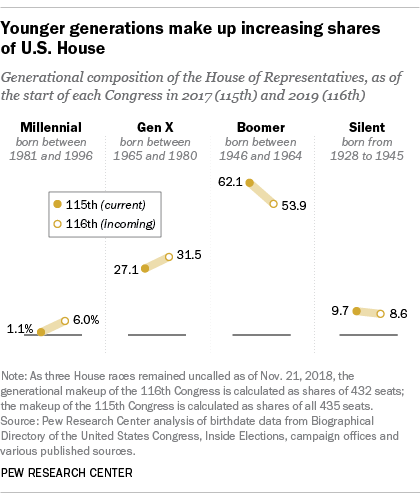
*When the new House of Representatives convenes in January, 26 members will be Millennials, up from 5 at the start of departing House in 2017.


*According to the Center for Information and Research on Civic Learning and Engagement (CIRCLE), 31 percent of youth turned out to vote in the 2018 midterms compared to 21 percent in 2014. CIRCLE's research suggests youth are pumped up for change; 72 percent of people 18-24 agree that "dramatic change could occur in this country if people banded together." And 73 percent agree that "we can work together to promote important political goals even if we face difficulties."

*Where I teach (the University of Wisconsin Oshkosh), students who interned for the campus American Democracy Project chapter engaged in a number of positive activities including voter registration, organizing a student activist forum, and organizing a forum for third party candidates. Voter turnout on the campus increased by 4 percent over 2014. When all the votes were counted in Wisconsin, Democrat for governor Tony Evers had a 23 point edge over Republican Scott Walker among voters under 30 (compared to only a 4-point advantage for Democrat Mary Burke four years ago.).

*Across the country a number youth led organizations are leading the way for change. One that I am familiar with is the Green Bay based Intellegere Project, an effort to raise the bar for social media discourse so as to promote civility and progressive change. The organization recently raised enough funds to support undergraduate research on the issue of why youth vote or do not vote.

*No discussion of the Youth Wave would be complete with giving major kudos to all of the survivors of the horrible massacre at Marjory Stoneman Douglas High School in Parkland, FL. Emma Gonzalez's now iconic "We Call BS" speech will forever be a wake-up call not only to people who want to see sane gun legislation, but for advocates on all issues who know they could and should be doing more to make change. The March For Our Lives movement shows no signs of slowing down, much to the chagrin of the NRA. Writing in the Madison Badger Herald, student Tatiana Dennis argues that "the results of recent elections in Wisconsin and across the nation show the NRA is losing its grip on the GOP and the American electorate." We have mostly high school students to thank for that.


What's special about this new generation of youth activists is that they do not seem at all interested in exploiting any kind of "generation gap" in order to motivate youth. Rather, they appear eager to work with their elders for a People centered agenda. In that regard they are very much like the American Youth Congress of the 1930s. In the 1936 Declaration of the Rights of American Youth, the AYC said:

We declare that our generation is rightfully entitled to a useful, creative, and happy life, the guarantees of which are: full educational opportunities, steady employment at adequate wages, security in time of need, civil rights, religious freedom, and peace . . . 

We recognize that we young people do not constitute a separate social group, but that our problems and aspirations are intimately bound up with those of all the people.


Declaration of the Rights of American Youth
The mainstream media in the United States so far doesn't appear to grasp breadth and depth of the Youth Wave. Today's  youth have about as much regard for the mainstream media as they do for the mainstream political parties, perhaps even less. If I am correct that we are in the early stages of a Youth Wave that's on the brink of producing some dramatic changes in our society, such changes will unquestionably upset mainstream media business models. Who knows, maybe the days of seeing readers and viewers as mere "demographics" whose only value is in being "sold" to advertisers could be coming to an end. The Correspondent, a Dutch news platform that is on the verge of becoming a journalistic force in the United States (I'll write about it in a future rant), is rooted in a unique model of interaction with readers. If the elections of 2018 taught us anything, it is that youth are demanding genuine interaction with institutions of power, not just in politics but in the press.

Thursday, November 01, 2018

What Came First? The Awful Ad or the Awful Media?

Back in July Eliot Nelson of the Huffington Post put together an amusing compilation of the worst campaign ads of 2018. Two of my "favorites" cited by Nelson include Minnesota's Richard Painter standing in front of a literal dumpster fire while sounding like a character out of a horror movie, and Colorado's Levi Tillemann writhing in pain after he pepper sprays his own face to demonstrate it as a possible alternative to arming teachers.

In Wisconsin this year, we've been subject to some pretty miserable ads on all sides. Although unlike the ads cited by Nelson, there's almost nothing very funny about them. I want to do three things in this rant:

1.  Explain why the political ads on TV are so awful.
2.  Explain the connection between awful political ads and awful news media.
3.  Suggest an alternative.

So what's so awful about Wisconsin's political ads? 

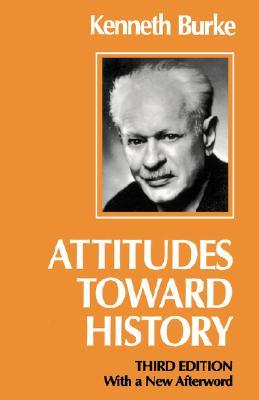
*The Tragic Frame: The late scholar of language Kenneth Burke in his 1937 book Attitudes Toward History  argued that participants in political struggles typically construct narratives about their opponents that are rooted in "tragic" or "comic" frames. In a tragic frame, the politician clearly states or strongly implies that his opponent is evil, corrupt, or somehow so broken beyond repair that he represents a clear and present danger to our way of life. In a comic frame, the opponent is merely mistaken or wrong. Comic framing leaves open the possibility for dialogue and problem solving between opponents, while the tragic allows only for victory and defeat.
Political discourse in America has been trending toward the tragic frame for a long time now, so it should not be surprising that such framing dominates political ads. The Republican ads are especially atrocious in this regard--almost every one on behalf of Scott Walker for Governor or Leah Vukmir for US Senate focuses on some fearful quality of their opponents.

A high percentage of ads these days are what I like to call "Daisy-lite." The "Daisy" ad was the infamous one run in 1964 by the Lyndon Johnson campaign against Barry Goldwater. The theme of the ad--never stated explicitly but implied by the words and imagery--was that if you voted for Goldwater you were essentially voting for a madman who would start a nuclear war. That's about as tragic a tragic frame as you can get. Partisans on all sides claim to be appalled by such hyperbole, yet ads suggesting that there is something pathologically or even clinically wrong with the opponent are quite common.
*The Three Ds: Distort, Deceive, Distract.  The Supreme Court gutted most of the old McCain-Feingold campaign finance reform legislation, but one part of it that stuck was the "stand by your ad" provision. That's the provision that requires candidates to say "I'm so and so and I approve this message." The idea at that time was that if candidates had to actually stand by their message, they would be less likely to endorse absurd, hyper-negative attacks on their opponents.

Didn't quite work out that way, did it? Seems like the average candidate for office will "approve" just about any message. In fact, I would have a lot more respect for the ads if they would simply be honest and say something like, "I'm Joe Smith and I will say whatever the fuck you need to hear in order to get your vote."

Not to keep picking on the Republicans, but this year they win the Three Ds sweepstakes by a landslide. For GOP candidates to say that they support mandatory health care coverage for people with pre-existing conditions, when they have spent this ENTIRE DECADE trying to defeat the legislation that mandates that coverage, is beyond appalling. In many of the ads they try and make it sound like it is the Democrats who are somehow against such coverage, and some would rather just talk about Mr. Trump's southern border "invasion" fantasy. Probably the most laughably absurd repositioning was from Wisconsin's Mr. Walker; after running against Obamacare for 8 years, he now says he will codify the Affordable Care Act language on preexisting conditions into Wisconsin law!
*The Exploitation of Identities: Perhaps what's most upsetting about modern political advertising is the way it shamelessly exploits working people, children, the elderly, mentally ill people, veterans, and really anyone else who can be staged in such a way so as provide support for the tragic frame.

I personally find the exploitation of the elderly to be most repulsive. As someone who addresses a Learning in Retirement group 2-4 times per year, I have some familiarity with that demographic. The group I speak to range from Walker-style Republicans to Bernie-style Democrats. No matter their political leanings, they state their views in thoughtful, respectful ways and are always eager to learn new things. The Walker Republicans are fully aware of my political leanings, yet we can engage in stimulating conversations in an atmosphere of mutual respect.

In TV ads however, the elderly are almost always portrayed according to the worst possible stereotypes: angry curmudgeons, closed-minded ignoramuses, holier-than-thou pontificators nostalgic for some idyllic past that the politician targeted in the ad has killed, or sometimes they are just meek and helpless folks whose very survival is dependent on that ONE politician who "approves the message." Are there elderly people who meet some of these stereotypes? Sure--we actually have one in the White House at the moment. But nothing in the stereotype is inherent to aging; we all know young and middle-aged people who behave similarly or even worse.

What's the Connection Between Awful Ads and Awful News Media?

It's not a secret that television coverage of political campaigns has been atrocious for a long time. Not only is there not enough time spent on the campaigns, but the limited time that is spent often goes to the standard "horse race," insider-baseball "who's up and who's down" style of journalism. In a previous rant I called this lazy journalism.

The connection to the awful ads should be obvious: if the news media are not adequately telling the stories of the campaigns, it's up to the campaigns themselves to do it. That actually provides two additional benefits to the news media: (1) an economic windfall for them as the cumulative campaign spending on television ads can total millions of dollars in midterm and presidential election years; and (2) a reinforcement of the lazy journalism as often the over-the-top ads become the topic of campaign coverage. It's a truly miserable system that does little to educate voters, little to motivate voter turnout (some might even argue that the negativity of the system discourages turnout, especially among  younger voters), and little to promote the overall health of our representative democracy. Way back in 2002 the Wisconsin Democracy Campaign referred to this system as "Gouging Democracy in Wisconsin," a label that fits even better today.

What's the Alternative?

First, I am under no illusion that the incestuous relationship between television stations, public relations outfits, and hijacked campaigns that have produced this system will change overnight. With "express advocacy" groups spending a record amount of money in Wisconsin this year, most of it on ad buys, it's not likely that profit driven television stations will discover their public interest conscience anytime soon. So this corrupt system is deeply entrenched, generally benefits incumbents, and is not the kind of issue that is easy to mobilize the masses to rise up against. Even worse is the fact that the Trump years have turned the Tragic Frame into a kind of National Religion with people on all sides looking for evil lurking in every corner, a horrid state of affairs that further empowers the tragic frame enabling Churches of the Almighty Dollar (i.e. local and national television stations).

But let's dream of what a better way might look like. Take the race for Wisconsin Senate District 19. The incumbent Republican is Roger Roth, and the Democratic challenger is Lee Snodgrass. Because of the differences between the candidates, the race could have provided an excellent opportunity for the local television networks to use it as a vehicle for voter education. Television stations seriously interested in fulfilling their public interest function could have, over a period of several weeks and at no cost to the candidates or campaigns:

*Identified and explained the major issues of concern to voters in the 19th District.
*Invited Roth and Snodgrass on repeatedly to explain, in their own words, their positions on each of these issues.
*Fact checked their statements.
*Examined the record of the incumbent on the issues and relevant prior experiences of the challenger.
*Hosted at least one town hall style debate that allowed for questions exclusively from people residing in the district.
*NOT RUN ADVERTISING FROM ANY CANDIDATE, PAC, or DARK MONEY interests. (Television stations can only be compelled to run ad for candidates seeking the federal offices of President, Vice-President, House, and Senate. They have complete control over how to handle advertising for state and local offices. See a good summary of the rules here.)

WHBY radio has done a decent job of covering Roth v. Snodgrass, including a live forum hosted by Josh Dukelow for his "Fresh Take" program. If we had more of this type of coverage, across a variety of media, there would be no need for advertising.

What happened in reality is that the 19th Senate District race received very little coverage on television, and so consequently it was left to the campaigns and the special interests to get the race on the air. While the ads in that race have not been excessively vitriolic or nasty, like all ads they simply cannot do much more than provide viewers with general feelings about the candidates. But much worse than that is the fact that whoever wins that race is ultimately beholden to the interest groups paying for the ads. If the local news media took their public interest responsibility seriously, candidates could be freed from the pressure of having to accept support from groups able to afford to get them media exposure.

So what came first? The awful ad or the awful media? Given the lack of adequate campaign coverage that forces candidates to buy time to tell their story, the clear answer is the awful media.

Final Word: If you are interested in the Roth v. Snodgrass race, a race that's critical in determining which party will control the state Senate, do yourself a favor and watch this mid-October League of Women Voters Forum:

Monday, October 01, 2018

"Judges are like umpires": John Roberts' Supremely Silly Simile

October 4th, 2018 Update: 2,400 plus law professors have signed on to a letter arguing that Judge Kavanaugh has not demonstrated the temperament necessary to sit on the Supreme Court. Apparently they do not believe Judge Kavanaugh is capable of being an umpire. 

"Judges are like umpires. Umpires don't make the rules; they apply them. The role of an umpire and a judge is critical. They make sure everybody plays by the rules. But it is a limited role. Nobody ever went to a ballgame to see the umpire." --Judge John Roberts (from his September 12, 2005 opening statement during his confirmation hearings for the position of Chief Justice of the United States Supreme Court).

"A good judge must be an umpire--a neutral and impartial arbiter who favors no litigant or policy." --Judge Brett Kavanaugh (from his September 4, 2018  opening statement during his confirmation hearings for the position of Associate Justice of the United States Supreme Court).

As I write in late September, it's still not clear that Judge Kavanaugh will actually make it to the Supreme Court. In his September 27th statement to the Senate Judiciary Committee defending himself against sexual assault allegations, his willingness to attribute public exposure of the allegations to a range of conspiracies including "revenge on behalf of the Clintons" hardly sounded like someone who would be ready to assume the role of "neutral and impartial arbiter." Moreover his statement did not hold up very well to a fact-check, something that calls into question whether he should be a judge on ANY court, let alone the Supreme. 

A handful of Senate Republicans (Jeff Flake, Susan Collins, Lisa Murkowski) have not closed the door on voting against Kavanaugh if the limited FBI investigation of allegations against him fails to reinforce his version of events. So it may very well be that Kavanaugh's fate (and maybe even the Court's fate for the next generation) rests on whether these three senators have the courage to walk the talk. Don't count on it.

Given the way he's conducted himself at the confirmation hearings, and given his prior experience as a hyper-partisan lawyer for the Republicans, it almost seems pointless to examine Judge Kavanaugh's judicial philosophy. We all know that he was nominated only because (a.) there's a high likelihood he will be the 5th vote needed to swing the Court solidly to the right and (b.) he's expressed a view of presidential powers that protects the President from prosecution while in office. As Kavanaugh was not on Mr. Trump's original list of potential nominees, these reasons for his selection seem very likely.

So it does not look like Judge Kavanaugh would be a judicial umpire in the way he defines it, or that his supporters are concerned about anything other than that he vote the "right" way. But just for the heck of it, let's take a serious look at the "judge as umpire" metaphor. In the rest of this rant I will identity what is wrong with the umpire metaphor as applied to judges. I'll suggest another of way looking at judges ("judges as peer reviewers") that is not as simple as umpire but more in line with what a great judge really does and what we should really want in a judge.

So what's wrong with the umpire metaphor? 

First, the idea of judge as umpire suggests that a judge is mostly responsible for applying already existing rules in a fair manner so as to resolve conflicts between plaintiffs and defendants. That vision of a judge might have some utility in small claims and divorce court (although even there it's a very clumsy fit), but has almost nothing to do with judicial activity at the appellate level (including and especially at the Supreme Court). Appeals court judges don't just apply rules, they INTERPRET them, sometimes in a manner that transforms American society.
Second, historically the Supreme Court has been at its worst when it is dominated by "the judge as umpire" type justices. Such judges would agree with what Brett Kavanaugh wrote in a 2016 law review article: The "greatest moments in American judicial history have been when judges stood up to the other branches, were not cowed, and enforced the law." Sure such moments can include the Court ruling against Nixon in the Pentagon Papers, but more typically the "judicial umpires" have enforced the law in such a way that rejected as unconstitutional any legislative attempt to build a more perfect union. Think Dred Scott, separate but equal, and the Court's opposition to the New Deal in the 1930s--to cite just three especially horrifying judge as umpire moments. In each case, the judges stood up to and were not cowed by the other branches, and enforced the law. Suffice it to say those umpires blew some really big calls.
In 1896 the Supreme Court claimed only to be enforcing the law when they gave thumbs up to segregation in Plessy v. Ferguson. The 8 judges in the majority, who did not see it as their responsibility to remove racism from the law, were acting like judicial umpires. 
Third, the judge as umpire metaphor takes the judges "out of the game" in a way that is neither realistic nor desirable. In baseball, the rules state that players, coaches, and managers cannot argue balls and strikes with the umpire. If arguments are allowed over balls and strikes, then the umpires are subject to a range of persuasive tactics; each team would do whatever it takes to get the umpire to adopt their respective view of what the strike zone should be. In a real sense, the manager would work hard to get the umpire to be part of his team. So the "no arguing over balls and strikes" rule is designed to increase the chances that the umps are not unduly influenced by persuasive players, managers, coaches, and even fans.

In contrast, the entire purpose of a hearing before the Supreme Court is to argue over balls and strikes. The judges are "in the game" every bit as much as the Legislative and Executive branches. That is what we mean by "checks and balances." This is one reason why the so-called "originalist" theory for interpreting the Constitution is so problematic. To put it in terms of the baseball metaphor, the originalists (the late Antonin Scalia would be the best example) think that judicial umpires should adopt as their strike zone that which existed in the first official game ever played. In real baseball argument with an umpire who holds a fixed, traditional view of the strike zone is not allowed. In a courtroom setting, the essence of the proceedings is for all sides to argue the strike zone. That's why advocates for each side submit briefs to the court, and also why the Court allows oral argument. The Supreme Court justices are IN that game. That's why the best judges are those who listen well, recognize that their current understanding of the Constitution could be wrong, and are open to changing their mind when confronted with compelling evidence and legal argument. This is almost the exact opposite of what an umpire does, especially when we are talking about calling balls and strikes.

Finally, many real life judges recognize the limited value of the judge as umpire metaphor for understanding what judges do. Justice Theodore McKee's "Judges as Umpires" essay for the Hofstra Law Review is an excellent statement of the case against the metaphor. Here's just one example of one of Judge McKee's many spot-on statements:

"The [umpire] metaphor has become accepted as a kind of shorthand for judicial 'best practices' that obscures a complex dynamic that is far more amorphous, elusive, and troublesome than its simplistic appeal suggests."
Judge Theodore McKee of the Third Circuit Court of Appeals is one of many modern judges who recognize the inherent shortcomings of the judge as umpire metaphor. 
Consequences of a silly simile

Justice Roberts was not the first to use the umpire analogy to describe what judges do (see this essay for citations on the history of the analogy). Unfortunately Judge Roberts received much praise for the analogy during his confirmation hearings, mostly because it seemed to be a clear and concise way of protecting him--and the Supreme Court in general--against charges of being "activist." So any time a nominee for the Court wants to assure the public he or she is not activist, s/he merely need to resort to the "umpire" imagery. Pretty slick, eh?


Not only does the umpire metaphor protect some judges against charges of being activist, but it's also become a way of signaling to the President and Senate Judiciary Committee where one's loyalties lie. When Judge Kavanaugh framed his vision of judicial responsibility as being like an umpire, he was clearly telling the President and Republicans that he is on the side of Judge Roberts and the other so-called "conservative" justices on the Court. (After being nominated by President Obama, Elana Kagan in contrast to Kavanaugh overtly rejected the umpire metaphor during her confirmation hearings, a clear sign that she would be in sync with the so-called "liberals" on the Court).

What's most troubling is that the umpire metaphor has evolved (or perhaps de-volved) into a specific type of umpire judge. What hyper-partisans on both sides want (though it is clearly more aggressive on the Republican side) is a kind of "corrupt replay official" umpire. In modern Major League Baseball, the replay officials are umpires who sit in a booth in New York. When there's a disagreement over  a specific call at any game, the replay officials are called upon to watch the video and either confirm or overturn the call on the field. The replay officials take feeds from as many as 12 cameras, so they get numerous perspectives on the play.

A corrupt replay official would be one who decides the call without taking a serious look at all the camera angles. Isn't that what hyper-partisans on all sides want? In the 2016 campaign Donald Trump was clear that he would only appoint judges who would vote to overturn Roe v. Wade. That is, he wants the Court filled with corrupt replay officials.
When politicians say they want judges to be umpires, what they really want are corrupt replay officials. Baseball replay officials get to see a disputed play from 12 different camera angles. Imagine if a replay official had his mind made up before even looking at all 12 angles? That's exactly what hyper-partisan politicians want from the judges. 
A better analogy: judges as peer reviewers

Based on what's already been said, when a judge announces that he or she endorses the umpire metaphor for judicial action, red flags should immediately go up. "Judges are like umpires" is powerful in large part because of its simplicity and the way in which it communicates an aversion to judicial "activism." But as I hope I have demonstrated clearly in this rant, as a practical matter the umpire analogy has very little to do with the actual job of appellate court judges, and when taken to its extreme gives us the "corrupt replay official" that hyper-partisans want on the court.

I think a better analogy, though it admittedly lacks the simplicity of umpire, is the judge as peer reviewer. In academic circles, peer reviewers play a critical role in determining what counts as knowledge in particular fields of study. Peer reviewers determine if scholars who want to introduce NEW concepts into the field actually understand the OLD ones.

Let's use my field of Communication Studies as an example. A competent, ethical peer reviewer recognizes that s/he is helping to determine what communication "means." To that end, we would expect that a great peer reviewer:

*LOVES the field of Communication Studies.
*Is a recognized and respected expert in a specific area(s) of the field.
*Insists that scholars who seek to influence what is meant by communication observe the highest standards of rigor and integrity in their work.
*Expects that new scholarship will challenge her current understanding of communication.
*Has the intellectual maturity necessary to change his mind about communication when confronted with compelling evidence and argument for a new point of view.
*Views the relationship between scholars and peer reviewers as a collegial one rooted in the values of mutual respect and a shared desire to make sure that Communication Studies can help humanity reach its full potential.

Judges like peer reviewers are charged with determining what the Constitution "means." The greatest judges love Constitutional law, are recognized experts in at least one part of it, insist that advocates who come before them demonstrate deep grounding in the legal history of the dispute in question, expect that their own current understanding of the Constitution will be challenged, are mature enough intellectually to change their minds when confronted with compelling evidence and argument for a new Constitutional interpretation, try to create an atmosphere of mutual respect for all litigants, and ultimately stand for a desire to make sure that the Constitution is understood in such a way that upholds the essential equality and dignity of all human beings.
If we conceived of judges as peer reviewers in the way I've described it, I dare say the make up of the current Supreme Court would be quite different. The judge as peer reviewer would not necessarily be more "liberal," but she would certainly be more unpredictable--as are all people with deep intellects and open minds.

"Judges are like umpires." I hereby stand resolved that it is time to reject such a supremely silly simile.

Saturday, September 01, 2018

Ocasio-Cortez, Shapiro, and Arguers as Lovers

In late June, 28-year-old Alexandria Ocasio-Cortez--a former Bernie Sanders for President organizer and self-declared democratic socialist--won the Democratic Party primary election in New York's 14th congressional district. She defeated Joseph Crowley, an establishment Democrat who political insiders thought had an opportunity to replace Nancy Pelosi as Democratic leader in the House of Representatives.

Not surprisingly, Ocasio-Cortez's victory sent the right wing into a frenzy. Sean Hannity calls her platform "downright scary." During his anti-Ocasio-Cortez rant, Hannity put on the screen her policies that are supposed to make us scared:
According to Fox's Sean Hannity, Alexandria Ocasio-Cortez's platform is "downright scary"
Wow, health care for everyone? I'm trembling. Support seniors? Frightening--I suppose we should just abandon them. Curb Wall St. gambling? Pure terror--let's just allow rich assholes to screw everyone. Seriously, we can and should have lively debates about the American democratic socialist platform, but to call it "scary?" In credible public opinion polls, almost everything on that platform has majority support among the population at-large (Medicare for All has the support of 70 percent of Americans), which is why Berniecrats have been doing well in elections across the country (Tallahassee Mayor Andrew Gillum's victory in the Democratic primary for governor of Florida was even more stunning than Ocasio-Cortez's).

The ascendance of progressive candidates like Ocasio-Cortez and Gillum does provide a golden opportunity--that will probably be missed--to have meaningful, civil argument over competing visions for the country's future. We've never really been good at public argument in the United States, but over the last 30 years a toxic mix of cable television idiocy and political tribes trapped in Internet echo chambers has pretty much eliminated even the possibility of such argument.

Last year in a Media Rant I blamed some of this pathetic state of affairs on the "eristic revival" championed by the late Fox News boss Roger Ailes. For the ancient Greeks the eristic was an "intoxicating" mode of argument rooted not in the civil exchange of ideas for the purpose of arriving at sound public policy, but in the desire to defeat and humiliate opponents. Actually if you watch any cable TV talking head panel on the Fox "right" or on the MSNBC "left," the participants (who comedian Michelle Wolf aptly refers to as the people who remind you why you hate to go home for Thanksgiving), really do seem intoxicated. They have the kind of "passion" you find in tavern arguments at midnight over politics, sex, or religion: half-baked ideas, trashing people not there to defend themselves, angry self-righteousness, glib stupidity, and often yelling for no good reason. At least after  a tavern clash a drunken fool might sober up the next day and apologize for his obnoxious behavior. On cable TV, not only is there no apology, but the fool keeps getting invited back for more!
The late Roger Ailes created a model of public argument on cable television that's got features of late night tavern battles over politics, sex, or religion.
When pundits who operate in the cable TV/Internet echo chamber framework challenge someone to a debate, the purpose is never to create a space for greater understanding of an issue. Instead, the purpose is to get the opponent on video opposite the pundit. Then, no matter what the opponent says, his or her comments will be digitally spliced and placed on echo chamber social media and other websites, where the comments will be characterized as the opponent being "owned," "trashed," or "put in her place" by the pundit. Go to YouTube and you can find literally thousands of clips of "debates" that have been cut and spliced in ways that make the debate participants appear to be saying whatever the cutter and splicer wanted them to say.

From the perspective I've put forth here, Ocasio-Cortez's rejection of an offer to "debate" right wing pundit Ben Shapiro makes complete sense. Mr. Shapiro, former editor of Breitbart News and now editor-in-chief of the Daily Wire, is probably best known for his attacks on the alleged political correctness dominating universities. He's a frequent guest on Fox News, but has also been on CNN, Bill Maher, and other mainstream programs. It also turns out that Shapiro, like Alex Jones and other firebrands on the right, actually uses his program to market dietary supplements.

After Ocasio-Cortez's primary victory, Shapiro joined the cable TV chorus, trashing her with  Hannity-like hyperbole. He then challenged her to a debate, even offering to pay $10,000 to her campaign if she would participate. Ocasio-Cortez likened the offer to catcalling. She tweeted: "Just like catcalling, I don't owe a response to unsolicited requests from men with bad intentions. And also like catcalling, for some reason they feel entitled to one."
Do a search of videos featuring Mr. Shapiro, and you will find that Ocasio-Cortez's claim of "bad intentions" is not entirely unfounded. As I suggested earlier, if Ocasio-Cortez were to take the stage with Shapiro, it would not matter what she actually says. Instead, her comments would be blown up, taken out of context, cut, spliced, and labeled in a manner to reinforce the right's pre-existing view that she's a dangerous radical whose ideas were "demolished" by Shapiro. Such a debate would add very little to our understanding of public policy issues, in large part because the echo chamber surrounding Shapiro really has no interest in understanding. Understanding public policy is hard and does not generate tons of clicks. But the eristic battle--"demolishing," "putting in place," "owning"--because it has more in common with Hulk Hogan v. the Rock than it does with Lincoln v. Douglas, is what a Shapiro requested "debate" becomes.

How do we get out of this mess? We need to rethink "argument." A good starting point is a classic essay from my field of Rhetorical Studies, published in 1972 by professor Wayne Brockriede. The essay, titled "Arguers as Lovers," was itself a response to the dysfunctional argument culture of the late 1960s and early 1970s, a time when public debate was moving toward the war-like quality that ultimately became the norm with cable TV and the Internet.

Brockriede presented three stances that arguers can take in relation to other arguers: the arguer as rapist, the arguer as seducer, and the arguer as lover. (Professor Robert Gass presents the stances as "abuser," "manipulator," and "equal").
Professor Wayne Brockriede's 1972 essay on "Arguers as Lovers" was looking for a way to articulate what should be considered "genuine" argument. 
Much of what we call public argument today features what Brockriede called the rapist or seducer stances. In those argument stances, the arguer's opponent is not a person as much as an object. Verbal aggressiveness, trickery, willfully distorting information, and other linguistic control mechanisms are all part of the rape and/or seduction framework. These argument metaphors are, sadly, almost perfect descriptors of what's happened to public argument in the social media age. Hyper-partisans on the right and left now argue almost exclusively within the bounds of the rape/seduction stances, though what's called "conservatism" today is the worse offender (as former Dean of Wisconsin right wing radio Charlie Sykes puts it, modern conservatism is now little more than trolling of liberals. Trolling is similar in form and impact to what Brockriede called the rape stance.).

Brockriede preferred a higher standard for arguers, what he called the arguer as "lover." The arguer as lover sees his or her opponent as an equal. For arguers as lovers, creating and maintaining a relationship between the opponents is as important as the outcome of the argument contest. In fact, arguers as lovers do not even see themselves as "opponents" as much as equal partners participating in problem solving. And very critically, in argument as love each participant starts off with the assumption that he or she CAN BE WRONG and might have to CHANGE HIS/HER MIND in the presence of an argument supported with compelling evidence.

Is it too naive to think that we could actually move toward an arguers as lovers model in the United States? It is true that the odds of argument as love happening on cable TV or the Internet are remote. The Ben Shapiros of the world, and others on the right and left performing more severe or milder forms of verbal rape/seduction, are lost causes. The best we can do as regards those folks is make sure our children learn how to do media criticism at the earliest possible age, so they can recognize all the attempts made to objectify them and make them easy prey for clickbait provocateurs.

On the other hand, there is evidence that Americans at the street level, in their own communities, are practicing argument as love. A recent article by Idaho based writer Gracy Olmstead in the New York Times on the movement toward "localism" showed how seeking community with those who live closest to us might be an antidote for the nastiness as the national level. Olmstead I think is spot on here:

If citizens turn off cable news and instead step outside their front doors, seeking to care for their communities, they may help fight back some of the anger that has fractured our politics. For those who volunteer together at a local soup kitchen, homeless shelter, Rotary Club or Boy Scout troop, national battles matter much less than local, tangible needs.

Rediscovering our communal identities will require unplugging from our devices and returning to the local institutions that used to facilitate a “center,” like school boards, church soup kitchens, town hall meetings and libraries. Disappearing bipartisanship may be rediscovered, as the journalist Sarah Smarsh puts it, “in direct communion, sharing a mission.”

Localism is not a perfect cure for national division, and cannot serve as a full replacement for national politics in a globalized era. But at a time in which many Americans feel disenfranchised, disillusioned and defenseless, its empowerment may act as a sort of balm.

Debate is a vital part of a healthy, functioning democratic culture. But debate that's rooted in rape/seduction argument stances and eristic displays that generate web clicks is actually more harmful to democracy. If we're going to see change at the national level, we have to first change the way we argue among ourselves in our communities. There are some hopeful signs on that front, but each of us needs to pledge to do more and be better.