Sunday, October 01, 2017

Cop Culture and Mindless Media Collusion

On July 31st of this year, 28-year-old Isaiah Tucker of Oshkosh was shot and killed by an Oshkosh police officer when he refused commands to leave a vehicle that he allegedly tried to run over the officer with. In September Winnebago County District Attorney Christian Gossett, citing Wisconsin's self-defense statute, announced at a press briefing that no charges would be filed against the officer.

The purpose of this post is not to argue that DA Gossett should have filed charges. Indeed, the facts as presented by Gossett, Assistant DA Mike Balskus, and Oshkosh Chief of Police Dean Smith suggest that the officers acted reasonably given the circumstances. Instead I will argue that the way mainstream media handles such situations make it extremely unlikely that facts will ever be presented in a manner that justifies charges against officers. Unlike the popular television show "COPS" in which the program's producers actively collude with police to place their actions in the most favorable light possible, mainstream media practice a "mindless collusion" that allows police spokespersons almost complete control over the framing of tragic events and the characterizations of people involved in them. I'll close with some advice on how mainstream media organizations can be mindful watchdogs in such situations as opposed to mindless colluders. 

Mindless Media Collusion

The television show "COPS" has been controversial for almost its entire 30-year run. A 2007 scholarly study by professors Elizabeth Monk-Turner, Homer Martinez, Jason Holbrook, and Nathan Harvey found that "media images depicted in COPS are at odds with UCR (Uniform Crime Reporting) official crimes statistics and reinforce stereotypes and myths about the nature of crime in the United States." Communication Studies scholars Theodore Prosise and Ann Johnson in a 2004 study argued that COPS' selective editing provided justification for racism, discrimination, and/or profiling. 

In 1999 Los Angeles Times TV critic Howard Rosenberg offered what I consider to be the definitive critique of cop "ride along" programs: "At their best, media ride-alongs and 'reality' series convey how diligently these agencies perform most of the time, often at great peril. At their worst they create unholy alliances where cops and cameras join forces as a single snoop, the former getting to choreograph themselves as heroes for the lens, the latter getting access to action footage that inevitably titillates viewers . . .  The collusion potential is enormous, with 'reality' series airing nothing they believe puts their partner subjects in a bad light. Doing so would cut off access. No access, no show." (emphasis added). 

If there is collusion in COPS, it is clearly purposeful and can perhaps be excused as nothing more than what is unfortunately typical in free-market media systems: ethics takes a backseat to whatever works to bring in the most advertising revenue. The result is lip service to the public interest while giving us the  "vast wasteland" that Newton Minnow warned of way back in 1961. 

In contrast, the kind of mindless collusion we see when it comes to mainstream media coverage of police shootings cannot easily be justified by commercial pressures. Instead I see two disturbing trends that together produce mindless collusion between the press and the police. First,  a real decline in the quality of journalism, making critical readers/viewers/listeners wonder if the average reporter today even possesses the skills necessary to serve a watchdog role. Second, as local police forces have come to be perceived more like local branches of the military, there's a tendency for local journalists to treat police the same way national journalists treat the military: with extreme deference to the point of serving as literal stenographers for them. The end result is a breakdown in the ability to trust both the police and the media, along with a widening polarization in how white people and people of color view the actions of law enforcement.

Let's apply these trends to the Isaiah Tucker tragedy. On the day of the event, Oshkosh Chief of Police Dean Smith held a press briefing that ran about 5 minutes. He announced that the investigation was in its early stages and that what he would be saying was based on what was known at the time. He said, "at the conclusion of this briefing I will not be taking any questions." In the briefing Smith repeatedly referred to Tucker as "the subject"  who had shown up to a residence on Knapp St. in Oshkosh, took items that were not his, then returned to take the Knapp St. resident's vehicle. The vehicle crashed through the garage door, and the subject then accelerated toward an officer which left no choice but to use lethal force. When Chief Smith finally did mention the subject's name, all that was said about him was that he was 28 years of age and had resided on Logan Dr. in Oshkosh. 

Anyone listening to that press briefing could have reasonably concluded that Tucker was nothing more than a common criminal, not known to the Knapp St. resident who called the police, whose reckless criminal behavior on that evening caused his death. Predictably, that framing of the event led to social media postings shrouded in racism and ignorance.  The amount of people who simply assumed that this was just another random burglary committed by one of "them" was surprising even by Oshkosh standards. Because journalists accepted the decree that they could not ask questions, crucial information known to the police at the time was left out of the initial reporting. 

It was known, for example, that Tucker was a father of three children, including one of them with the Knapp St. resident. He was a former student of Lourdes High School in Oshkosh and had excelled in sports.  The Knapp St. resident told the police that Tucker was acting aggressively that day, but that such behavior was not typical for him. It seems probable that his judgment was impaired by drug abuse. 

I point out elements of Tucker's biography not to suggest that knowing the details of his life excuses his awful behavior on that evening or makes the police more culpable. Rather, knowing the details of Tucker's life humanizes him in a way that Chief Smith's briefing did not, and forces a perception of the events of that evening at least in part as a domestic conflict that got completely out of control due to Tucker's [probably drug induced] erratic behavior. It's important to understand that the absence of humanizing material in a narrative about the victim of a police shooting does not make that narrative more "neutral." Absence of humanizing material simply makes the decision to use lethal force sound like the only practical choice in a difficult situation. Portraying the event and Tucker more accurately and fairly would still of course produce racist/ignorant comments in social media and other platforms, but for responsible citizens it would be easier to recognize the situation as one more horrifying example of how the problem of drug addiction and treatment needs to be given more urgency.  

District Attorney Gossett's press briefing in September to announce that no charges would be filed was only mildly better. At that event, it was finally revealed that Tucker and the Knapp St. resident had a child together. Also, we learned that the original police claim that Tucker had tried to hit an officer with the car was not completely accurate. The officer believed that the car was going to hit him and he was scared for his life. In the earlier press briefing, where the purpose seemed to be to make Tucker sound sufficiently criminal to promote the perception that he brought this on himself,  there was no doubt that Tucker had willfully tried to kill the officer. Police shootings are almost always framed that way; it prevents us from having to deal with the fact that an officer's perception that his life is in danger is in the eyes of the law sufficient to warrant the use of deadly force. 

It is no condemnation of law enforcement in the United States to say that it exists in a "cop culture" designed to maximize everything right that the men and women in blue do while minimizing the wrong. All institutions of power behave similarly. Because of that, we need principled, vigorous watchdog journalism that rejects the reduction of the craft to that of nothing but stenographers for the powerful

Recommendations Moving Forward

How should mainstream media cover tragedies like the Isaiah Tucker situation? Here are some recommendations:

*Do not cover police press briefings at which no questions can be asked. Press briefings without questions are the antithesis of transparency. If the police refuse to take questions, then tell them to stream the press briefing on the police department's website. The media could then provide a link to that site. To carry a question-less press briefing on a newspaper website or mainstream television station gives tacit approval to the idea that the media can be used as a one-way conduit of information that could be strategically incomplete or flat-out propaganda. Mainstream audiences will respect a media that stands for genuine transparency. Explain to your readers/listeners/viewers that journalistic ethics  does not allow your platform to be used for one-way transmission of messages from powerful sources who may be trying to control the framing of a serious issue. 

If the media insist on covering question-less press briefings, then they should at least express clearly and without equivocation that they are outraged at being put in such a position. 

*Insist on the proper amount of time to ask questions. At DA Gossett's September press briefing, the event started out with an announcement that the press would have 10 minutes at the end to ask questions.  In the local Fox 11 coverage of that press conference, it was almost impossible to even hear the questions that were being asked. 

There is no formula for what is the proper amount of time the press should be allowed to ask questions. Suffice it to say that if the collective efforts of multiple local television and radio stations, the Gannett press, and credible online sources cannot come up with more than 10 minutes, then we are being seriously under served in this community by the media. The media's inability to demand and ask for thorough questioning of the powerful almost makes it look like the kind of law enforcement/press relationship that one would expect to see in a banana republic. Actually it's much worse, because at least in the banana republics the journalists don't pretend to be anything other than mouthpieces for the state. 

*Remember to minimize harm.  "Minimize Harm" is actually one of the Society of Professional Journalists' ethical standards. They say, "Ethical journalism treats sources, subjects, colleagues, and members of the public as human beings deserving of respect." That standard was clearly neglected in the coverage of the initial police press briefing dealing with Isaiah Tucker, as the press uncritically allowed a depiction of Tucker that was at best misleading and certainly devastated his family. I mean, would it really have taken that much effort to point out that he was a father of three, at one time a student athlete at a Catholic high school, and in some kind of relationship with the woman that he behaved aggressively toward on the night of his death? 

About a week after the tragedy, the Gannett paper carried a story with a fascinating headline: "Family of Oshkosh man shot by police want answers."  In the story, Tucker's family--clearly disturbed by the coverage of the case to that point--try to assert simply that he was "human." The story also asserts that the family had been in contact with three advocates who plan to "ask Oshkosh police every question in the world as to why this young man died." Shouldn't that also be the plan of the press? If the press were doing its job, families of victims would not feel the need to solicit private investigators. Sadly, the private investigators will probably end up concluding that the media--in its uncritical reporting of the police version of events the day after the tragedy--was more of a hindrance than a help in trying to get at the truth. 

*Advocate for Civilian Review Boards.  In most of the United States, civilian review of police practices is woefully inadequate. When complaints against police are filed or shootings have to be investigated, we basically have to have faith that law enforcement is able to study its own behavior in an objective, credible manner. Mountains of evidence suggest that's not the case.  President Obama's Commission on 21st Century Policing produced a final report that envisions much greater public input in all areas of policing.  That report deserves wider circulation and discussion; at a minimum, mainstream media should actively try to get the discussion going. 

In short, press coverage of the Isaiah Tucker tragedy featured a mindless media collusion that allowed newspapers, television, and other media to be used as uncritical vehicles for the promotion of the police framing of the case. "Cop culture," like the culture of any institution of power, will do what it can to promote its perspective and protect its servants. To assert that FACT is not the same as condemning the police, who appear to have acted reasonably on the night of Tucker's death. Calls for reform of the way journalists cover police shootings and police procedures in general cannot change past tragedies, but they might contribute to preventing future ones. 


Friday, September 01, 2017

Inching Toward Glasnost--American Style

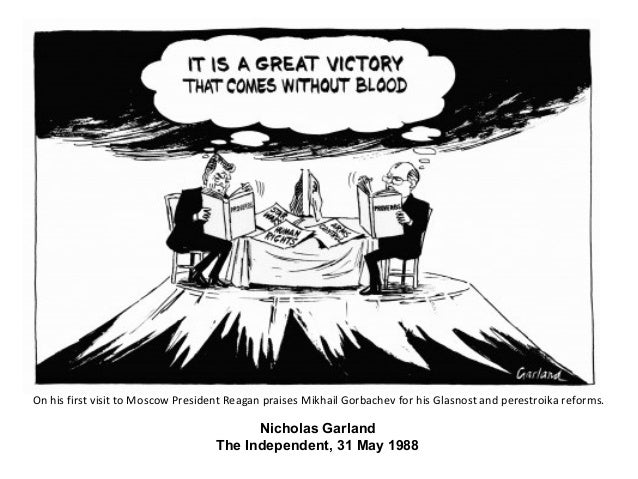
We American boomers who came of age during the Cold War will recall being told--repeatedly in the press and in school--that the major difference between us and the Soviet Union was that in contrast to the evil communists' "closed" society, we freedom-loving-small-d democrats were "open." President Reagan (or at least his speechwriter Peggy Noonan) in an otherwise moving eulogy for the fallen Challenger astronauts on January 28, 1986 even managed to find an opening to take a subtle cheap shot at the Soviets:

"We don't hide our space program. We do it all up front and in public. That's the way freedom is, and we wouldn't change it for a minute."

Thanks to the heroic physicist Richard Feynman, who offered a principled and vigorous dissent against a Rogers' Commission majority that downplayed NASA's dishonesty about the space shuttle flight risks, we know that in fact it was the FAILURE to be up front that was perhaps the chief cause of the tragedy.

The "open" US v. the "closed" USSR narrative enabled lots of lazy journalism and scholarship during the cold war. When Soviet President Mikhail Gorbachev in the 1985-1991 period pursued his policies of "perestroika" (restructuring) and "glasnost" (openness), his efforts were almost universally framed in mainstream Western media as the Soviets finally making efforts to become more like the United States. Even though the United States had never come fully to terms with its own history of slavery, Jim Crow, and subjugation of native populations, Gorbachev's attempt to be more open and honest about the historical failures of the Communist bureaucracy and brutality of prior regimes was framed as somehow representing the USSR engaging in an American style search for truth.

Gorbachev's reforms could and should have provoked needed restructuring and greater openness over here. Instead, a great majority of American government leaders and journalists adopted a "triumphalist" narrative in which Gorbachev's program was interpreted as "we won and they lost" the cold war.

After Boris Yeltsin dissolved the Soviet Union in 1991 (and ended up dissolving the Russian parliament by force in 1993) the triumphalist narrative in the West got even louder. Gorbachev's (at least stated) vision of democratic reforms and a people-centered economy gave way to austere, so-called "neoliberal" measures that by the late 1990s had many citizens in Russia and former Soviet states longing for the "old days." The West meanwhile pursued its own brand of neoliberalism which, it is fair to say, by 2008 had significantly wrecked the economy. In 2009 historian Andrew Bacevich I believe was right on point: 

"Post–cold war triumphalism produced consequences that are nothing less than disastrous. Historians will remember the past two decades not as a unipolar moment, but as an interval in which America succumbed to excessive self-regard. That moment is now ending with our economy in shambles and our country facing the prospect of permanent war."

Bacevich thought he was writing a postmortem for triumphalism. Obviously he was being too optimistic, as the Obama years offered no significant challenge to the narrative. Indeed, the political establishment's current stance toward Russia--which has even liberals like Rachel Maddow participating in a kind of neo-McCarthyite hysteria--appears to be rooted almost entirely in triumphalism. (Which is in NO WAY a defense of the alleged and/or real corruption and thuggery of Donald Trump and Vladimir Putin. In fact it is the triumphalist narrative that is in large part responsible for producing "democratators" like them.).

I thought about all this recently while watching the controversy play out over the removal of Confederate statues in many part of the south and even in some northern locations. Because we've never had a period of glasnost in the United States, most people seem to have no idea why and how Confederate statues got put where they are in the first place. Will the tragic death of Heather Heyer in Charlottesville, killed as she protested a white supremacist rally, force journalists, government officials, and school curriculum directors to rethink our history?

We are seeing some movement in that direction. Even before the death of Ms. Heyer, New Orleans Mayor Mitch Landrieu courageously defended the removal of confederate statues from the city: "They are not just innocent remembrances of a benign history. These monuments celebrate a fictional, sanitized confederacy ignoring the death, ignoring the enslavement, ignoring the terror that it actually stood for. They may have been warriors, but in this cause they were not patriots."

Actions by local officials like Mayor Landrieu--along with the opening for debate and discussion provided by Charlottesville tragedy--allows for greater dissemination of accurate information about our past. Finally there is media interest in items such as data provided by the Southern Poverty Law Center. SPLC researchers found that:

*There are at least 1,503 symbols of the Confederacy in public places.
*There are at least 109 public schools named after prominent Confederates, many with large African-American student populations.
*There are more than 700 Confederate monuments and statues on public property throughout the country, the vast majority in the South.
*There were two major periods in which the dedication of Confederate monuments and other symbols spiked--the first two decades of the twentieth century and during the civil rights movement.
*The Confederate flag maintains a publicly supported presence in at least six southern states.
*There are 10 major US military bases named in honor of Confederate military leaders.
*There have been at least 100 attempts at the state and local levels to remove or alter publicly supported symbols of the Confederacy.

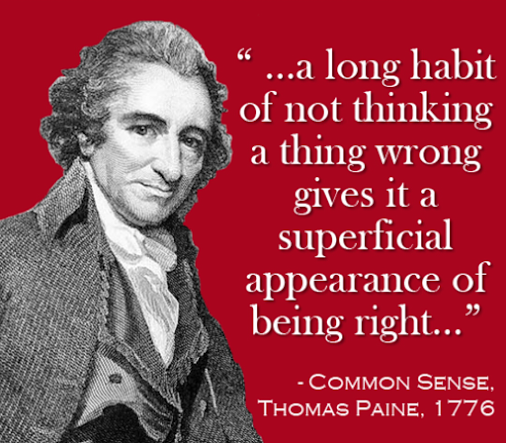
In the wake of Charlottesville, many pundits and government officials are grappling with coming to terms with the Confederacy and white supremacy. This process, in my view, represents an American glasnost that will be painful and controversial. Because we've never had a real period of glasnost, those choosing to challenge white supremacist symbols (and really all forms of white supremacy) need to be prepared to confront the many rationalizations, delusions, sweeping under the rug, and outright dishonesty that appear any time a society is in a period of change. The American revolutionary Thomas Paine's explanation for these kinds of mental gymnastics in defense of tradition I think is still the most clear and concise: "a long habit of not thinking a thing wrong, gives it a superficial appearance of being right, and raises at first a formidable outcry in defense of custom."


Think about that Sam Adams quote next time you find yourself engaged in a discussion with someone who sees Confederate symbols as "no big deal," "just history," "heritage," and yada yada yada.

The breakdown of the Soviet Union in 1991 presented the United States with a golden opportunity to reflect on its own historic failures to live up to its Constitutional ideals. We blew the opportunity and instead were guided by a triumphalist narrative that made it easy to sweep difficult conversations and overt injustices under the rug.

Some will call the effort to come to terms with the Confederacy and other uncomfortable parts of American history the work of radicals and malcontents. I call it inching toward glasnost--American style.

Tuesday, August 01, 2017

It's the War, Stupid

In September Hillary Clinton will release a campaign memoir. The book is called What Happened. Publisher Simon and Schuster tells us what to expect:

Now free from the constraints of running, Hillary takes you inside the intense personal experience of becoming the first woman nominated for president by a major party in an election marked by rage, sexism, exhilarating highs and infuriating lows, stranger than fiction twists, Russian interference, and an opponent who broke all the rules . . . She lays out how the 2016 election was marked by an unprecedented assault on our democracy by a foreign adversary. By analyzing the evidence and connecting the dots, Hillary shows just how dangerous the forces are that shaped the outcome, and why Americans need to understand them to protect our values and our democracy in the future.


Perhaps a better title for the book would be "What Happened According to MSNBC" since the publisher's  blurb strongly suggests that Hillary may have borrowed Rachel Maddow's Russian dot-connector. Rolling Stone's Matt Taibbi, quite accurately I think, has labeled the Democratic Party establishment obsession with Russia as a case of "Putin Derangement Syndrome" that borders on mass hysteria. Noam Chomksy highlights the hypocrisy.
Given Mr. Trump's shady financial history, there may in fact be something to all the colluding with Russia business. The problem is when establishment Democrats use the Russia investigation as an excuse to not confront the real reasons why Democrats continue to lose elections that should be won. As noted by the economist Doug Henwood:

And what exactly are the claims made by these Putin-did-it stories? That were it not for Russian chicanery, Hillary Clinton would have won the popular vote by five million and not almost three million? That displaced machinists on the banks of Lake Erie were so incensed by the Podesta emails that they voted for Trump instead of Clinton? That Putin was pulling FBI director James Comey’s strings in his investigation of the Clinton emails? That those scheming Russians were clever enough to hack into voting machines but not clever enough to cover their tracks?

Suppose Hillary and/or political pundits were to make a serious effort at understanding what happened in November of 2016. What would that look like? In an important and insightful working paper posted just this past June on the Social Science Research Network, Douglas Kriner (Professor of Political Science at Boston University) and Francis Shen (Associate Professor of Law at the University of Minnesota Law School) make a major stride toward going beyond partisan, self-serving, conspiratorial analysis of the elections results. Kriner and Shen are best known for their 2010 book The Casualty Gap: The Causes and Consequences of American Wartime Inequalities (Oxford University Press, 2010). In that book, the authors defined the "casualty gap" as "a disparity in the concentration of wartime casualties among communities at different points on the socioeconomic ladder."

In their recent more piece (entitled "Battlefield Casualties and the Ballot Box: Did the Bush-Obama Wars Cost Clinton the White House?"), Kriner and Shen build off the claims of the 2010 book and make a compelling case that Donald Trump benefited from the war fatigue afflicting communities in traditionally blue states that swung away from Hillary. According to the authors:

America has been at war continuously for over 15 years, but few Americans seem to notice. This is because the vast majority of citizens have no direct connection to those soldiers fighting, dying, and returning wounded from combat. Increasingly, a divide is emerging between communities whose young people are dying to defend the country, and those communities whose young people are not. In this paper we empirically explore whether this divide—the casualty gap—contributed to Donald Trump’s surprise victory in November 2016. The data analysis presented in this working paper finds that indeed, in the 2016 election Trump was speaking to this forgotten part of America. Even controlling in a statistical model for many other alternative explanations, we find that there is a significant and meaningful relationship between a community’s rate of military sacrifice and its support for Trump. Our statistical model suggests that if three states key to Trump’s victory – Pennsylvania, Michigan, and Wisconsin – had suffered even a modestly lower casualty rate, all three could have flipped from red to blue and sent Hillary Clinton to the White House. 

Until 2016 Pennsylvania, Michigan, and Wisconsin had all been reliably blue states in presidential elections. Conventional wisdom argues that Hillary lost the states due to a combination of factors including her lack of campaigning (especially in Wisconsin), the attraction of the Trump campaign to low income whites and whites without college degrees, Hillary's inability to match the Obama enthusiasm and turnout among voters of color, the lack of enthusiasm for Hillary among millennials, the impact of then FBI Director Comey's public statement re-opening an investigation of Clinton emails, "fake news" targeting the Clinton campaign, and third party candidates "spoiling" the election. And of course some believe the results were the result of hacking. Each one of these factors have received significant media coverage.

In looking at the connection between battlefield casualties and voting, Kriner and Shen are in a  territory completely ignored by the mainstream, corporate media. Yet their statistical model produces some fascinating results: In Wisconsin, Trump received 47.8 percent of the vote to 47 percent for       Clinton. If Wisconsin had the same battlefield casualty rate as New York, Kriner and Shen estimate that the results would have been 48.4 percent Clinton, 46.4 percent Trump. Michigan's actual results were 47.6 - 47.4 for Trump. With a lower rate of battlefield casualties, the results would have been 49-46 for Clinton. Pennsylvania's actual results were 48.6 - 47.9 for Trump. With lower battlefield casualty rates, the results would have been 49.5 - 47 for Clinton. Many pundits argue that Clinton should have spent more time campaigning in Wisconsin, Michigan, and Pennsylvania--especially in rural areas. Yet if Kriner and Shen are correct, Clinton's hawkish foreign policy proposals combined with her past support for wars would have made her presence in those areas absolutely toxic. Perhaps it was better that she just stay away. 

Why has discussion of "war fatigue" in relation to the 2016 election results been completely absent from the media? Kriner and Shen argue it's because of the class and social status of the pundits: " . . . most American elites in the chattering class have not, at least in recent years, been directly affected by on-going conflicts. Children of elites are not as likely to serve and die in the Middle East, and elite communities are thus less likely to make this a point of conversation. The costs of war remain largely hidden, and an invisible inequality of military sacrifice has taken hold. Our analysis . . . suggests that Trump recognized and capitalized on this class-based divergence. His message resonated with voters in communities who felt abandoned by traditional politicians in both parties."

In a previous Media Rant I argued that the militarism of the Obama administration did not represent any significant change in the "War on Terror" as laid out by George W. Bush. The implications of Kriner's and Shen's findings is that Hillary Clinton--who spent much of the 2000s and 2010s as an enthusiastic advocate of militaristic adventures--may have paid for that advocacy in at least three traditionally blue states that went for Trump.

Since the day after the election it has become painfully obvious that Mr. Trump's campaign represented the most massive bait-and-switch operation ever visited upon the American voter. Anyone who hoped that a Trump administration would bring some relief for war families or narrow the casualty gap has already had those hopes crushed. My great fear is that through sheer arrogance, ignorance, and incompetence Trump might well spark a global war that will make Iraq and Afghanistan pale by comparison.

What should be the lesson for the Democrats? My guess is that in her September book release tour Hillary will warn of the need for Democrats to be vigilant in the face of Russian interference in elections and fake news. The Kriner/Shen paper suggests a different, more meaningful lesson: the Democrats should reject the premises of the "War on Terror" and lead the effort to re-think the nation's militaristic posture. They should acknowledge the reality of the casualty gap and pledge to minimize or, better yet, eliminate it.

Read the Kriner/Shen paper here.


Saturday, July 01, 2017

My Favorite Albums Of 1967

On the day of my birth in July of 1961, the #1 song in the United States was "Quarter to Three" by Gary U.S. Bonds. Exuberant dance tunes and celebrations of all-night parties were common in rock- and-roll during the JFK years. "Quarter to Three" epitomized the trend:

Don't you know that I danced, I danced till a quarter to three
With the help, last night, of Daddy G
He was swingin on the sax like a nobody could
And I was dancin' all over the room
Oh, don't you know the people were dancin' like they were mad
It was the swingin'est band they had, ever had
It was the swingin'est song that could ever be
It was a night with Daddy G


Few on that dance floor could have predicted that in only six years rock would evolve (or de-evolve, depending on your point of view) from "a night with Daddy G" to "Nights in White Satin." Indeed by 1967 rock-and-roll went from being (at its best) the youthful drive to piss off your parents with only four chords and a backbeat, to a full-fledged art form which made raising the consciousness as legitimate a function for rock as raising the roof. And it pissed off your parents even more. 

Why the dramatic shift in rock quality in such a short period of time? In terms of musical influences, folk singer Bob Dylan has to be given credit for giving currency to the idea that it was okay for songs to "say something." Given that the years 1961-1967 were filled with controversies over civil rights, Vietnam, feminism and much else, there existed lots to say something about. In terms of recording techniques, the Beach Boys' classic "Pet Sounds" (1966) used experimental arrangements to produce a kind of "art rock" that might be difficult to perform live but could be reflected on in privacy or in groups like a great novel. Guided by the "Pet Sounds" example, bands moved away from the standard 2-3 minute track with guitar/bass/drums and mostly innocuous lyrics to lengthy, orchestral tunes often featuring deeply personal lyrics or social commentary. 

In terms of social movements, the west coast hippies like the "Beats" of the 1950s mixed a rejection of middle-class norms with an acceptance of personal liberation to create a space for rock as more than "mere entertainment." The hippies experienced rock as a vehicle for sending messages to the masses, as a peaceful weapon to provoke emotions in a culture made numb by hyper-consumerism, and as the most striking symbol of the values of the new generation; they saw rock-and-roll as nothing less than the soundtrack of the REVOLUTION. As such, they helped shape an audience of listeners that came to expect and appreciate maximum levels of creativity in songwriting and sound.  
For me, more important than musical and sociocultural influences in the development of rock-and-roll was the emergence of FM radio as a space for non-commercial rock music. In 1967 popular San Francisco deejay Tom Donahue wrote an article for the new Rolling Stone magazine called "AM Radio is Dead and its Rotting Corpse is Stinking Up the Airwaves." That article and the work of Donahue and other like-minded jocks led to the creation of the "free-form" style of programming. For the first time, deejays could play whatever they wanted, not just the "hits." In the free-form format, a deejay might play an obscure track, or an entire album, or maybe just spend some time talking about the meaning of the music. Donahue pioneered the free form on KPMX and KSAN in Frisco. In my home town of New York City, WNEW-FM became the archetype of what a "progressive" rock radio station should be, featuring deejays in-tune (pun intended) not just with new music but with society. (Just as an aside: I've yet to meet anyone raised on that era of FM radio who believes that FM radio today is--with few exceptions--anything other than awful, pathetic, mindless crap. Another great venue ruined by corporate greed.). 

So thanks to those and other factors, by 1967 rock and roll had been transformed from mostly fun to a major force for social change. Hordes of youth headed out to San Francisco to find out what all the buzz was about, and the June 16-18 Monterey Pop Festival is widely recognized as the event that ushered in the "Summer of Love." The Beatles did not perform at that concert, but their "Sgt. Pepper's Lonely Hearts Club Band" album (released in June in the United States) became the iconic record of the times. 

Sgt. Pepper is an important, great record, but its notoriety unfortunately overshadows the fact that there were many important, great records released that year. Given that we are in the 50th anniversary of 1967, I thought I would list my own personal favorites from that year (organized by the month in which they were released.). 

January: The Doors, "The Doors" and Laura Nyro, "More Than A New Discovery." 

The Doors first album is a classic example of a record that would not have been heard (or possibly even made) without the existence of a viable FM radio band. Today the album is pegged as a seminal recording in the "psychedelic" or "acid" rock category (mostly because of  the songs "Break on Through" and "The End" and lead singer Jim Morrison's burnout image), but for me it's just a great example of modern blues played by a group of white guys from California. 
I found out about Laura Nyro in the 1970s when a WNEW-FM deejay played "And When I Die" by Blood, Sweat, and Tears and announced that the song was "written by Laura Nyro and appears on her first album." Nyro was a thought provoking lyricist who wrote catchy tunes; she's admired among serious artists. In 2012 she was inducted into the Rock and Roll Hall of Fame. The Hall's website says that her music "reflected a combination of spirituality and street smarts." 
February: The Jefferson Airplane, "Surrealistic Pillow" 

Everything on this record rocks, but "White Rabbit" is by itself worth the price of admission. Grace Slick's penetrating vocals belting out subversive lyrics might be THE highlight of the music of 1967. 
March: Grateful Dead, "The Grateful Dead" 

The first album from the most legendary jam band of all time. As with the Doors first album, the Dead's debut effort is often unfairly pegged as vital mostly because of its connection to psychedelia. But listen to "Viola Lee Blues" and it's clear that from their earliest days the Dead found a way to create a blues-rock-folk hybrid unlike anything heard before or since. 
Honorable Mention: The Velvet Underground's "The Velvet Underground & Nico" came out in March of 1967 also. Rolling Stone calls it the 13th greatest album of all time. The album's eclectic musical style--and the fact that the songwriters dared to address controversial themes like drug abuse and prostitution--make it a groundbreaking effort. Lou Reed's chilling tune "Heroin" is on this album--another great example of pioneering music that would never have been heard were it not for the courageous efforts of the era's FM deejays. 

April: The Electric Prunes, "The Electric Prunes"

The Electric Prunes were the ultimate American garage band. When I teach "The Rhetoric of Rock and Roll" for contemporary students, lots of them get a kick out of this album's featured track "I Had Too Much To Dream (Last Night)." A few years ago I asked a student why he liked that song and he said, "The words sound like something they came up with after smoking some really good weed." That sounds about right. 


Last night your shadow fell upon my lonely room
I touched your golden hair and tasted your perfume
Your eyes were filled with love the way they used to be
Your gentle hand reached out to comfort me
Then came the dawn
And you were gone
You were gone, gone, gone
Too much to dream
I'm not ready to face the light
I had too much to dream
Last night

I had too much to dream last night
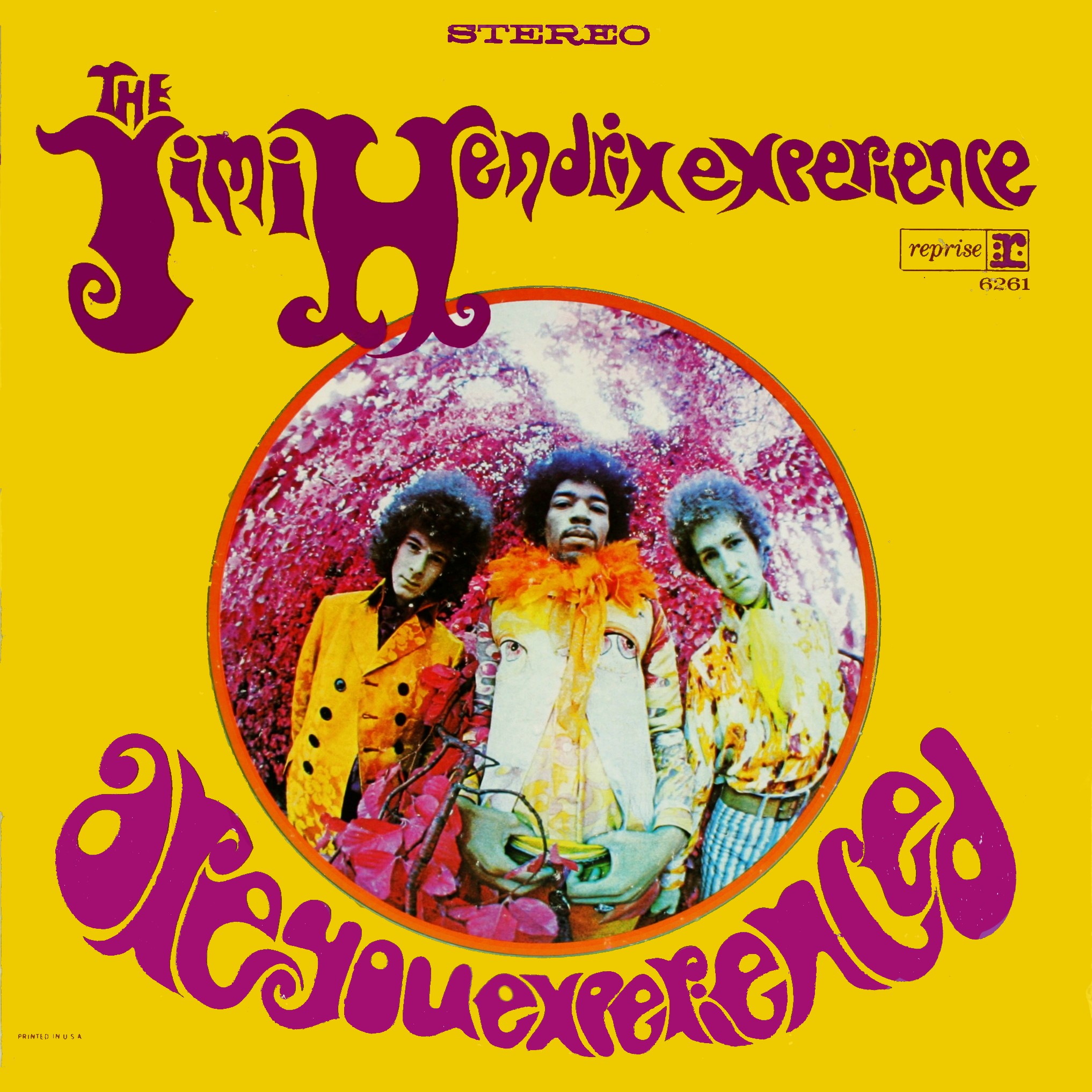
May: The Jimi Hendrix Experience, "Are You Experienced?" and The Mothers of Invention, "Absolutely Free"

Hendrix wasn't the first electric guitar hero in the history of rock; Chuck Berry, Dick Dale, Link Wray, and Duane Eddy were some of the earliest innovators in the genre. But Hendrix's 1967 debut album took the instrument to a new level; when Les Paul and Leo Fender pioneered the solid body electric guitar in the 1940s, they could never have imagined the result would be roaring riffs as can be heard in songs like "Manic Depression" and "Fire." It should also be noted that while Hendrix is primarily known for his guitar theatrics, he was also one of best lyricists of the era. "The Wind Cries Mary" is Shakespearean in its romantic imagery. 
Frank Zappa and the Mothers of Invention's "Absolutely Free" is one of the funniest rock records ever recorded. Zappa's biting satire blew up America's consumerist, materialist culture in what could be described as the musical equivalent of  a Lenny Bruce or George Carlin stand-up routine. Today, as we experience the absurdity of having a full-fledged internet troll calling the shots in the White House, "Absolutely Free" seems more relevant than ever. The song "Plastic People" features some lyrics that in 2017 should be posted on every highway bulletin board in the land: 

Take a day and walk around 
watch the nazi's run your town 
Then go home and check yourself
you think we're singing 
'bout someone else 
June: The Beatles, "Sgt. Pepper's Lonely Hearts Club Band" 

Sgt. Pepper did for rock music what Orson Welles' "Citizen Kane" did for film: raised the bar and changed the rules. "Kane" and "Pepper" spawned some awful imitators in their respective media, but they also inspired artists to take more creative risks. 
July: The Bee Gees, "Bee Gees 1st" and Canned Heat, "Canned Heat" 

Bee Gees 1st was actually the third studio album released by the band, but the first to be released internationally. The album is a power-pop archetype, and it might be only a mild exaggeration to say that "To Love Somebody" is the greatest pop love song ever written. 
Canned Heat's first album is not their best or my favorite of theirs, but in the midst of all the mind expanding music of 1967, this one refreshingly provided a jolt of John Lee Hooker inspired boogie and blues. Like most Heat albums, it's fun from beginning to end. 
August: Pink Floyd, "The Piper at the Gates of Dawn"; Albert King, "Born Under a Bad Sign"; Vanilla Fudge, "Vanilla Fudge" 

Pink Floyd went on to bigger and better things, but their 1967 debut is still a key creation in the development of "progressive" rock. When Elvis broke through in 1955, I'm quite sure no one thought there would be a time when rock songs could have titles like "Astronomy Domine," "Lucifer Sam" and "Interstellar Overdrive." 
Albert King's "Born Under a Bad Sign" helped usher in the blues revival of the time. Depending on what mood I'm in, when asked "What's your all time favorite song?" there's a good chance I'll say "The title track of Albert King's 'Born Under a Bad Sign." 
Vanilla Fudge's first album is a landmark in how to perform cover tunes: make them so different from the original that the average listener won't even recognize that they are covers. No crappy karaoke from the Fudge. Their cover of the Supremes'  Motown classic "You Keep Me Hangin' On" used to be in regular rotations on the classic rock radio playlist. It should be brought back. 
September: The Kinks, "Something Else"; The Beach Boys, "Smiley Smile"; Arlo Guthrie, "Alice's Restaurant"; Procul Harum, "Procul Harum"; Eric Burdon & The Animals, "Winds of Change"

As the kids returned to school in September of 1967 they were met with some spectacular records. The Kinks will always be known as the most underrated of the British Invasion bands of the 1960s. That's too bad, because their best work is on par with best of the Beatles, Rolling Stones, and The Who. "Something Else" has the acoustic/electric mix that became commonplace in 1990s indie rock and today. Two tunes on the album, "Death of a Clown" and "Waterloo Sunset," deserve to be on any list of great 1960s records. 
People who knew the Beach Boys for surfin' and hot rod songs did not appreciate "Smiley Smile," but the record is another example of Brian Wilson's ability to push the envelope in the recording studio. The most popular song on the album, "Good Vibrations," had already been released as a single in 1966 (my guess is that someone at the studio headquarters insisted it be put on "Smiley Smile" so as to make it easier to market the album.). On songs like "Vegetables" and "She's Goin' Bald" you almost get the feeling that Wilson is poking fun at the Beach Boys' previous incarnation. Very endearing. 
Arlo Guthrie's "Alice's Restaurant" includes "Alice's Restaurant Massacree," an 18 minute, 20 second folk epic that became the anti-war anthem of a generation. I've seen Arlo perform it live twice at the Oshkosh Grand Opera House and it never seems dated. 
Procul Harum got unfairly pegged as a one hit wonder on the strength of the beautiful tune "A Whiter Shade of Pale." But their debut album is high caliber throughout; Gary Brooker's vocals and keyboards demand attention. "She Wandered Through the Garden Fence" and "Conquistador" are my personal favorites off the album. 

In 1967 rocker Eric Burdon was a true believer in the love generation. "Winds of Change" is probably the most coherent musical statement of what was going on in San Francisco in the middle 1960s composed and performed by active participants in the historical moment. 
October: Sam & Dave, "Soul Men" and Buffalo Springfield, "Buffalo Springfield Again" 

Sam & Dave were accompanied by Booker T. & The MGs and the Mar-Key Horns, some of the most awe-inspiring musicians ever to perform and record. Anyone curious as to what is meant by the Stax sound needs to listen to "Soul Men." 
"Buffalo Springfield Again" is notable for featuring some of the early, classic material by Stephen Stills and Neil Young. I don't think Stills ever topped his song "Bluebird" from this album, while Neil's "Mr. Soul" might be the earliest example what later became known as grunge rock. 
November: The Moody Blues, "Days of Future Passed" and Cream, "Disraeli Gears" 

"Days of Future Passed" is a "thinking person's album," the kind of opus that became impossible even to conceive of after the birth of music video in the 1980s. Too bad; there's something to be said for music that connects with a 4.0 GPA English major. 
"Disraeli Gears" is one of the foundation records in the sub-genre known as heavy metal. Guitarist Eric Clapton, bassist Jack Bruce, and drummer Ginger Baker provide a rock out clinic on this album. If you've listened to lots of FM radio over the years you're probably sick of "Sunshine of Your Love" and "Strange Brew," the two tracks off this album that remained on the classic rock radio set lists. My personal favorites on the record are "Tales of Brave Ulysses" (another one that the English majors might get into) and "Take It Back"--a subtle anti-war song. 
December: The Who, "The Who Sell Out" and Leonard Cohen, "Songs of Leonard Cohen"

Pete Townshend, guitarist and brains behind the Who, has his entire career navigated between the comic and the tragic. "The Who Sell Out" catches him in a comic phase; the album is an extended satire on commercialism. Today when we watch Don Draper on the hit show "Mad Men" we recognize the absurdity of the early public relations/advertising culture of the early 1960s. The Who recognized the absurdity early, which is one of the reasons this record occupies an important place in the history of rock. 
"Songs of Leonard Cohen" was the crooner's first album. For me, Cohen could do nothing but recite the contents of grocery lists and it still would have been worth a listen. He simply had one of those mesmerizing voices that comes along only a few times each generation. That he was able to compose poetic, eerily beautiful words only added to the appeal. 
Happy Birthday 1967! Thanks for leaving us with a wealth of wonderful, timeless music. And may every summer be a "Summer of Love." 

Thursday, June 01, 2017

Roger Ailes and the Eristic Revival

In this media rant I wish to make three points:
  1. Fox News, guided by the values of founder Roger Ailes, did not originate but did magnify the worst tendencies of post-World War II news media in the United States.
  2. The real significance of Ailes and Fox is his/its revival of the ancient “eristic,” an intoxicating mode of argument rooted not in the civil exchange of ideas for the purpose of arriving at sound public policy, but rooted instead in the desire to defeat and humiliate opponents.
  3. The end and tragic result of Fox’s magnification of the news media’s worst tendencies and revival of the eristic has been the death of political conservatism as a force for generating new ideas or reformulating old ones.
Fox and the Three Worst Features of American News Media      

Roger Ailes, the founder of Fox News, died recently. The response by his critics was, paradoxically but predictably, Fox News-like in its vitriol. Media Studies Professor Marc Lamont Hill tweeted, “Roger Ailes has died. Wow. Sending deep and heartfelt condolences to everyone who was abused, harassed, exploited, and unjustly fired by him.” Rolling Stone’s Matt Taibbi chimed in withThe extent to which we hate and fear each other now – that's not any one person's fault. But no one person was more at fault than Roger Ailes. He never had a soul to sell, so he sold ours. It may take 50 years or a century for us to recover. Even dictators rarely have that kind of impact. Enjoy the next life, you monster.” Media critic Neal Gabler posits that Ailes created a monstrous news channel:


You could say that Fox News gave voice to those who felt voiceless, though it might be more accurate to say that he gave voice to those who were so filled with enmity that they seemed on the borderline of sanity. With his hosts and guests howling at elites without surcease, he created not just an alternative media or even an alternative set of facts, but an alternative universe that has overtaken the real one — a bizarre universe bubbling with resentments and conspiracies and fabrications in which liberals aren’t a political opposition; they are the source of all evil. Basically, he poisoned America.

Think Gabler is exaggerating? Consider the recent case of Princeton University assistant professor of African-American Studies Keeanga-YamahttaTaylor. Professor Taylor delivered the commencement address at Hampshire College in Amherst, Mass. In the speech she called President Trump a “racist, sexist megalomaniac.” After Fox News covered her speech, she was subjected to bitter, angry, threatening, racist trolling that forced her to cancel public lectures in Seattle and San Diego. She put out a statement which said in part:

My speech at Hampshire was applauded but Fox News did not like it. Last week, the network ran a story on my speech, describing it as an “anti-POTUS tirade.” Fox ran an online story about my speech and created a separate video of excerpts of my speech, which included my warning to graduates about the world they were graduating into. I argued that Donald Trump, the most powerful politician in the world, is “a racist and sexist megalomaniac,” who poses a threat to their future. Shortly after the Fox story and video were published, my work email was inundated with vile and violent statements. I have been repeatedly called “nigger,” “bitch,” “cunt,” “dyke,” “she-male,” and “coon” — a clear reminder that racial violence is closely aligned with gender and sexual violence. I have been threatened with lynching and having the bullet from a .44 Magnum put in my head. I am not a newsworthy person. Fox did not run this story because it was “news,” but to incite and unleash the mob-like mentality of its fringe audience, anticipating that they would respond with a deluge of hate-filled emails — or worse. The threat of violence, whether it is implied or acted on, is intended to intimidate and to silence . . . The cancelation of my speaking events is a concession to the violent intimidation that was, in my opinion, provoked by Fox News. But I am releasing this statement to say that I will not be silent. Their side uses the threat of violence and intimidation because they cannot compete in the field of politics, ideas, and organizing.

The most credible accounts of Roger Ailes’ tenure at Fox suggest that he created a toxic, ratings driven corporate culture, while his predatory behavior toward women is now well documented. (Appropriately, Ailes’ biggest defender is Bill O’Reilly, himself finally forced out at Fox in April of this year after his show’s corporate sponsors could no longer stand by the sexual harassment behaviors that Ailes enabled for many years). Maybe what’s most shocking is that the TV liberal Rachel Maddow openly admits to considering Ailes a “friend.”


As regards his journalistic legacy, most of Ailes’ critics seem convinced that he represented something uniquely awful in the history of American and/or global news media. My own view, for what it’s worth, is that historians of the future will find Ailes and Fox News noteworthy for how they magnified the three worst features of post-World War II American news media:

Worst Feature #1: The news media as an arm of the State. Some Vietnam War reporting and Watergate-era journalism created an inaccurate perception of American news media as adversarial towards the interests of the State. In fact the establishment media have always had a cozy relationship with the powers that be, exemplified most distressingly by the annual White House Correspondents Dinner. And probably the best example of the reigning in of what little media/State tension did exist during the Vietnam era was CNN’s 1998 termination of April Oliver and Jack Smith, producers of a feature report showing that the US military used sarin gas during the Vietnam’s “Operation Tailwind.” Oliver and Smith were fired after significant pushback to the story from the Pentagon. (Oliver and Smith ended up writing a 77-page rebuttal to the CNN internal report that was used a justification  to fire them. It is a worthwhile read for anyone interested in the real world challenges to journalists who dare to be more than stenographers for the powerful.).

Worst Feature #2: The News as Entertainment. Fox has taken this feature to lamentable heights, but it did not begin with them. Reuven Frank, who served as President of NBC news from 1968-1974 and again from 1982-1984 reportedly said that every news story should "display the attributes of fiction, of drama. It should have structure and conflict, problem and denouement, rising action and falling action, a beginning, a middle and an end." Attorney Floyd Abrams claims that Frank told him “sunshine is a weather report. A flood is news.”

Worst Feature #3: The News as Alternative Reality. In 2012 Thomas Mann and Norm Ornstein published It's Even Worse Than It Looks: How the American Constitutional System Collided with the New Politics of Extremism. The authors published an op-ed that same year in the Washington Post that summarized one of the key points of the book: “The Republican Party has become an insurgent outlier in American politics — ideologically extreme; contemptuous of the inherited social and economic policy regime; scornful of compromise; unmoved by conventional understanding of facts, evidence and science; and dismissive of the legitimacy of its political opposition.”  That is, the modern day GOP inhabits an alternative reality.

No doubt Fox News aided and abetted the Republicans march toward an alternative universe. But as with the news as entertainment, this is not unique to Fox. Put on your local television news or read your local corporate newspaper. What you will see and read bears only marginal relation to the real lives of the majority of people inhabiting the geographical region. Most mainstream media subscribe to what Roger Ailes called the Orchestra Pit Theory: “If you have two guys on a stage and one guy says, ‘I have a solution to the Middle East problem,’ and the other guy falls in the orchestra pit, who do you think is going to be on the evening news?”  News media, from Fox on up, give us a view of reality as nonstop orchestra pit malfunctions, consequently making “reality” (especially for heavy TV news viewers) seem more chaotic, evil, and beyond repair than it actually is.

Roger Ailes, Fox News, and the Revival of the Ancient Greek Eristic

More than 2000 years ago, ancient Greek philosophers developed a fascination with what we today call “mass communication.” They called it Rhetoric, and they had spirited debates about the ethics of such communication. Most people today receive little education about that time period or those debates, which is unfortunate because if they did maybe it would be easier to understand the rise of Roger Ailes and Fox News.

In the 5th century BCE, as Greece dabbled in experiments with democracy, attention was given to the importance and power of communication in civic life. Today when people hear the word “rhetoric” they think of “spin” or “bullshit,” but to the ancient Greeks the study of rhetoric was equal to the study of citizenship; rhetoric was vital as an aid in making policy decisions, resolving disputes, and mediating the discussion of public issues to citizens.

Early teachers of rhetoric were known as “Sophists.” Many of them were brilliant philosophers and educators teaching the skills necessary to be successful as a public advocate, but others were kind of like early versions of Dale Carnegie; “winning friends and influencing people” took priority over sound argument and the search for truth. Socrates, his student Plato, and Plato’s student Aristotle developed a sense of rhetoric as “philosophy in action.” Aristotle’s Rhetoric, the most well developed exploration of the “art of rhetoric” from that time period, conceives of a rhetorician as someone who presents a well-argued case, develops an emotional connection with an audience, and is perceived by them to be a person of goodwill.


Plato was quite hostile to the sophists. In his writings, most of which feature his teacher Socrates, Plato has Socrates accuse the Sophists of engaging in “eristic” argument. Eristic argument was a kind of verbal duel; the purpose was not to enlighten or arrive at truth but only to win an argument. Plato’s Socrates differentiates eristic from dialectic. According to professor James Benjamin, “A defining characteristic of proper dialectic is that the participants must seriously pursue the subject under discussion. Disputes become eristical when one of the participants violates the serious purpose of the dispute. Just as a card game deteriorates into chaos when one player intends to play bridge while another player intends to play hearts, so too does dialectic deteriorate into eristic if one participant holds a serious intention while another participant holds a less serious intention . . . Eristic is fallacious dialectic that corresponds to fallacious argumentation in rhetoric and is motivated by a disregard for the rules of serious argumentative pursuits.” (quote appears in Benjamin, J. "Eristic, Dialectic, and Rhetoric." Communication Quarterly, Vol. 31, No. 1, Winter 1983, pp. 21-26).  Eristic argument, given that it is like a sport, has high entertainment value and literally draws crowds. 

Seen from this perspective, Roger Ailes and Fox News since 1996 have provided us with a powerful model of modern eristic. The bluster and bloviation of blowhards like Bill O’Reilly and Sean Hannity—maddening to their opponents—is rooted in a communication model that ancient philosophers and rhetoricians warned us about many years ago. In a corporate media world that lives and dies by the advertising dollar, it is not surprising that the success of Ailes’ eristic has spawned a wide range of imitators all over the political spectrum, from the alt.right to the so-called left over at MSNBC. The mainstream media's obsession with Vladimir Putin, cleverly coined "Putinology" by Keith Gessen, comes straight from the Fox playbook in use of the most vulgar guilt-by-association tactics. 

Ailes, Fox, and the Death of Political Conservatism

Perhaps the most disastrous consequence of Ailes’ eristic has been Fox’s impact on political conservativism. Conservativism used to be about, and should be about, figuring out how to adapt precedent and traditional principles to modern problems. Conceived of that way, conservativism at its best is a rigorous and spirited testing of ideas. Ailes and Fox, because of their addiction to the eristic mode of argument, literally destroyed any of that sense of conservatism. They replaced it with a sham conservativism that seeks not to advance new ideas or provide fresh takes on old ones, but rather is content to demolish “liberal elites.”

Charlie Sykes, the conservative talk-radio host who appears to have finally “had it” with the excesses of the movement that he himself had a prominent role in creating, penned an important op-ed recently for the New York Times that gets at the heart of what the eristic style has done to conservatism. He writes:

Not surprisingly, the vast majority of airtime on conservative media is not taken up by issues or explanations of conservative approaches to markets or need to balance liberty with order. Why bother with such stuff, when there were personalities to be mocked and left-wing moonbats to be ridiculed?

What may have begun as a policy or a tactic in opposition has long since become a reflex. But there is an obvious price to be paid for essentially becoming a party devoted to trolling. In the long run, it’s hard to see how a party dedicated to liberal tears can remain a movement based on ideas or centered on principles.

Conservatives will care less about governing and more about scoring “wins” — and inflicting losses on the left — no matter how hollow the victories or flawed the policies. Ultimately, though, this will end badly because it is a moral and intellectual dead end, and very likely a political one as well.

If you want to test Sykes’ argument, just go to Facebook and monitor the posts of your self-identified “conservative” friends. You won’t see much original argument or insight, but you will see a boat load of memes mocking liberals. (There are of course exceptions, but the exceptions always seem to prove the rule.). Is this entirely because of Roger Ailes and Fox? No, but Fox has for over 20 years produced an almost intoxicating brand of eristic that has normalized mockery, name-calling, and knocking down straw (wo)men as legitimate forms of conservative argument. If liberalism died because its advocates lack guts, maybe conservatism died because, as Stephen Colbert famously noted in his roast of George W. Bush, it argues “from the gut.”

So addictive is the eristic that if you point out the strategy to the addicts, a typical response is “whataboutism;” “Whatabout when liberals attack conservatives? Whatabout that professor’s commencement speech? Didn’t she call Trump names?”  Etc. etc. A great sign of a philosophy going bankrupt is when its adherents are reduced to answering all major criticisms by pointing out the hypocrisy of the critics.


Eristic argument will always be with us. The answer is not to censor it or whine about it, but to teach citizens how to recognize it. Once citizens recognizes the eristic at work, they can seek out more ethical discourse interested in the pursuit of truth as opposed to the pursuit of power and ratings points. Even better, they can become a more active contributor to the media; we need more blogs, newspaper columns, social media posts, podcasts, and other forms of media that reject trolling (i.e. the eristic) and seek understanding and insight. Drown out the eristic with a healthy dose of ethical citizenship.