Monday, January 01, 2018

The 2017 Tony Awards

Welcome to the annual Tony Awards post. Every year since 2002 I've awarded a Tony to the best media of the previous year. Some years (like last year) there are a range of media recognized, but sometimes I recognize just one person.). I operate from no automatic set of criteria when deciding what media to honor, but in general I am drawn to:

*insightful works that shed light on some important public issue.
*creative works that deserve a wider audience.
*informative works that provide eye-opening education on a difficult topic.
*courageous works that speak truth to power.
*humorous works that skillfully provoke laughter and thought at the same time.
*local works that promote community and civic engagement.

(Just as an aside: Those criteria are in sync with what many of us professors in liberal arts colleges would articulate as the end goal of our respective degree programs. If students can graduate with the ability to be insightful, creative, informative, and courageous; if they can use humor to transcend the world's absurdities--and adopt civic engagement as a core life value--then maybe we are doing something in the academy worth fighting for. Our ability to produce engaged citizens is now much more difficult as political hacks and powerful interests threatened by a critical populace continue to look for ways to undermine any campus mission that does not meet the most narrow possible understanding of "training the workforce.".). 

My list of award recipients is of course incomplete (to mention all the work I admired during the year would require book length treatment) and obviously reflects my own values. I strongly encourage anyone bothered by my list of recipients to create their own. Start your own blog! 

And now the 2017 Tony Award recipients. Drum roll please. 

Best New Local Publication: The Oshkosh Independent Magazine. The Oshkosh Independent was founded by Justin Mitchell in 2015 as an online news source featuring original writings by active community members. Justin has done a remarkable job of keeping the online source updated, informative, and cutting edge. 
The inaugural issue of the Oshkosh Independent Magazine
In 2017 the Oshkosh Independent took a step forward and in November debuted a hard copy magazine. Edited by UW Oshkosh Journalism Professor Miles Maguire, the first issue profiles Greg Pierce, the man who "brought professional basketball back to Oshkosh." The entire magazine is professional in appearance and tone, highly informative, and manages to cheerlead for Oshkosh without being brain dead about it. In his inaugural Editor's Note, Maguire writes, "We need your support--whether it's in the form of an advertisement in these pages or of a subscription for home delivery. Our goal is to make the time you spend with us time well spent. If we can earn your support, then we can keep this caper going." Plans are to release 5 or 6 issues of the magazine per year. Individual subscription rates are reasonable ($22 for one year or $36 for two). For information on how to subscribe, go here

(Full disclosure: I write State of the State for the online Oshkosh Independent and may contribute occasionally to the hard copy magazine.). 

Best Local Journalist: Miles Maguire. In 2017 not only did Miles Maguire manage to get a new magazine off the ground, but he also wrote some of the most important local news stories for the online Oshkosh Independent. Local citizens' ability to come to grips with complex and emotional issues like the sale of the Lakeshore golf course, possible corruption involving the UW Oshkosh Foundation, the city's rental inspection program, and many others were enhanced by Miles' reporting. Finally, in addition to regular reporting and editing a new magazine, Maguire in 2017 somehow even had time to publish a fiction novel: check out A Special Detail: The Untold Story of a Reporter's Suspicious Death. You can find excerpts here
Miles Maguire had a busy 2017: Professor, Journalist, Editor, and Fiction Writer to name a few roles
Most Impactful Investigative Journalism of the Year: Ronan Farrow's "From Aggressive Overtures to Sexual Assault: Harvey Weinstein's Accusers Tell Their Stories," New Yorker Magazine, October 23, 2017. Without exaggeration, I'd say that you would have to go back to Peter Benenson's classic 1961 article "The Forgotten Prisoners" (which launched a global movement to free political prisoners) to find a written work that had as much positive impact as Farrow's New Yorker piece in 2017. Researched over a 10-month period, Farrow managed to get 13 women to go on the record with horrific tales of sexual assault and harassment at the hands of Hollywood mogul Harvey Weinstein. The piece helped jump start the #metoo movement which continues to knock down prominent power brokers in a variety of fields. I would not at all be surprised if Farrow earns a Pulitzer Prize for his efforts. Vox.com is keeping a running list of alleged harassers knocked off their perch. 

Investigative Journalism Honorable Mention: The International Business Times "Republican Senators Will Save Millions With Special Real Restate Tax Break."  Early in the deliberations on the Trump Tax Bill, Tennessee Senator Bob Corker announced that he was going to vote against it because he could not in conscience be for anything that increased the deficit. Corker grandstanded on this point for weeks, in the process managing to avoid the brunt of the criticism of thousands of citizens who flooded Washington to urge NO votes on the tax bill. 

As the move to an actual vote on the bill came nearer, Corker suddenly and inexplicably flip-flopped and announced he would vote for it. Journalists Alex Kotch, David Sirota, and Josh Keefe finally discovered why: at the last minute the tax bill writers added a provision that would allow real estate developers like Corker to benefit to the tune of multi millions of dollars from changes to the tax law involving their business. Outrage over the "Corker Kickback" almost succeeded in getting senators to change their votes, but alas it was not to be. 
Corker continues to insist that his vote had nothing to do with his personal finances, but he has offered no compelling explanation as to why he could vote for a bill that clearly violates the deficit principle he grandstanded on for weeks (actually for years.). The same is true for Wisconsin Senator Ron Johnson, by the way. 

Most Insightful #metoo Testimonial: Brit Marling's "Harvey Weinstein and the Economics of Consent," The Atlantic, October 23, 2017.  Brit Marling is an actress, screenwriter, and film producer. In 2014 she had a hotel room encounter with Harvey Weinstein in which she was fortunate to be able to repel his advances and leave. The brilliance of her Atlantic piece is in the way it brings to the forefront what is typically marginalized or ignored in most writing about sexual harassment: The Harvey Weinsteins of the world are in large part the result of an unjust economic system that makes the financially vulnerable prey for the "gatekeepers" like Weinstein who decide quite literally who gets to work and who doesn't. From her conclusion: 

"The real danger inside the present moment . . . would be for us all to separate the alleged deeds of Cosby, Ailes, O’Reilly, or Weinstein from a culture that continues to allow for dramatic imbalances of power. It’s not these bad men. Or that dirty industry. It’s this inhumane economic system of which we are all a part. As producers and as consumers. As storytellers and as listeners. As human beings. That’s a very uncomfortable truth to sit inside. But perhaps discomfort is what’s required to move in the direction of a humane world to which we would all freely give our consent."

Song of the Year: Jessie Reyez' "Gatekeeper."  In 2017 Columbian-Canadian singer-songwriter Jesse Reyez wrote and recorded what may become the anthem of the #metoo movement. The song "Gatekeeper" features Reyez' voice and the voice of a devilish sounding Weinstein figure who says: 

Oh I'm the gatekeeper
Spread your legs
Open up
You could be famous
If you come up anywhere else, I'll erase you
Drink up, bitch, we got champagne by the cases
Don't you know? Don't you know?
We are the gatekeepers
Spread your legs
Open up
You could be famous
You know we're holding the dreams that you're chasing
You know you're supposed to get drunk and get naked


Best Trump and the Press Explainer: Jay Rosen's "Normalizing Trump: An Incredibly Brief Explainer," PressThink Blog, September 17, 2017. NYU Journalism Professor Jay Rosen has been almost alone among press critics in recognizing the true civic emergency brought on by the election of Donald Trump. Last year he won a Tony for his "Winter is Coming," a Twitter thread on what it will be like for the press under Trump that has unfortunately turned out to be frighteningly accurate. 

"Normalizing Trump" needs only 400 words to explain why the mainstream press insists on finding something "normal" in Trump in spite of all evidence to the contrary: 

If nothing the president says can be trusted, reporting what the president says becomes absurd. You can still do it, but it’s hard to respect what you are doing. If the president doesn’t know anything, the solemnity of the presidency becomes a joke. That’s painful. If they can, people flee that kind of pain. In political journalism there is enough room for interpretive maneuver to do just that.

This is “normalization.” This is what “tonight he became president” is about. This is why he’s called “transactional,” why a turn to bipartisanship is right now being test-marketed by headline writers. This is why “deal-making” is said to be afoot when there is barely any evidence of a deal.

What they have to report brings ruin to what they have to respect. So they occasionally revise it into something they can respect: at least a little.

Jay Rosen is one of the few media critics who refuses to minimize the extent of our current civic emergency
Best Comic Explainer of Threats to the Media: John Oliver's "The Trump Presidency" From a November episode of Last Week Tonight. Viewers of John Oliver's program know that he consistently mixes belly laugh jokes with serious, well supported evidence to back up his claims. His November statement on the strategies Donald Trump uses to insulate himself from attacks on his incoherent public statements was one of the most brilliant pieces of political communication criticism I have ever heard. Mirroring much academic criticism on how politicians scapegoat media (but stating his case in a language that everyone can understand), Oliver highlights three strategies used by Trump to deflect attention away from his incoherence: 

1. Delegimitizing the Media (i.e. the "Fake News" canard) 
2. Whataboutism (i.e. answering every criticism by claiming that Obama or Clinton did something worse). 
3. Trolling (i.e. substituting intentional personal attacks against political enemies for any kind of real argument)

These strategies are not unique to Donald Trump. They can be found among hyperpartisans on all sides of the political spectrum, but there is no doubt that they've most infected the so-called conservative movement in America. Once a respected force for ideas in American political life, the conservative movement is now dedicated almost entirely to media delegitimization, whataboutism, and trolling. The one-time Dean of Wisconsin Conservatives, Charlie Sykes, has written an entire book on this topic. We don't know if the Republicans will lose control of the House and Senate in 2018, but if such a loss happens it would at least force a reflection on how their current argumentation runs counter to virtually everything that conservatism should stand for. 


Best Bitcoin Explainer: Doug Henwood, "What's Behind Bitcoin Mania?" Jacobin Magazine Online, December 26, 2017. If you're like me you are probably fascinated with the Bitcoin phenomenon and other "cryptocurrencies" but find yourself unable to explain them and maybe even more confused after reading mainstream articles on the topic. 

Doug Henwood, longtime editor of the Left Business Observer, in my opinion provides a huge public service with his readable piece on Bitcoin. He shows the roots of the cryptocurrency fetish in a particular brand of libertarian economics. Any social good that could come from Bitcoin appears to be outweighed by the interests of some to make huge profits in speculation. For Henwood, the Bitcoin bubble "shows that some people have too much money. Our society — and I mean that broadly, since a lot of the money going into Bitcoin looks to be coming from Asia — has plenty of cash for speculation and not much for human need."
Doug Henwood cuts through the Bitcoin BS
There you have it, the 2017 Tony Award recipients. Honorees receive no actual award, and most of them will never even know that they were so recognized. But so what? The entire point really is to urge my readers to take a look at the works I've mentioned. I hope you find them as provocative and enlightening as I did. 

Let's hope that 2018 is a great year for media that is insightful, creative, informative, courageous, thoughtfully humorous, and civic minded!

Friday, December 08, 2017

Dr. Chris Terry on Net Neutrality and Media Ownership

Critical issues related to media, like net neutrality and media ownership, are often discussed in wonky, technical terms that leave even the most concerned citizen confused and frustrated. When I find myself having difficulty understanding these issues, I call on my former student Chris Terry for clarification and insight. Dr. Terry is an assistant professor of media ethics and law at the University of Minnesota Hubbard School of Journalism & Mass Communication. Chris is an active scholar in the areas of administrative law, media regulations, and the real world impacts of media policy. 
The Federal Communications Commission in the Trump era is on the brink of making major, massive changes to the media regulatory environment. Proposed changes on Internet policy and media ownership, if they do in fact go into place, will impact each and every one of us. In order to get a better grasp of the issues, I emailed Chris some questions. Below are his responses, along with links to much information that can get inquiring minds up to speech. --Tony Palmeri

On December 14th the Federal Communications Commission is scheduled to vote on a proposal to repeal the 2015 "net neutrality" rules. Three part question: (1) What is net neutrality? (2) What do the 2015 rules say? (3) Why does repeal matter? 


Chris Terry Response: 1.) Net Neutrality is a term coined by Columbia Professor Tim Wu to describe how ISPs manage traffics on their networks. In practical terms, it describes a regulatory situation where your internet service provider cannot slow a consumer's access to content (a process known as throttling) or block you from accessing websites.


2.) The 2015 rules reclassified broadband from an “information service” to a “communication service” and in the process moved broadband under the Title II provisions of a common carrier. In simple terms, this makes internet service more like a utility, and essentially treats the internet like a traditional phone connection. Doing so keeps ISPs from blocking or throttling content…as all content under a common carrier status has to be treated equally.
3.) Repeal matters for several reasons, but the removal of the 2015 Title II rules will fundamentally change how internet content is delivered to consumers. Your ISP will have the ability to control what content you can access online, and because those are private companies (rather than state actors) there’s no first amendment right/defense for citizens to access content they choose.


The face of the repeal effort is the Republican Chair of the FCC Ajit Pai. What can you tell us about Mr. Pai? 

Chris Terry Response: Pai has been on the Commission since the Obama administration, and was in the minority when the 2015 rules were implemented by the agency. Donald Trump appointed him chair of the FCC and Congress recently extended his term at the agency. He is a strong and outspoken opponent of net neutrality concepts or regulation.
On December 7th citizens against net neutrality repeal protested outside Verizon stores across the country. Ajit Pai was one Verizon's top lawyer, but are there other reasons for choosing that company as the site for protest? 


Chris Terry Response: Pai’s association with Verizon is probably the primary reason for the protest locations, but it is worth nothing that Verizon has long opposed Net Neutrality, and was the lead plaintiff in the case that ultimately overturned the FCC’s 2010 Net Neutrality rules.

Suppose the FCC does in fact vote to scrap the 2015 net neutrality rules. What kinds of legal challenges will ensue? What are the likely outcomes? 


Chris Terry Response: There will be a variety of legal challenges. There’s some procedural issues with the proceeding, but the most notable is the FCC’s decision to ignore a huge volume of public comments in the rule making docket. There’s also a matter of the agency acting without a change in material facts. Both of these issues are important in legal reviews of administrative agency decision making.


As for the outcomes, it is hard to predict at this point. Both sides claim to have the legal high ground.


There's also been much activity lately on the media ownership front. In November on a 3-2 party line vote, the 3 Republicans on the FCC voted to overturn a ban that's been in place since 1975 that prevented one company from owning newspapers and broadcast stations in one market. What was the rationale for the ban in the first place? The rule changes will be challenged in court, but if they do end up going into effect what will be the practical impact?

Chris Terry Response: The newspaper-broadcast cross ownership ban was a legacy media ownership policy first implemented in 1975 after a long proceeding. The agency has been trying to repeal the rule for many years, but these attempts have been tied to the agency’s ham-handed set backs on media ownership policy. 

Of the media ownership rules the agency voted to change, the NBCO rule is the one most likely to withstand a judicial review because unlike the other rules, the agency actually has some empirical evidence that proposes that the rule no longer works. (Note: I produced some of that empirical evidence)


The ownership case will occur in the 3rd Circuit Court of Appeals, where the agency has been trying to resolve a remand first issued in 2003 (and again in 2011 and then in 2016) in the Prometheus Radio Project case. I am skeptical the FCC wins, and many of the rule changes will likely be remanded to the agency.


The FCC is also loosening restrictions on one company owning two stations in the same market. Who would benefit from that rule change?

Chris Terry Response: The rule you refer to is the local television ownership rule. The revision in the rule would allow a single owner/operator to possess more than one television station in a market. Several media companies would benefit from the change, but the rule change appears to be on the table to help facilitate the FCC’s approval of the merger between Sinclair and Tribune’s television properties. That merger, while contentious because of Sinclair’s political viewpoints, is not legal under the current rules, hence the attempt to change or alter the rule.

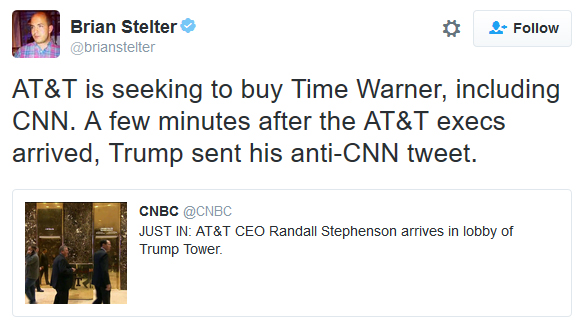
The Trump Administration is going to court to block the proposed AT&T/Time-Warner merger. Why would Trump be opposed to the merger? What's your personal view on the merger? 

Chris Terry Response: I think there’s been a fair amount of either/or in the discussion surrounding the merger. The administration wants AT&T to divest some properties, including CNN. The suggestion was made that President Trump and CNN have an active feud going, and this was one way to get back at the news channel for criticism. While that may be true, there are some issues with the merger involving scale that I think would have made it a hard sell for anti-trust review. As I have said, Trump’s people might be making trouble, but the deal might also be problematic…both things can be true at the same time.

Net neutrality and media ownership issues can be quite wonky. What's the best way for a citizen to stay informed and active on these issues? 


Chris Terry Response: Stay in tune with these issues by following the advocacy groups like the Benton Foundation, Free Press, The Future of Music Coalition or Prometheus Radio Project that are involved heavily in the legal and political fights over these issues.

Some links to audio/essays on both topics:
*Radio Survivor Podcast #118: Making Sense of the FCC's Effort to Kill Net Neutrality
*Radio Survivor: Chris Terry on the FCC's Legacy of Failure  
*Radio Survivor Podcast #115: The Federal Consolidation Commission
*Radio Survivor Podcast #7: The FCC's Legacy of Failure With Media Ownership Policy
*Radio Survivor: Chris Terry 2015 guest column on the FCC's Legacy of Failure and Media Ownership Policy
*Radio Survivor Podcast #33: 20 Years Ago Local Radio Was Crushed  
*Radio Survivor: Chris Terry on Whether the FCC's Legacy of Failure Could Trigger Even More Consolidation
*Radio Survivor Podcast #50: Prometheus v. FCC and a Generation of Gridlock
*Radio Survivor: Chris Terry on the FCC's Media Ownership Legacy-Now With More Failure!
*Radio Survivor Podcast #62: The FCC's Legacy of Failure and CMJ's Uncertain Future  
*Radio Survivor: Happy(?) 21st  Birthday to the Telecommunications Act of 1996
*Radio Survivor Podcast #78: Pai is Trump's FCC Guy

Want to communicate with Chris Terry? Send him an email  crterry@umn.edu  You can also connect with him on Twitter @Christopherterr

Friday, December 01, 2017

Awakening From The Dreamworld's Nightmare

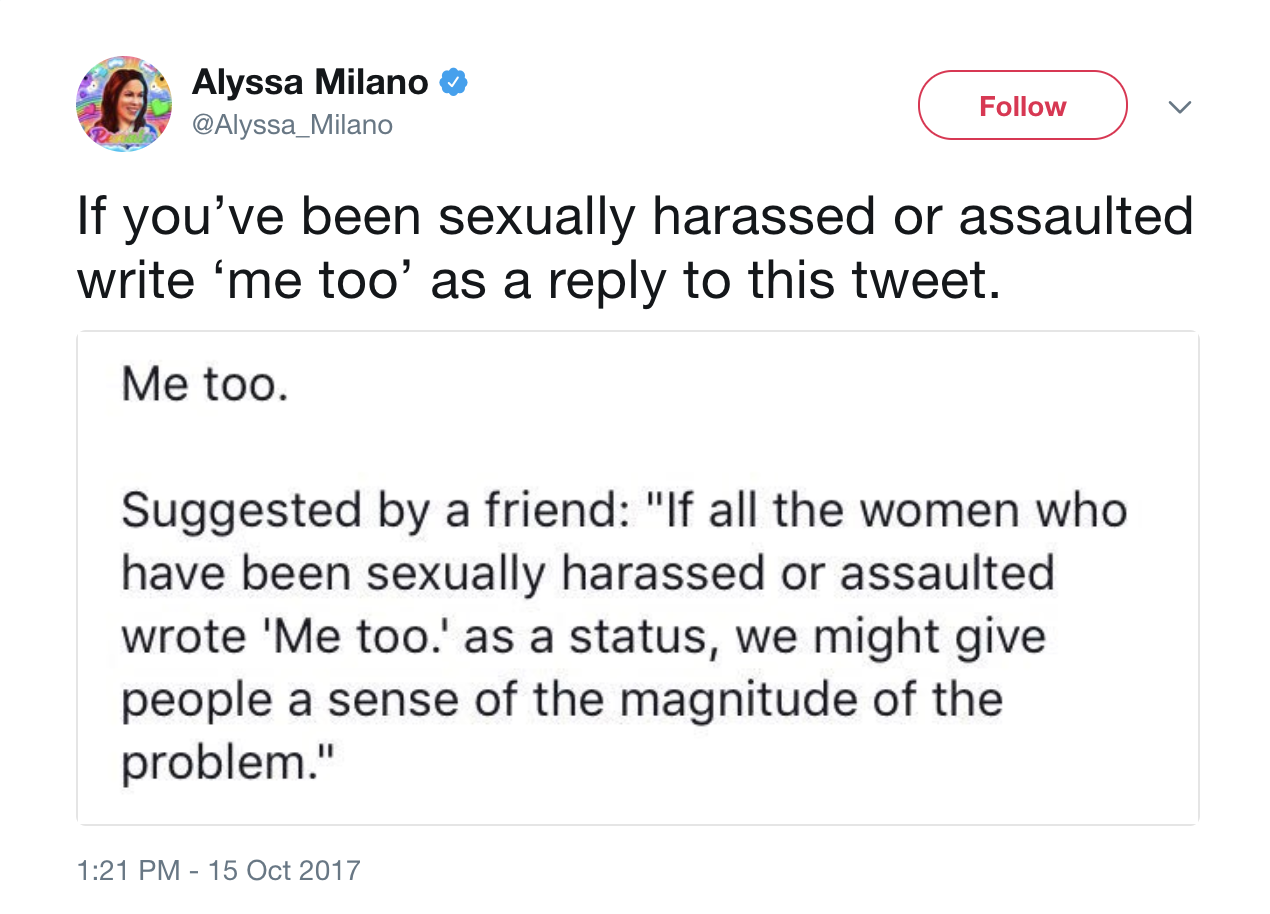
Inspired by social activist Tarana Burke and mobilized by a tweet from actress Alyssa Milano, the #metoo movement to expose and root out sexual harassers from the workplace has--at least in the worlds of entertainment, news media, and politics--revealed that many men who've received public accolades have privately been living a lowlife golden rule of "grope unto others as you would have them grope unto you." Every day seems to come new, credible accusations of rape, inappropriate touching, unwelcome advances, and various other forms of oppressive treatment toward women (and in some cases toward men or toward children). The list of accused power players is long and getting longer. 

The award winning television series "Mad Men" (ran for 7 seasons and 92 episodes between 2007 and 2015), critically acclaimed in part for its blunt portrayal of misogyny and sexism in the workplace of the 1960s, led many viewers to believe mistakenly that such behaviors were things of the past. If anything, the #metoo disclosures demonstrate that workplace rules against sexual harassment put in place as a result of the 1960s/70s feminist movement were not enough to challenge power imbalances that allow certain men to abuse women cavalierly even in the presence of explicit codes of conduct warning the harasser of potential consequences. Perhaps not surprisingly, "Mad Men" creator Matthew Weiner has himself been accused of harassment. 

Few would argue that men are by nature inclined to abuse women. A more likely explanation for the phenomenon is the culture of "toxic masculinity" described in a range of social science and popular literature over many decades. According to this line of thinking, a variety of cultural influences--including media--succeed in normalizing misogyny and sexism. In a toxic male culture, the Harvey Weinstein's of the world view women as a kind of "reward" that their success at playing the role of "man" entitles them to. 

Do certain forms of media especially reinforce toxic masculinity? I teach a course called "The Rhetoric of Rock and Roll." One of the most powerful and most appreciated parts of the course occurs when we watch University of Massachusetts professor Sut Jhally's brilliant "MTV Dreamworlds" video. Jhally is founder and executive director of the Media Education Foundation, an organization that's done great work in showing the connections between gender identity and media. 

Students are always fascinated and disturbed by "Dreamworlds" because, while the film does not claim or show a causal connection between music videos and real world sexual abuse, it does show how the dominant narrative of the videos normalizes sexual aggression. As stated by professor Jhally in Dreamworlds Part 3:

"The images and stories of music videos, and other forms of media culture, do not directly cause men to harm women. But they do dehumanize women and thus make it easier to inflict and justify abusive treatment. They contribute to an environment where men’s violence against women is legitimized and the female victims of this violence are blamed for the brutality that men inflict on them. They encourage an attitude of callous disdain while all the while implying that this is how women want to be treated—that women in fact desire harassment, stalking, and assault."


One thing I've been fascinated by in the current wave of assault allegations is how many of the harassers are men who would have "come of age" in the music video era and/or been high level participants in the video culture. The two best (worst?) examples are filmmaker Brett Ratner and Hip-Hop icon Russell Simmons. 

Before becoming a successful movie maker, Ratner made a name for himself as a music video director. His "classics" include Jessica Simpson's hypersexualized cover of "These Boots Were Made For Walkin'" and L.L. Cool J's sex parable "Pink Cookies in a Plastic Bag Getting Crushed by Buildings."  When you read about actress Olivia Munn's outing of Ratner as a pervert, it becomes clear that he seemed to be quite literally acting out the kind of macho posturing seen in music video:

New to Los Angeles and pursuing an acting career, Munn said she was thrilled when a friend invited her to the set of "After the Sunset.” "I was so excited, because I mean, that's why you come out to California and Hollywood," recalled the actress, 37, whose credits now include HBO's "The Newsroom" and the movies "Magic Mike” and "X-Men: Apocalypse."

Not long after Munn arrived on the Santa Monica set in 2004, she said, she was asked to drop some food off in Ratner's trailer as a favor. She said she was assured that the director would not be there.
Munn entered Ratner’s trailer and quickly placed the food on a table. She said she was startled to find him inside. She tried to make a quick exit, but Ratner implored her not to leave.

"He walked out ... with his belly sticking out, no pants on, shrimp cocktail in one hand and he was furiously masturbating in the other," Munn said. "And before I literally could even figure out where to escape or where to look, he ejaculated."

Munn said she let out a "startled scream" and raced out of the trailer. She said she immediately told the man who had asked her to deliver the food. His reaction? “It wasn't a shock. It wasn't surprise,” Munn recalled. “It was just, ‘Ugh, sorry about that.’"

Writer Jenny Lumet's allegations against Simmons are more disturbing, yet also consistent with the violence against women suggested in much music video. Narrating her 1991 assault,  Lumet writes:

At no time that night did I say: "Russell, I will go home with you." Or "Come home with me." Or "I will have sex with you." Or "I have the desire to have sex with you . . ."

I got into the car with you. The driver began to drive. I assumed you knew where I lived, because you had sent me 250 balloons, but I gave the driver my address on 19th Street and 2nd Avenue.

You said to the driver: "No."
I didn't understand, so I said: "Russell?"
I said, again, to the driver: "19th Street."
Again you said to the driver: "No."
Then the car doors locked. It was loud. The noise made me jump.

She goes on to describe in vivid detail the awful experience of what happened once inside Simmons' apartment. For men completely engrossed in music video culture (Simmons and Rattner have apparently been best buddies for a long time), Olivia Munn and Jenny Lumet "want" this kind of treatment. Were we just talking about Brett Ratner, Russell Simmons and the assorted other prominent abusers mentioned in the press that would be one thing; unfortunately the problem is much more extensive. "Dreamworlds 3" (which I hope professor Jhally updates in the near future) includes powerful footage of "average" men assaulting women in parks, on public streets, and participating in interviews in which they talk about the kinds of misogynist attitudes they hear in their social circles.

Russell Simmons and Brett Ratner: Livin' the Dreamworld?
Obviously the problem of toxic masculinity is much bigger than songs and music videos. However, if you do have substantive interaction with young people, you should engage them with the Boston Public Health Commission's "nutritional impact" scoring sheets for songs and videos. These simple tools are a challenging yet simple way of determining if the main theme of a song/video promotes healthy, respectful gender relations or sexist/misogynist ones.

It's become common to say that the accusations of sex abuse and the resulting terminations of once iconic news anchors, politicians, and entertainers represents some kind of reckoning. I reckon instead that what we are actually experiencing is an awakening from the Dreamworld's Nightmare. Reckonings are necessary to guarantee justice for victims, but by themselves do not change toxic cultures.

For cultural change we need the awakening. What might an awakening mean in the current context?

*In news media it would mean CBS and NBC pledging to hire hundreds of journalists rather than pay multi-millions to "star" anchors like Charlie Rose and Matt Lauer.

*In politics it would mean ending the culture of secrecy that allows the abusers to silence victims with non-disclosure settlements. In Wisconsin, we should push back against the legislature's bipartisan edict that results of the investigations into harassment allegations against state politicians would always be kept secret. (Interesting that this is just about only thing we can get bipartisan agreement on in Madison.).

*In the entertainment industry it would mean not just that we need more women in executive level positions, but we also need an industry commitment to recruit, finance, and promote narratives that reject the gratuitous degradation of women. 

Tuesday, October 31, 2017

On Public Displays Of Affliction

In 1962 historian Daniel J. Boorstin released The Image: A Guide To Pseudo-Events in America. Pseudo-events are planned, often highly choreographed public relations stunts. Boorstin's concern  was that when politicians sell policy the same way commercial advertisers sell products, democracy suffers. His concern was real, and democracy HAS suffered. Immensely. Perhaps it was inevitable that by 2016 we would elect a man that pundit Conor Friedersdorf calls "the master of the pseudo-event."
The pseudo-event ethic in the political world and other institutions of power is today so deeply internalized among institutional participants that it is naive to think we can reverse the trend. When systems of power are addicted to the creation of bullshit, and the masses to its consumption, we're in dire straits. Perhaps the best we can do is (1) label and critique the pseudo-event phenomenon and try not to enable the exploiters of it and (2) work with principled citizens' organizations committed to rising above the BS while advocating for sound public policy. Neither is easy, but each is necessary. 

The Media Rants column can [at least try to] help with the labeling and critique. In this rant I'd like to focus on a particular type of pseudo-event gaining traction in the Trump years, mostly among Republican politicians. I call it the "Public Display of Affliction" (PDA). In the remainder of this piece I will describe the essential features of the PDA, give some examples, and briefly address the consequences of it. 

The epitome of the PDA occurred on October 8th, 2017. That was the day Vice President Mike Pence, in a highly calculated maneuver consistent with his overall midwest Machiavellian style, traveled to Indianapolis to walk out of the Colts/49ers game in response to players taking a knee during the national anthem. Immediately after leaving the event, the Veep tweeted that "While everyone is entitled to their own opinions, I don't think it's too much to ask NFL players to respect the Flag and our National Anthem." In Pence's staged event we can locate the essential features of the PDA: 
*The chief participant (in this case Vice President Pence) needs to look pained and hurt; i.e. he must be visibly afflicted. 

*The audience must identify with the chief participant's pain. In VP Pence's case, viewers were supposed to say, "I too would walk out if I saw spoiled athletes disrespecting our flag." Indeed, three weeks after the VP's stunt, two referees walked out and refused to officiate a high school game in New Jersey after players took a knee during the anthem. Their rationale parroted Pence: "What they are doing with this kneeling and everything, they have the right to do that, but the National Anthem has nothing to do with them kneeling." 

*The PDA seeks to distort the message of the targeted group. In spite of the fact that NFL players have been clear from day one that their protests are about racial inequality and police brutality, VP Pence continued to repeat the alt.right canard that it is about soldiers, the flag, and the anthem. The irony of course is that while the Vice President and POTUS put on an act of affliction, the NFL players are calling attention to real, ongoing, actual afflictions in America

*The PDA attempts to marginalize the targeted group. Already called "sons of bitches" by the POTUS, on October 8th the protesting NFL players experienced further piling on by Pence. In response, San Francisco 49er Eric Reid said, "This is what systemic oppression looks like. A man with power comes to the game, tweets a couple of things out leaves the game with an attempt to thwart our efforts."
The Public Display of Affliction pseudo-event genre did not begin with Vice President Mike Pence walking out of a football game. As with all rhetorical genres, it is impossible to locate one genuine starting point. However, the calculated PDA as I've described it does seem to have deep roots in the efforts of politicians (mostly Republicans) to offer up "thoughts and prayers" for victims of mass shootings. The "thoughts and prayers" for victims of gun violence, typically offered up by those politicians in receipt of most gun lobby campaign contributions, substitutes personal affliction for public policy. It's like Bill Clinton's legendary "I feel your pain" pronouncement on steroids. 

Almost every word out of President Trump's mouth is a form of PDA. He reminds us continuously of afflictions he suffers as a result of unfair attacks launched by the "failing" New York Times and other establishment news media, late-night comics, members of the US Congress, football players, Steph Curry, the mayor of San Juan, the wife of a fallen soldier, and many others. Almost never does the president address in any meaningful way any of the issues at the root of his conflict(s) with these people and institutions; instead he shifts the focus to how terrible it is that they all "hate Trump."  In true Trump fashion, after the Charlottesville tragedy he somehow found a way to make himself the victim

White House Chief of Staff John Kelly's extraordinary statement supporting President Trump and attacking Florida Congresswoman Frederica Wilson suggests that Public Display of Affliction might now be the official communication strategy coming out of the White House. Rep. Wilson had critiqued the president for what she said was an inappropriate condolence call to Myeshia Johnson, widow of fallen soldier LaDavid Johnson. Generally Kelly, who in the speech inaccurately portrayed remarks by Rep. Wilson, seemed to take the condolence controversy as a personal affront:

It stuns me that a member of Congress would have listened in on that conversation. Absolutely stuns me. And I thought at least that was sacred. You know, when I was a kid growing up, a lot of things were sacred in our country. Women were sacred, looked upon with great honor. That's obviously not the case anymore as we see from recent cases. Life -- the dignity of life -- is sacred. That's gone. Religion, that seems to be gone as well.
Gold Star families, I think that left in the convention over the summer. But I just thought -- the selfless devotion that brings a man or woman to die on the battlefield, I just thought that that might be sacred.
And when I listened to this woman and what she was saying, and what she was doing on TV, the only thing I could do to collect my thoughts was to go and walk among the finest men and women on this Earth. And you can always find them because they're in Arlington National Cemetery. I went over there for an hour-and-a-half, walked among the stones, some of whom I put there because they were doing what I told them to do when they were killed.

What are the consequences of powerful people persistently employing Public Displays of Affliction as a rhetorical strategy? Three things come immediately to mind. First, public displays of affliction make it all but impossible to resolve--or even address--issues at the root of the conflict between the powerfully afflicted and their targets. A strong leader would try, for example, to use the bully pulpit of the White House to address inequality, police brutality, and other issues sparking the NFL protests. Because they have 24/7 media attention, all presidents in a real sense role model how the population at-large should treat controversies involving emotionally charged subjects. What kind of model have President Trump and Vice President Pence set when it comes to the NFL protests? That whenever a group makes a public statement of protest you should distort the message and make the issue about how pained the protest makes you feel? Seriously? Is that what leaders do? 

Second, PDA coming from the powerful has a kind of domino effect: before you know it, the default response of almost everyone to everything is some kind of highly charged personal revulsion. Think of the supreme irony of Republicans in the White House and Congress creating the PDA domino effect. For years they have chastised the political left for being intolerant, taking everything too personally, and substituting "political correctness" for legitimate clash over ideas. I don't think the political left ever engaged in those behaviors to the level portrayed in the conservative caricature of them, but today there can be no doubt that in the Trump era the political right now behaves that way in the extreme. 

Finally, Public Displays of Affliction seem to be the latest sign of the erosion of political conservatism as an intellectual force in public life. Charlie Sykes, once the Dean of Wisconsin's conservatives, has argued cogently that the right "lost its mind" and consequently conservatism in the Trump era dedicates itself almost exclusively to mocking and trolling liberals. The Public Display of Affliction rhetorical strategy is but one more sign of that. This is tragic because conservatism--by which I mean REAL conservatism rooted in an understanding of the Constitution and Bill of Rights as living documents that ought to inform current debates--can and should be a powerful force for generating creative public policy options. That kind of conservatism is dying a slow death right before our collective eyes, drowning in a pool of public displays of affliction coming from those who have co-opted the conservative movement. 

Candidate Trump told us that if he got elected we would win so much that we would be "sick of  winning." President Trump's given us the culture of the Public Display of Affliction, and I know I'm not alone in saying that I'm sick of the WHINING. 

Sunday, October 01, 2017

Cop Culture and Mindless Media Collusion

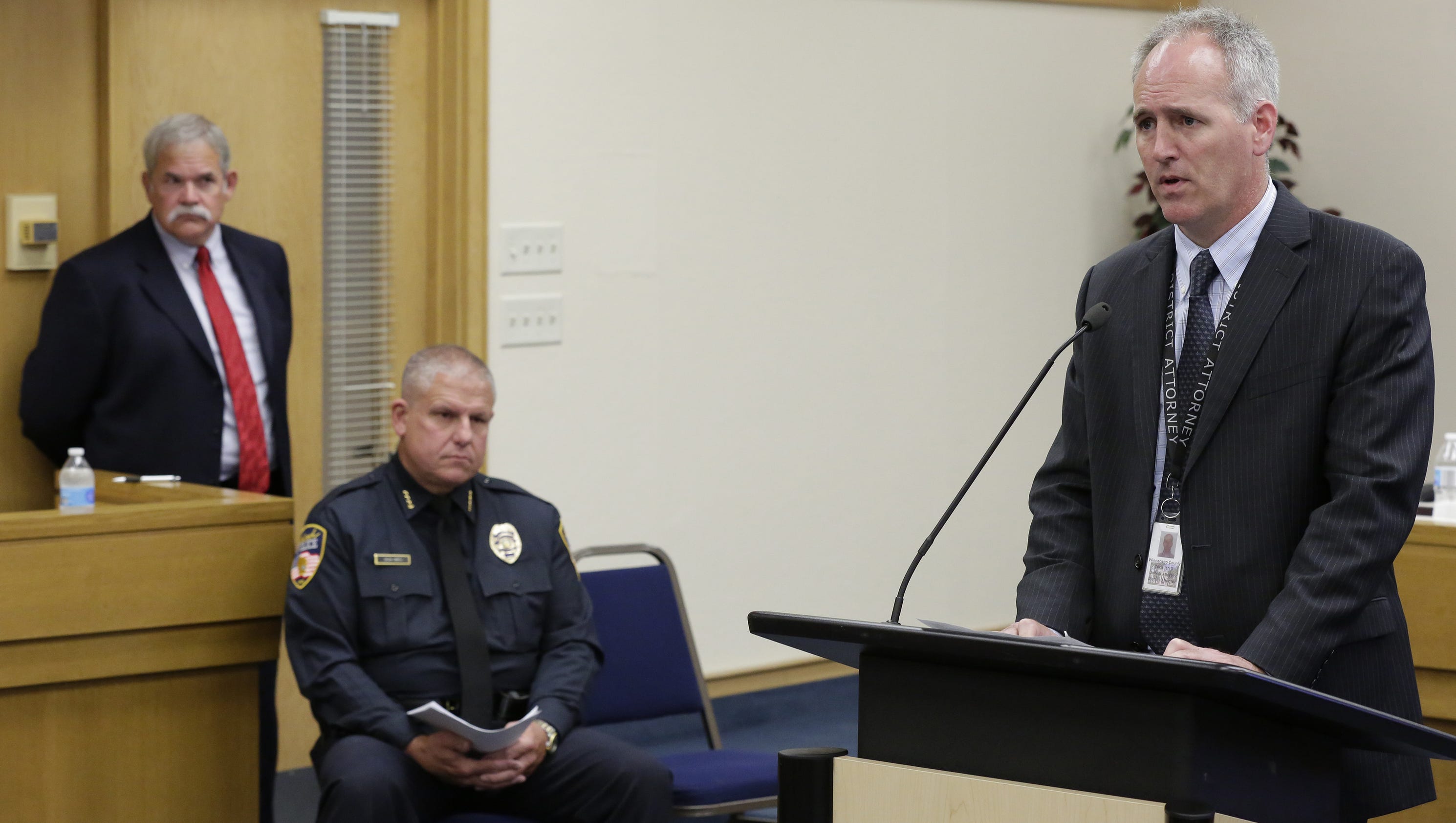
On July 31st of this year, 28-year-old Isaiah Tucker of Oshkosh was shot and killed by an Oshkosh police officer when he refused commands to leave a vehicle that he allegedly tried to run over the officer with. In September Winnebago County District Attorney Christian Gossett, citing Wisconsin's self-defense statute, announced at a press briefing that no charges would be filed against the officer.

The purpose of this post is not to argue that DA Gossett should have filed charges. Indeed, the facts as presented by Gossett, Assistant DA Mike Balskus, and Oshkosh Chief of Police Dean Smith suggest that the officers acted reasonably given the circumstances. Instead I will argue that the way mainstream media handles such situations make it extremely unlikely that facts will ever be presented in a manner that justifies charges against officers. Unlike the popular television show "COPS" in which the program's producers actively collude with police to place their actions in the most favorable light possible, mainstream media practice a "mindless collusion" that allows police spokespersons almost complete control over the framing of tragic events and the characterizations of people involved in them. I'll close with some advice on how mainstream media organizations can be mindful watchdogs in such situations as opposed to mindless colluders. 

Mindless Media Collusion

The television show "COPS" has been controversial for almost its entire 30-year run. A 2007 scholarly study by professors Elizabeth Monk-Turner, Homer Martinez, Jason Holbrook, and Nathan Harvey found that "media images depicted in COPS are at odds with UCR (Uniform Crime Reporting) official crimes statistics and reinforce stereotypes and myths about the nature of crime in the United States." Communication Studies scholars Theodore Prosise and Ann Johnson in a 2004 study argued that COPS' selective editing provided justification for racism, discrimination, and/or profiling. 

In 1999 Los Angeles Times TV critic Howard Rosenberg offered what I consider to be the definitive critique of cop "ride along" programs: "At their best, media ride-alongs and 'reality' series convey how diligently these agencies perform most of the time, often at great peril. At their worst they create unholy alliances where cops and cameras join forces as a single snoop, the former getting to choreograph themselves as heroes for the lens, the latter getting access to action footage that inevitably titillates viewers . . .  The collusion potential is enormous, with 'reality' series airing nothing they believe puts their partner subjects in a bad light. Doing so would cut off access. No access, no show." (emphasis added). 

If there is collusion in COPS, it is clearly purposeful and can perhaps be excused as nothing more than what is unfortunately typical in free-market media systems: ethics takes a backseat to whatever works to bring in the most advertising revenue. The result is lip service to the public interest while giving us the  "vast wasteland" that Newton Minnow warned of way back in 1961. 

In contrast, the kind of mindless collusion we see when it comes to mainstream media coverage of police shootings cannot easily be justified by commercial pressures. Instead I see two disturbing trends that together produce mindless collusion between the press and the police. First,  a real decline in the quality of journalism, making critical readers/viewers/listeners wonder if the average reporter today even possesses the skills necessary to serve a watchdog role. Second, as local police forces have come to be perceived more like local branches of the military, there's a tendency for local journalists to treat police the same way national journalists treat the military: with extreme deference to the point of serving as literal stenographers for them. The end result is a breakdown in the ability to trust both the police and the media, along with a widening polarization in how white people and people of color view the actions of law enforcement.

Let's apply these trends to the Isaiah Tucker tragedy. On the day of the event, Oshkosh Chief of Police Dean Smith held a press briefing that ran about 5 minutes. He announced that the investigation was in its early stages and that what he would be saying was based on what was known at the time. He said, "at the conclusion of this briefing I will not be taking any questions." In the briefing Smith repeatedly referred to Tucker as "the subject"  who had shown up to a residence on Knapp St. in Oshkosh, took items that were not his, then returned to take the Knapp St. resident's vehicle. The vehicle crashed through the garage door, and the subject then accelerated toward an officer which left no choice but to use lethal force. When Chief Smith finally did mention the subject's name, all that was said about him was that he was 28 years of age and had resided on Logan Dr. in Oshkosh. 

Anyone listening to that press briefing could have reasonably concluded that Tucker was nothing more than a common criminal, not known to the Knapp St. resident who called the police, whose reckless criminal behavior on that evening caused his death. Predictably, that framing of the event led to social media postings shrouded in racism and ignorance.  The amount of people who simply assumed that this was just another random burglary committed by one of "them" was surprising even by Oshkosh standards. Because journalists accepted the decree that they could not ask questions, crucial information known to the police at the time was left out of the initial reporting. 

It was known, for example, that Tucker was a father of three children, including one of them with the Knapp St. resident. He was a former student of Lourdes High School in Oshkosh and had excelled in sports.  The Knapp St. resident told the police that Tucker was acting aggressively that day, but that such behavior was not typical for him. It seems probable that his judgment was impaired by drug abuse. 

I point out elements of Tucker's biography not to suggest that knowing the details of his life excuses his awful behavior on that evening or makes the police more culpable. Rather, knowing the details of Tucker's life humanizes him in a way that Chief Smith's briefing did not, and forces a perception of the events of that evening at least in part as a domestic conflict that got completely out of control due to Tucker's [probably drug induced] erratic behavior. It's important to understand that the absence of humanizing material in a narrative about the victim of a police shooting does not make that narrative more "neutral." Absence of humanizing material simply makes the decision to use lethal force sound like the only practical choice in a difficult situation. Portraying the event and Tucker more accurately and fairly would still of course produce racist/ignorant comments in social media and other platforms, but for responsible citizens it would be easier to recognize the situation as one more horrifying example of how the problem of drug addiction and treatment needs to be given more urgency.  

District Attorney Gossett's press briefing in September to announce that no charges would be filed was only mildly better. At that event, it was finally revealed that Tucker and the Knapp St. resident had a child together. Also, we learned that the original police claim that Tucker had tried to hit an officer with the car was not completely accurate. The officer believed that the car was going to hit him and he was scared for his life. In the earlier press briefing, where the purpose seemed to be to make Tucker sound sufficiently criminal to promote the perception that he brought this on himself,  there was no doubt that Tucker had willfully tried to kill the officer. Police shootings are almost always framed that way; it prevents us from having to deal with the fact that an officer's perception that his life is in danger is in the eyes of the law sufficient to warrant the use of deadly force. 
It is no condemnation of law enforcement in the United States to say that it exists in a "cop culture" designed to maximize everything right that the men and women in blue do while minimizing the wrong. All institutions of power behave similarly. Because of that, we need principled, vigorous watchdog journalism that rejects the reduction of the craft to that of nothing but stenographers for the powerful

Recommendations Moving Forward

How should mainstream media cover tragedies like the Isaiah Tucker situation? Here are some recommendations:

*Do not cover police press briefings at which no questions can be asked. Press briefings without questions are the antithesis of transparency. If the police refuse to take questions, then tell them to stream the press briefing on the police department's website. The media could then provide a link to that site. To carry a question-less press briefing on a newspaper website or mainstream television station gives tacit approval to the idea that the media can be used as a one-way conduit of information that could be strategically incomplete or flat-out propaganda. Mainstream audiences will respect a media that stands for genuine transparency. Explain to your readers/listeners/viewers that journalistic ethics  does not allow your platform to be used for one-way transmission of messages from powerful sources who may be trying to control the framing of a serious issue. 

If the media insist on covering question-less press briefings, then they should at least express clearly and without equivocation that they are outraged at being put in such a position. 

*Insist on the proper amount of time to ask questions. At DA Gossett's September press briefing, the event started out with an announcement that the press would have 10 minutes at the end to ask questions.  In the local Fox 11 coverage of that press conference, it was almost impossible to even hear the questions that were being asked. 

There is no formula for what is the proper amount of time the press should be allowed to ask questions. Suffice it to say that if the collective efforts of multiple local television and radio stations, the Gannett press, and credible online sources cannot come up with more than 10 minutes, then we are being seriously under served in this community by the media. The media's inability to demand and ask for thorough questioning of the powerful almost makes it look like the kind of law enforcement/press relationship that one would expect to see in a banana republic. Actually it's much worse, because at least in the banana republics the journalists don't pretend to be anything other than mouthpieces for the state. 

*Remember to minimize harm.  "Minimize Harm" is actually one of the Society of Professional Journalists' ethical standards. They say, "Ethical journalism treats sources, subjects, colleagues, and members of the public as human beings deserving of respect." That standard was clearly neglected in the coverage of the initial police press briefing dealing with Isaiah Tucker, as the press uncritically allowed a depiction of Tucker that was at best misleading and certainly devastated his family. I mean, would it really have taken that much effort to point out that he was a father of three, at one time a student athlete at a Catholic high school, and in some kind of relationship with the woman that he behaved aggressively toward on the night of his death? 

About a week after the tragedy, the Gannett paper carried a story with a fascinating headline: "Family of Oshkosh man shot by police want answers."  In the story, Tucker's family--clearly disturbed by the coverage of the case to that point--try to assert simply that he was "human." The story also asserts that the family had been in contact with three advocates who plan to "ask Oshkosh police every question in the world as to why this young man died." Shouldn't that also be the plan of the press? If the press were doing its job, families of victims would not feel the need to solicit private investigators. Sadly, the private investigators will probably end up concluding that the media--in its uncritical reporting of the police version of events the day after the tragedy--was more of a hindrance than a help in trying to get at the truth. 

*Advocate for Civilian Review Boards.  In most of the United States, civilian review of police practices is woefully inadequate. When complaints against police are filed or shootings have to be investigated, we basically have to have faith that law enforcement is able to study its own behavior in an objective, credible manner. Mountains of evidence suggest that's not the case.  President Obama's Commission on 21st Century Policing produced a final report that envisions much greater public input in all areas of policing.  That report deserves wider circulation and discussion; at a minimum, mainstream media should actively try to get the discussion going. 

In short, press coverage of the Isaiah Tucker tragedy featured a mindless media collusion that allowed newspapers, television, and other media to be used as uncritical vehicles for the promotion of the police framing of the case. "Cop culture," like the culture of any institution of power, will do what it can to promote its perspective and protect its servants. To assert that FACT is not the same as condemning the police, who appear to have acted reasonably on the night of Tucker's death. Calls for reform of the way journalists cover police shootings and police procedures in general cannot change past tragedies, but they might contribute to preventing future ones.