Sunday, November 10, 2013

Media Rants: Fresh Political Portmanteaus

Media Rants

Fresh Political Portmanteaus
By Tony Palmeri
from the November 2013 issue of The SCENE
If you’re a word geek like me, then you must be a fan of the portmanteau. That’s the trick of developing a new word from the blending of two older ones. Simple examples include brunch (breakfast + lunch), Wikipedia (wiki + encyclopedia), and Anthony Weiner’s favorite, sexting (sex + texting).

In politics, Barack Obama in 2008 lauded RonaldReagan’s presidency as “transformational.” Yet Obama’s signature policy achievement, the portmanteau Obamacare (Obama + healthcare) seems so far to have transformed the Republican Party more than the nation. Reaganomics (Reagan + economics) did the same for the Democrats a generation ago.

The most consequential political portmanteau, in terms of its reference to something destructive to our democracy, is “gerrymander” (Elbridge Gerry + salamander). In 1812 Massachusetts Governor Gerry signed a redistricting bill designed to guarantee legislative victories for his party. Thanks to gerrymandering, today the nation’s worst elected officials behave badly with little fear of being booted out of office; the only thing they have to fear is redistricting reform itself.

The last few months witnessed some wacky political events including: a technically not a filibuster filibuster, a former and current US president waxing delusional about their progressive credentials,  a president elected on a change platform formally endorsing the neoconservative approach to American foreign policy, a governor with presidential ambitions promoting a pointless property tax cut, and a government shutdown featuring the “fiscally conservative” Republicans voting to pay retroactively hundreds of thousands of federal workers they forced into furlough. Mainstream media had trouble finding a language to articulate these absurdities. The following portmanteaus should shed some light.
Panderfit (pandering + hissy fit): In September Senator Ted Cruz (R-Texas) spoke for more than 20 hours on the Senate floor in an attempt to obstruct Obamacare. Since Cruz’s theatrics did not delay action on a bill, his gabfest technically wasn’t a filibuster, leading some to employ the portmanteau “fauxbuster” to describe it. After listening painfully to much of the remarks, I concluded that “fauxbuster” wasn’t strong enough to capture the true nature of Cruz’s crusade. The blather struck me as extreme pandering to red state Republicans and Tea Party aficionados, using the kind of extended hissy fit style typically found on the Rush Limbaugh or Sean Hannity or Bill O’Reilly programs. From now on, I recommend that all similar acts of pandering hissy fits be referred to as “panderfits.”  Marco Rubio and Rand Paul are first rate panderfitters, though as we get closer to the 2016 presidential primaries we can expect many more to pop up.

Selfusional (self serving + delusional): Not long after Ted Cruz’s panderfit, C-Span viewers had the opportunity to watch former President Bill Clinton interview current President Barack Obama about the Republicans’ effort to derail health insurance reform. To listen to these two, you’d think that the Affordable Care Act, which has its roots in Republican ideas about health care delivery, is somehow in the progressive tradition of Social Security and Medicare. Yes Obamacare is better than the Republican alternative, which no one takes seriously. But for Clinton and Obama to present themselves as courageous progressives extending the New Deal and Great Society is self serving and delusional. Selfusional pays though; after the interview Obama spoke at a DNC fundraiser at which attendees paid anywhere from $5,000 to $32,400 to attend. Suffice it to say those folks aren’t shopping for health care on the exchanges, though it would not be surprising to find out that some of them are insurance industry executives benefitting from the new law.
Chumsfeld (Cheney + Rumsfeld): On the same day as the selfusional with Bill Clinton, President Obama addressed the United Nations. He insisted on repeating the tired neoconservative meme that the United States is the world’s “exceptional” nation, while his criteria for when the US might intervene militarily around the world only mildly tweaked the Bush Doctrine of preemptive war. Far from repudiating the narrow nationalist neoconservatism of Dick Cheney and Donald Rumsfeld, today’s foreign policy establishment has in many ways internalized it. Establishment foreign policy speeches should no longer be called foreign policy speeches; instead let’s call them “Chumsfelds.”

Exploitition (exploit+ ambition). Does anyone have any doubt by now that Scott Walker is giving serious thought to entering the 2016 Republican presidential primaries? Frequent trips to primary states, nonstop fundraising, and a soon to be released book all point clearly in that direction. He’s got one problem: if he doesn’t get reelected in 2014, his presidential hopes will be toast. His solution? Make sure all public policy proposals promote his personal ambitions. Thus we get a pointless property tax cut plan, announced almost immediately after Mary Burke threw her hat into the ring for the Democratic nomination for governor. Exploiting the public for sheer personal ambition. Let’s call that “exploitition.”
Congastrophe (Congress + catastrophe). Public Policy Polling found that the Republican Congress is less popular than “lice, colonoscopies, and Nickelback.”  That poll was taken before the Congress, led by panderfitting, selfusional politicians pursuing the exploitition policy of defunding Obamacare, shut the government down for sixteen days and came this close to throwing the country into default. Impressive work, huh? The sixteen days in October of 2013 should always be remembered as the kind of Congastrophe future Congresses should work hard to avoid.

Thursday, October 03, 2013

Media Rants: Bradlees For Bezos

February 6, 2026 Update: Well, so much the "brilliant" billionaire Bezos finding a business model to save newspapers. Not only has Bezos failed in the business sense, but he also ended up doing explicitly what media owners always deny doing: dictate the editorial content of the paper. Last year he refused to allow the Washington Post to make an endorsement in the presidential race, and then early last year he announced that there would not longer be any criticism of capitalism allowed in the paper. Now he's laying off more than 300 journalists. The Jeff Bezos era at the Washington Post will go down as one of the most shameful periods in the history of mass media.--Tony Palmeri

Feb. 8, 2019 Update:
Thanks to the ineptitude and inanity of Donald Trump and the in-your-face dumbassery of bored oligarchs like Howard Schultz, it's hard for a billionaire to get a break in the court of public opinion these days. Leave it to Donald Trump's BFF, the National Enquirer's David Pecker (anyone else remember that Republican debate in 2016 when Ted Cruz literally said "Trump loves Pecker?"), to find a way to turn a billionaire into a sympathetic figure. Apparently Pecker threatened to release salacious pictures of Jeff Bezos (aka richest man in the world) unless Bezos ordered his Washington Post to go easy on Pecker-interests. That little act of extortion allowed Bezos to write a blog post in which he rebrands himself as a kind of protector of journalistic ethics. One could say that while Bezos may have been caught sending a d*ck pic, he certainly won't be bullied by a Pecker. Below is a piece I wrote about Bezos in 2013 shortly after he assumed control of the Washington Post. --Tony Palmeri

Bradlees For Bezos

Media Rants

From the October 2013 edition of The SCENE

Billionaire Jeff Bezos, founder of the wildly successful Amazon.com, stunned the media world recently when he purchased the Washington Post from the legendary Graham family for $250 million in cash. A 44 percent decline in operating revenue over the past six years put the family in the selling mood. Bezos’ reputation for innovation and experimentation convinced the Grahams that he’s capable of constructing a digital age business model that might rescue the Post and maybe even the entire newspaper industry. 

Being a billionaire allows Bezos to take the Post private. He won’t have to report quarterly earnings or obsess over how to maximize short term profit for investors. In other words, he will have a freedom to experiment not enjoyed by many of his corporate press competitors. 
Those hoping that Bezos will shift the Post firmly to the political Left or Right will probably be disappointed.  Unlike his billionaire brethren George Soros and Warren Buffett, Bezos doesn’t posture as the “I’m filthy rich but I feel your pain” friend of the downtrodden global masses. Similarly, he’s shown little sign of being a right wing kooky crackpot like Trump or the Koch Brothers

Bezos strikes me as the “hipster” billionaire, the cool digitarian who paved the way for Facebook’s Mark Zuckerberg and other new wave “job creators.” These peppy plutocrats see themselves as new millennium revolutionaries, with revolution defined as the ability of every person to purchase consumer goods inexpensively with one click and share that experience with their virtual friends. 

True to the hipster form, Bezos assures Post employees and readers that change can only happen collectively. He told the Post: “In my experience, the way invention, innovation and change happen is through team effort. There’s no lone genius who figures it all out and sends down the magic formula. You study, you debate, you brainstorm and the answers start to emerge.” 

He’s yet to announce how this team effort will be accomplished, but I’m expecting that in the near future Post employees will get a memo saying something like this: “Dear valued Post employee. If we are to change the culture of this company, I need to hear your opinion as to what direction we should take. I believe the greatest ideas are always stated in 150 words or less. Please write up your idea and put them in the suggestion box outside your office. You’ll notice that we are calling it the “Bradlee Box” in honor of BenBradlee, the former great editor of the Post and one of my heroes growing up. In fact, here at the Post ideas will now be called Bradlees. So please put your Bradlees in the Bradlee Box! The best Bradlees will receive $200 Amazon gift cards.”  
Shortly after sending the memo, Bezos opens the first floor Bradlee Box and notices that it already has three Bradlees in it. 

Bradlee #1 is from a Post employee identified as a “senior editor:” Thanks for the opportunity Jeff. It’s about time we had someone running this company who really understands the business side of news. The Post has to find ways to prevent readers from getting our fine product for free. Let’s create a digital paywall with teeth.  Let’s take on the leeching aggregator sites like Huffington Post, in court if we have to. And why have we rolled over and played dead in response to Craigslist? Craig Newmark went to war with newspapers, and much to his benefit found the corporate press armies in retreat. Let’s fight to get back those advertisers! 

Bradlee #2 comes from someone identified as “senior reporter on the White House beat:” Websites like politico.com have figured out how to generate an audience for political reporting in a digital age. Politico privileges the views of powerful insiders more than we do, and they even find a way to get readers interested in pointless tripe. For example, I saw a headline over there that said, “Robert Gibbs,Maureen Dowd trade barbs.” At the Post our journalism quality has fallen, but we still aim for the Woodward/Bernstein/Bradlee Watergate standard. Maybe we can only continue to do that if we balance it with more pointless tripe? 

Bradlee #3 comes from someone identified as a “20 year old summer intern majoring in Journalism at a Midwestern university:” Hey Mr. Bezos. I don’t have too much to say, but I thought you might be interested in this quote I found in the textbook for my Intro to Journalism class. It’s from the legendary newsman William Allen White: “The owners of newspaper investments, whether they be bankers, stockholders of a corporation, or individuals, feel a rather keen sense of financial responsibility, and they pass their anxiety along to . . . managing editors . . . . copy desk men, reporters or what not. The sense of property goes thrilling down the line. It produces a slant and a bias that becomes . . . a prejudice against any man or any thing or any cause that seriously affects the right, title, or interest of all other capital, however invested.” 

Bezos reads the three Bradlees and immediately launches an inquiry into the Post’s intern hiring practices. “Criticisms of capital won’t help save the newspaper industry,” reasons Bezos. And thus continued the hipster billionaire digital revolution.

Saturday, September 07, 2013

The Meaning of Manning

Media Rants

The Meaning of Manning

from the September 2013 edition of The SCENE
[Note: This piece was written in early August, while the sentencing hearing for Private Manning was ongoing. He ended up being sentenced to 35 years, essentially for embarrassing the United States government. Years from now, the arrest, torture, show trial, and incarceration of Manning will be widely seen as one of the worst travesties in the history of the United States.].
In 1923 English scholars C.K. Ogden and I.A. Richards released The Meaning of Meaning, a groundbreaking work that sparked decades of discussions about the nature and purpose of communication in society. The authors’ main insight, that “meaning” resides in people and not in words, helped explain why misunderstanding mars most communication encounters. More important, Ogden and Richards promoted reflection on the ethics of communication; i.e. if misunderstanding creates tension and distress between humans, are we not all responsible for helping to remedy that situation?

Early 20th century communication scholars knew their insights could be twisted unscrupulously by governments, corporations, and other institutions of power. Still, even they would be shocked at the extent to which contemporary political and corporate powers not only resist remedying misunderstandings, but actively keep individuals and the public at-large as confused as possible.

One look no further than the detention and trial of Private First Class Bradley Manning, the soldier now convicted of leaking classified documents to the whistleblowing website WikiLeaks, to see how supremely rotten is the current state of political communication in America. Indeed, to grasp the meaning of meaning today requires first grasping the meaning of Manning. The treatment of Private Manning represents one more step toward what writer Peter Van Buren calls “post-Constitution America,” a major feature of which is the “Guantanamo-ized definition of justice.”
Bradley Manning served as an intelligence analyst in Iraq. Frustrated by his superior officers’ directive that he should keep quiet about war crimes, he struggled with trying to figure out the responsible course of action. When neither the New York Times nor Washington Post showed significant interest in obtaining materials from him, he turned to WikiLeaks. Of all the classified communications released, the most controversial was a video of US soldiers killing innocent civilians (including Reuters news organization journalists) almost gleefully.
After Manning’s arrest in May of 2010 on suspicion of unauthorized leaking, he was subjected to Gulag style incarceration including extended solitary confinement, being forced to sleep naked without pillows or sheets, sleep deprivation, and denial of the ability to communicate. Keep in mind these were the prison conditions Manning was exposed to before even being indicted for a crime. In language that could come right out of dystopian novels like Orwell’s 1984, military officials insisted that Manning’s solitary confinement wasn’t torture but actually a “prevention of harm watch.”

Elite media turned out troves of stories based on the leaks, yet curiously and sadly would not champion Manning’s cause in the same way most championed Daniel Ellsberg’s leak of the Pentagon Papers 40 years earlier. Some have argued that Manning’s actions were worse than Ellsberg, an argument Ellsberg himself repeatedly refutes. Moreover, the main difference between their cases appears to be the fact that the documents released by Ellsberg were labeled “top secret,” but nothing released by Manning carried a similar label.
Elite media mostly ignored Manning’s prison plight, so it was left to United Nations special rapporteur on torture Juan Mendez to alert the world to the travesty: “I conclude that the 11 months under conditions of solitary confinement (regardless of the name given to his regime by the prison authorities) constitutes at a minimum cruel, inhuman and degrading treatment in violation of article 16 of the convention against torture.”  No doubt Edward Snowden read Mendez’s report before making the decision to seek asylum instead of placing his fate in the hands of USA prison authorities.

After 3 years in horrid prison conditions, Manning’s court martial proceedings finally began on June 3rd of this year. Military prosecutors labored to show how his disclosures constituted irreparable harm against The Homeland, including “aiding the enemy” and “espionage” in accordance with World War I era legislation. In keeping with the Guantanamo style justice mentioned earlier, prosecutors sought conviction for “wanton publication.” Democracy Now’s Amy Goodman had the perfect retort: “The real offense, for which no one has been charged, is the wanton disregard for human life that Manning exposed.”
Media elites in their establishment slumber could not be bothered to express even mild outrage at being effectively barred from Manning’s trial, but woke up to announce relief that Judge Denise Lind acquitted the whistleblower on the “aiding the enemy” charge. Conviction on aiding the enemy would have criminalized investigative journalism. JeremyScahill, author of the bestselling DirtyWars, said that “The corporate media coverage of this trial, which is arguably one of the most important cases in modern American history, has been utterly shameful . . . There has been more coverage of the indictment of that Real Housewives lady and her husband than there has been of Bradley Manning,”
As I write in early August, the trial is in the sentencing phase. Manning faces as much as 136 years in prison for the sham charges he was convicted of at the show trial. The Obama Administration, instead of using Manning’s revelations to support the obvious need for a reset in the conduct of the “War on Terror,” instead took the Nixon/Bush/Cheney route of overt intimidation and persecution of people of conscience.
Welcome to the 21st century United States where, thanks to thuggish government officials and a compliant corporate press corps, those exposing criminality themselves come to be defined as criminals. That is the meaning of Manning.

Tuesday, August 06, 2013

Media Rants: Reformers and Hacks in Politics and Media

Reformers and Hacks in Politics and Media

By Tony Palmeri

From the August, 2013 edition of The SCENE

Asked what steps his administration would take to apprehend National Security Agency (NSA) whistleblower Edward Snowden, President Obama said he was not going to be scrambling jets to get a 29-year-old hacker.” In fact, the administration immediately revoked Snowden’s passport, bullied nations that dared offer asylum, and colluded with cowering European governments to engineer the shameful spectacle of the forced landing of Bolivian President Evo Morales’ plane in Vienna upon suspicion Snowden might be aboard. That Dick Cheney and Ari Fleischer openly support the administration’s stance ought to give us pause.
Snowden vs. Obama underscores the truth of the late journalist/historian Walter Karp’s insight in his classic 1973 book IndispensableEnemies that the tension in American political life isn’t between Democrats and Republicans or liberals and conservatives, but rather reformers and hacks. Driven by a moral vision and idealism, reformers act on principle.  Driven by self-preservation instincts, hacks act in accordance with the demands of the structure of power. Anyone who’s ever worked in academia, corporate America, or other hierarchical institutions knows the same principles apply there too. Hacks aggressively undermine and marginalize reformers not just in politics, but in establishment media. The Snowden Affair presents a striking case study of the reformer/hack dynamic at work.
We live in such unprincipled times that when someone genuinely acts on principle our tendency is to be suspicious. Snowden’s statement of July 12, 2013 is enough to make a hack’s head explode:

Hello. My name is Ed Snowden. A little over one month ago, I had family, a home in paradise, and I lived in great comfort. I also had the capability without any warrant to search for, seize, and read your communications. Anyone’s communications at any time. That is the power to change people’s fates.

It is also a serious violation of the law. The 4th and 5th Amendments to the Constitution of my country, Article 12of the Universal Declaration of Human Rights, and numerous statutes and treaties forbid such systems of massive, pervasive surveillance. While the US Constitution marks these programs as illegal, my government argues that secret court rulings, which the world is not permitted to see, somehow legitimize an illegal affair. These rulings simply corrupt the most basic notion of justice – that it must be seen to be done. The immoral cannot be made moral through the use of secret law.

I believe in the principle declared at Nuremberg in 1945: "Individuals have international duties which transcend the national obligations of obedience. Therefore individual citizens have the duty to violate domestic laws to prevent crimes against peace and humanity from occurring."

A handful of establishment politicians now use Snowden’s revelations as a basis for questioning the legality of the NSA’s expansive surveillance model, but few defend the leaker. As I write in mid-July, only retired Republican Senator Gordon Humphrey had the cojones to stand with Snowden; in an email to him he wrote: “I believe you have done the right thing in exposing what I regard as massive violation of the United States Constitution . . . I wish you well in your efforts to secure asylum and encourage you to persevere.”

Snowden responded by saying in part, “I only wish more of our lawmakers shared your principles - the actions I've taken would not have been necessary.” Indeed our own “progressive” Wisconsin Senator Tammy Baldwin to this point only mimics the hacks at 1600 Pennsylvania Ave.: “I do not believe that Edward Snowden acted at all appropriately. I think he should be tried. Let’s bring that before a jury of his peers.” Seriously Senator? Does the treatment of Bradley Manning and other whistleblowers provide even a scintilla of hope that the present United States government is capable of treating Snowden fairly? Legendary Pentagon Papers leaker Daniel Ellsberg thinks not, and penned a Washington Post piece explaining why: “Many people compare Edward Snowden to me unfavorably for leaving the country and seeking asylum, rather than facing trial as I did. I don’t agree. The country I stayed in was a different America, a long time ago.”

As for the establishment media, the London Guardian’s Glenn Greenwald (the journalist who received the leaked materials) continues to do a remarkable job of demonstrating how in almost every country of the world the substance of the NSA documents receives prominent coverage. Only in the hack controlled US media do we see an obsession with Snowden’s personality, personal life, and other irrelevancies. MSNBC is especially deplorable these days; now a pathetic, moderately left of center Fox News style propaganda machine that Jeff Cohen callsthe official network of the Obama White House.”

Swedish Sociology Professor Stefan Svallfors recently nominated Snowden for the Nobel Peace Prize. His nomination letter suggests a desire to put the Nobel organization on the side of reform as opposed to hackery: “The decision to award the 2013 prize to Edward Snowden would . . . help to save the Nobel Peace Prize from the disrepute that incurred by the hasty and ill-conceived decision to award U.S. President Barack Obama the 2009 award. It would show its willingness to stand up in defense of civil liberties and human rights, even when such a defense is viewed with disfavor by the world's dominant military power.”

Friday, July 05, 2013

Media Rants: Gettysburg’s Lesson For Today

Media Rants

Gettysburg’s Lesson For Today
By TonyPalmeri


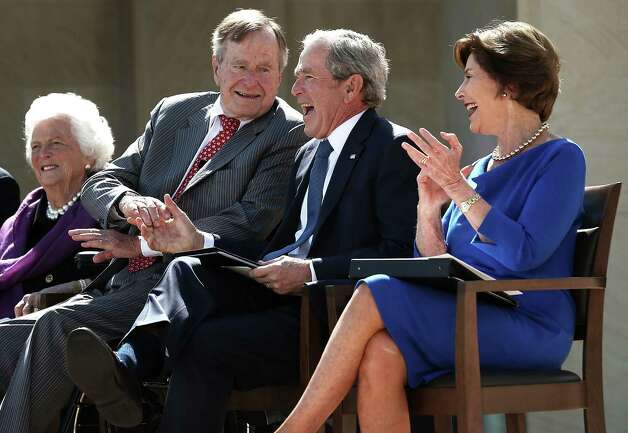
I’ve been reading and been disappointed by corporate mainstream daily newspapers for a long time, but it wasn’t until April 26, 2013 that the front page of a tabloid made me physically ill almost to the point of throwing up. On that day Gannett’s USA Today had on its cover a picture of George W. Bush having a good laugh with his daddy George H.W. Bush at the dedication of Bush The Younger’s presidential library and museum. The copy under the picture said, “Living presidents join to hail Bush."

What sickened me was the fact that the Bush Klan Kodak Moment was juxtaposed with a below the fold picture of Ronny “Tony” Porta, a 26 year old war veteran who suffered terrible trauma in Iraq. Headlined “Who’s going to love me now?” the story said “Tony Porta, disfigured in Iraq, has sustained additional wounds at home: stares, pointing, even mocking. For this Marine and many war vets like him, the battle never ends.” The editors somehow thought it appropriate to place Tony Porta’s severely scalded facial features in proximity to the chuckling Bush, yet never saw fit to communicate the fact that Porta’s plight, and the plight of thousands more soldiers and their families, exists as a direct result of the former president’s deceptions and the lapdog media that enabled them.

What is owed Tony Porta and the thousands of victims of the now more than 10 years’ worth of foreign policy death follies? Given that this July is the 150th anniversary of the Battle of Gettysburg, perhaps we could look to President Lincoln’s response to that event for advice.

Historians consider the July 1-3, 1863 Gettysburg campaign to be a turning point leading to a Union victory in the Civil War even though, according to the New York Times, there were more casualties “in the twenty two months of war after Gettysburg and Vicksburg than in the twenty seven months of war that preceded them.”  The Union Army suffered 23,055 casualties and losses at Gettysburg including 3,155 killed, 14,531 wounded, and 5,369 captured or missing. The Confederate number was 23,231 including 4,708 killed, 12,693 wounded, and 5,830 captured or missing.

President Lincoln in his famous November 19th  Gettysburg memorial address could have assured the war weary public that ultimate victory was near; he could have easily offered a 19th century equivalent of “Mission Accomplished.”  Instead, with stunning eloquence he needed just over 270 words to remind his hearers of the great principles underlying the battle:

Four score and seven years ago our fathers brought forth on this continent, a new nation, conceived in Liberty, and dedicated to the proposition that all men are created equal.

Now we are engaged in a great civil war, testing whether that nation, or any nation so conceived and so dedicated, can long endure. We are met on a great battle-field of that war. We have come to dedicate a portion of that field, as a final resting place for those who here gave their lives that that nation might live. It is altogether fitting and proper that we should do this.

But, in a larger sense, we can not dedicate -- we can not consecrate -- we can not hallow -- this ground. The brave men, living and dead, who struggled here, have consecrated it, far above our poor power to add or detract. The world will little note, nor long remember what we say here, but it can never forget what they did here. It is for us the living, rather, to be dedicated here to the unfinished work which they who fought here have thus far so nobly advanced. It is rather for us to be here dedicated to the great task remaining before us -- that from these honored dead we take increased devotion to that cause for which they gave the last full measure of devotion -- that we here highly resolve that these dead shall not have died in vain -- that this nation, under God, shall have a new birth of freedom -- and that government of the people, by the people, for the people, shall not perish from the earth.

Anyone attempting to compose a Gettysburg Address for our contemporary killed and maimed warriors must come to grips with the fact both Afghanistan and Iraq were wars of choice commandeered by administrations involved not in Lincolnesque quests to preserve the Constitution, but in Nixonian crusades to subvert it. Think warrantless wiretapping, torture, extraordinary rendition, expanded drone wars, the virtual criminalizing of investigative journalism, forced feeding of hunger strikers at Guantanamo, the rubber stamp FISA court, and additional abuses associated with the post 9/11National Security/Surveillance State.

Given that context, what do we owe Tony Porta and the war dead? What does it mean today to resolve that they shall not have died in vain? The short answer is this: when soldiers are sent to war by leaders who are themselves at war with the Constitution, our obligation is to take the side of those with the courage to reveal what government is doing in our name. Bradley Manning and Edward Snowden represent just two examples of honorable young men who get the message of Gettysburg in ways the chuckling Bush never could or will. Support them.

Thursday, June 06, 2013

Media COINTELPRO

Media Rants 

Media COINTELPRO
The J. Edgar Hoover era FBI Counter Intelligence Program (aka “COINTELPRO”), initiated in 1956 and allegedly ended in 1971, tried with much success to “expose, disrupt, misdirect, discredit, or otherwise neutralize" domestic political movements. COINTELPRO harassed mostly left leaning grassroots activists and prominent leaders like Martin Luther King, Jr. (former FBI Domestic Intelligence Director William Sullivan said the Bureau had a “no holds barred” policy towards King when it came to methods of neutralization.). Tactics included surveillance, infiltration of organizations, “dirty tricks” designed to intimidate, and even assassination. In 1975 Senator Frank Church’s Oversight Committee exposed COINTELPRO style abuses throughout the US intelligence apparatus. The Bureau on its own website minimizes the Gestapo like nature of COINTELPRO and admits only that the program was “rightfully criticized by Congress and the American people for abridging first amendment rights and for other reasons.”  
Since the 1970s a range of activists have insisted that COINTELPRO never ended; in May the FBI’s naming of  Assata Shakur (formerly Joanne Chesimard) as a “domestic terrorist” and the first female “Most Wanted Terrorist” lends credence to those activists’ charges. Shakur’s attorney Lennox Hinds told the New York Times that “The attempt at this point by the New Jersey State Police to characterize her as a terrorist is designed to inflame the public who may be unfamiliar with the facts.”
What are the facts? In the 1960s Shakur joined the Black Panther Party and later the more revolutionary Black Liberation Army. From 1973-1976 the government failed to convict Shakur on a range of charges from kidnapping to bank robbery while holding her under torturous prison conditions. In 1977 an all-white jury found her guilty of the murder of New Jersey State Trooper Werner Foerster in a May, 1973 New Jersey Turnpike shootout. The verdict occurred despite the fact that Sundiata Acoli (formerly Clark Squire) had already been convicted of firing the shots that killed Foerster, and in spite of there being no forensic evidence tying Shakur to the murder. In 1979 she escaped from prison with the help of BLA allies and eventually fled to Cuba where she was granted political asylum. Her autobiography Assata is widely read in African-American Studies and other university programs. In Hip Hop culture she’s attained almost mythical status as a heroic freedom fighter. (She is the late Tupac Shakur’s step aunt.). 

Sixties radical Angela Davis, herself no stranger to COINTELPRO persecution, opined on Amy Goodman’s Democracy Now! program that the FBI’s placement of Shakur on the Most Wanted Terrorist list itself reflects the “logic of terrorism” because it is “designed to frighten young people, especially today, who would be involved in the kind of radical activism that might lead to change.”
Evidence for Davis’ position can be found in the fact that FBI’s renewed focus on Shakur occurred not long after the hip artist Common (born Lonnie Rashid Lynn, Jr.) released “Open Letter Part II,” a rap that remixed Jay Z’s “Open Letter.” In his recording, Jay Z defends his recent trip to Cuba with lyrics that present a scathing critique of political hypocrisy. Common, who’d already gained notoriety in establishment circles for his year 2000 “A Song For Assata,” reworked “Open Letter” to say this: 
My man went to Cuba
Caught in a political triangle, Bermuda
The same way they said she was the shooter
Assata Shakur, they tried to execute her
I went to Cuba to see her
We should free her, like we should Mumia 
  
Assata Shakur in 1998 composed her own open letter, to Pope John Paul II during his visit to Cuba. American politicians at the time were calling on the Pope to demand the Cuban government extradite Shakur to the United States. She wrote to the Pope:
“I advocate self-determination for my people and for all oppressed inside the United States. I advocate an end to capitalist exploitation, the abolition of racist policies, the eradication of sexism, and the elimination of political repression. If that is a crime, then I am totally guilty.” 
 
For those sensing the continued existence of COINTELPRO, it is Shakur’s message more than the events of May, 1973 that make her a terrorist. In announcing Shakur’s terrorist designation, FBI special agent Aaron Ford explicitly argued that her message was central to the Bureau’s interest: “Openly and freely in Cuba . . . She provides anti-U.S. government speeches espousing the Black Liberation Army message of revolution and terrorism.” 

Youth tempted by Common and others to see her as a freedom fighter now have to contend with the possibility that merely espousing what the Bureau may construe as Shakurian views could land them in a bureaucrat’s file or something worse. That IS frightening.

What is the mainstream media’s role in all of this? Virtually all of the reporting on the FBI’s Shakur initiative, in print and especially on television,  minimized or flat out ignored the COINTELPRO context that has to be part of any story dealing with African-American rebels. The Associated Press, which recently and rightly protested in harsh terms the government’s seizure of APjournalists’ phone records (a COINTELPRO style repression) in the name of “national security,”  curiously did noteven mention the history of FBI abuses in its reporting on Shakur.

American journalists should consider that silence on COINTELPRO is consent to it.

Tuesday, April 30, 2013

Challenge Common Sense

Challenge Common Sense


Media Rants by Tony Palmeri  

from the May, 2013 edition of the SCENE  

Ask your real or digital friends to comment on what’s wrong with public argument these days, and they will usually say something like “a lack of civility.”  People should be nicer to one another, but compared to historical norms we’re not near as bad as establishment media sources insist. In the 19th century abolitionists like Elijah Lovejoy and feminists like Angelina Grimke spoke under constant threat of mob violence, and were sometimes killed, just for having the audacity to advocate for equality and justice. 

That’s a kind of civility breakdown most of us thankfully will never experience. 

Today what ails our democracy is not lack of civil argument, but lack of argument, period. When asked to defend positions on public issues, everyone from powerful public officials in Washington to the chatty neighbor down the block too often respond by assuring us their take is just “common sense.” Meditate on this for a moment: if the person you’re mingling with is speaking “common sense” yet you don’t agree with her, then that must make you a moron, right? 

Wrong. What’s moronic is the refusal to think critically about an issue while hiding behind the shield of “common sense” to mask that intellectual laziness. 

Hiding behind the common sense shield occurs on all sides of the political spectrum. Consider Wisconsin Senator Ron Johnson, who calls the attempt to expand health coverage to 30 million uninsured people (i.e. Obamacare) the "greatest assault on freedom in our lifetime.”  When queried about what he would put in its place he says, “common sense market-based reforms that work.” RoJo the Freedom Defender is not moved by the fact that “common sense market-based reforms” of the financial sector led to the worst economic crash since the 1930s. But hey, common sense tells him that health care is different. On the budget, Johnson hopes that his new colleague Tammy Baldwin (double major in math and governmentin college) can understand the “ugly math” and work with him to find “common sense solutions.”

For his part, President Obama now labels virtually every proposal crawling out of the White House as “common sense reform.” On gun control, he angrily agrees with the New York Times that “gun advocates have stymied common sense efforts to reduce violence.”  His immigration reform proposals include “common sense steps that the majority of Americans support.” On the budget, Obama calls a group of Republicans and Democrats who share his approach to fiscal matters a “caucus of common sense.” The Prez never wanted to be the Socialist tyrant imagined by his opponents, but he does crave the title of King of Common Sense. 

When prominent or everyday people ask you to accept a “common sense” proposal, they are NOT telling you that proposal was arrived at through rigorous analysis of data, is supported by reliable studies, and can withstand serious scrutiny. “This is just common sense” instead typically means one of three things: 

1: “In my experience this is true.”  On health care, the market works just fine for Ron Johnson, as it does for most in the high income bracket. So therefore the market must work for everyone. When policy makers fail to walk in others’ shoes, they powerfully limit their ability to arrive at meaningful solutions to problems. 

2: “I really, really want this to be true.” Even though President Obama’s gun control proposals are extremely mild compared to other democracies, and even though none of them would actually reduce the excessive number of guns in the country, he really, really wants to believe the proposals will prevent another massacre of innocents. Australia had 13 mass shootings from 1978-1996, and then decided to remove 700,000 guns from circulation while banning the sale, importation, and possession of semiautomatic rifles and instituting mandatory gun registration.  That’s called a serious gun control plan. 
 
There have been no mass shootings in Australia since 1996, but here in the States policy makers really, really want to believe that “common sense” reforms like an expanded background check will do the trick. Is an extended background check better than nothing? Sure, but if and when such legislation passes the best Congress the gun lobby can buy let’s not delude ourselves into thinking we did something courageous or likely to make a dent in the horrific homicide numbers. 

3: People I admire believe this is true.” All of us at times parrot back jive we hear on talk radio, cable television, print media, the Internet, or persuasive people in our immediate environment. Almost everything out of Senator Johnson’s mouth sounds like it came from the Wall St. Journal editorial page, while few politicians today seem able to escape from the mental grip of the talking points provided them by their favorite partisan “think” tank. 

Privileging our personal experience, desiring things to be true even when evidence suggests otherwise, and uncritically adopting the views of others does not make us evil. These problems with “common sense” ways of approaching the world make us human. 

The good news is we don’t have to be passive victims of common sense appeals. All we need to do is keep asking critical questions, be mature enough to change our minds when the evidence suggests we should, and resist all the pressures urging us to be intellectually lazy.