Friday, July 05, 2013

Media Rants: Gettysburg’s Lesson For Today

Media Rants

Gettysburg’s Lesson For Today
By TonyPalmeri


I’ve been reading and been disappointed by corporate mainstream daily newspapers for a long time, but it wasn’t until April 26, 2013 that the front page of a tabloid made me physically ill almost to the point of throwing up. On that day Gannett’s USA Today had on its cover a picture of George W. Bush having a good laugh with his daddy George H.W. Bush at the dedication of Bush The Younger’s presidential library and museum. The copy under the picture said, “Living presidents join to hail Bush."
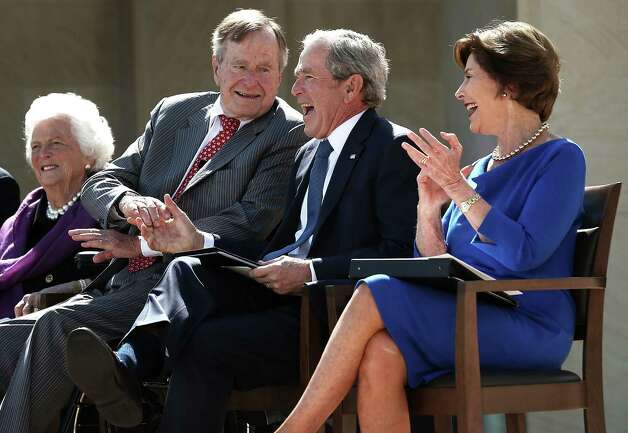
What sickened me was the fact that the Bush Klan Kodak Moment was juxtaposed with a below the fold picture of Ronny “Tony” Porta, a 26 year old war veteran who suffered terrible trauma in Iraq. Headlined “Who’s going to love me now?” the story said “Tony Porta, disfigured in Iraq, has sustained additional wounds at home: stares, pointing, even mocking. For this Marine and many war vets like him, the battle never ends.” The editors somehow thought it appropriate to place Tony Porta’s severely scalded facial features in proximity to the chuckling Bush, yet never saw fit to communicate the fact that Porta’s plight, and the plight of thousands more soldiers and their families, exists as a direct result of the former president’s deceptions and the lapdog media that enabled them.

What is owed Tony Porta and the thousands of victims of the now more than 10 years’ worth of foreign policy death follies? Given that this July is the 150th anniversary of the Battle of Gettysburg, perhaps we could look to President Lincoln’s response to that event for advice.

Historians consider the July 1-3, 1863 Gettysburg campaign to be a turning point leading to a Union victory in the Civil War even though, according to the New York Times, there were more casualties “in the twenty two months of war after Gettysburg and Vicksburg than in the twenty seven months of war that preceded them.”  The Union Army suffered 23,055 casualties and losses at Gettysburg including 3,155 killed, 14,531 wounded, and 5,369 captured or missing. The Confederate number was 23,231 including 4,708 killed, 12,693 wounded, and 5,830 captured or missing.

President Lincoln in his famous November 19th  Gettysburg memorial address could have assured the war weary public that ultimate victory was near; he could have easily offered a 19th century equivalent of “Mission Accomplished.”  Instead, with stunning eloquence he needed just over 270 words to remind his hearers of the great principles underlying the battle:

Four score and seven years ago our fathers brought forth on this continent, a new nation, conceived in Liberty, and dedicated to the proposition that all men are created equal.

Now we are engaged in a great civil war, testing whether that nation, or any nation so conceived and so dedicated, can long endure. We are met on a great battle-field of that war. We have come to dedicate a portion of that field, as a final resting place for those who here gave their lives that that nation might live. It is altogether fitting and proper that we should do this.

But, in a larger sense, we can not dedicate -- we can not consecrate -- we can not hallow -- this ground. The brave men, living and dead, who struggled here, have consecrated it, far above our poor power to add or detract. The world will little note, nor long remember what we say here, but it can never forget what they did here. It is for us the living, rather, to be dedicated here to the unfinished work which they who fought here have thus far so nobly advanced. It is rather for us to be here dedicated to the great task remaining before us -- that from these honored dead we take increased devotion to that cause for which they gave the last full measure of devotion -- that we here highly resolve that these dead shall not have died in vain -- that this nation, under God, shall have a new birth of freedom -- and that government of the people, by the people, for the people, shall not perish from the earth.

Anyone attempting to compose a Gettysburg Address for our contemporary killed and maimed warriors must come to grips with the fact both Afghanistan and Iraq were wars of choice commandeered by administrations involved not in Lincolnesque quests to preserve the Constitution, but in Nixonian crusades to subvert it. Think warrantless wiretapping, torture, extraordinary rendition, expanded drone wars, the virtual criminalizing of investigative journalism, forced feeding of hunger strikers at Guantanamo, the rubber stamp FISA court, and additional abuses associated with the post 9/11National Security/Surveillance State.

Given that context, what do we owe Tony Porta and the war dead? What does it mean today to resolve that they shall not have died in vain? The short answer is this: when soldiers are sent to war by leaders who are themselves at war with the Constitution, our obligation is to take the side of those with the courage to reveal what government is doing in our name. Bradley Manning and Edward Snowden represent just two examples of honorable young men who get the message of Gettysburg in ways the chuckling Bush never could or will. Support them.

Thursday, June 06, 2013

Media COINTELPRO

Media Rants 

Media COINTELPRO
The J. Edgar Hoover era FBI Counter Intelligence Program (aka “COINTELPRO”), initiated in 1956 and allegedly ended in 1971, tried with much success to “expose, disrupt, misdirect, discredit, or otherwise neutralize" domestic political movements. COINTELPRO harassed mostly left leaning grassroots activists and prominent leaders like Martin Luther King, Jr. (former FBI Domestic Intelligence Director William Sullivan said the Bureau had a “no holds barred” policy towards King when it came to methods of neutralization.). Tactics included surveillance, infiltration of organizations, “dirty tricks” designed to intimidate, and even assassination. In 1975 Senator Frank Church’s Oversight Committee exposed COINTELPRO style abuses throughout the US intelligence apparatus. The Bureau on its own website minimizes the Gestapo like nature of COINTELPRO and admits only that the program was “rightfully criticized by Congress and the American people for abridging first amendment rights and for other reasons.”  
Since the 1970s a range of activists have insisted that COINTELPRO never ended; in May the FBI’s naming of  Assata Shakur (formerly Joanne Chesimard) as a “domestic terrorist” and the first female “Most Wanted Terrorist” lends credence to those activists’ charges. Shakur’s attorney Lennox Hinds told the New York Times that “The attempt at this point by the New Jersey State Police to characterize her as a terrorist is designed to inflame the public who may be unfamiliar with the facts.”
What are the facts? In the 1960s Shakur joined the Black Panther Party and later the more revolutionary Black Liberation Army. From 1973-1976 the government failed to convict Shakur on a range of charges from kidnapping to bank robbery while holding her under torturous prison conditions. In 1977 an all-white jury found her guilty of the murder of New Jersey State Trooper Werner Foerster in a May, 1973 New Jersey Turnpike shootout. The verdict occurred despite the fact that Sundiata Acoli (formerly Clark Squire) had already been convicted of firing the shots that killed Foerster, and in spite of there being no forensic evidence tying Shakur to the murder. In 1979 she escaped from prison with the help of BLA allies and eventually fled to Cuba where she was granted political asylum. Her autobiography Assata is widely read in African-American Studies and other university programs. In Hip Hop culture she’s attained almost mythical status as a heroic freedom fighter. (She is the late Tupac Shakur’s step aunt.). 

Sixties radical Angela Davis, herself no stranger to COINTELPRO persecution, opined on Amy Goodman’s Democracy Now! program that the FBI’s placement of Shakur on the Most Wanted Terrorist list itself reflects the “logic of terrorism” because it is “designed to frighten young people, especially today, who would be involved in the kind of radical activism that might lead to change.”
Evidence for Davis’ position can be found in the fact that FBI’s renewed focus on Shakur occurred not long after the hip artist Common (born Lonnie Rashid Lynn, Jr.) released “Open Letter Part II,” a rap that remixed Jay Z’s “Open Letter.” In his recording, Jay Z defends his recent trip to Cuba with lyrics that present a scathing critique of political hypocrisy. Common, who’d already gained notoriety in establishment circles for his year 2000 “A Song For Assata,” reworked “Open Letter” to say this: 
My man went to Cuba
Caught in a political triangle, Bermuda
The same way they said she was the shooter
Assata Shakur, they tried to execute her
I went to Cuba to see her
We should free her, like we should Mumia 
  
Assata Shakur in 1998 composed her own open letter, to Pope John Paul II during his visit to Cuba. American politicians at the time were calling on the Pope to demand the Cuban government extradite Shakur to the United States. She wrote to the Pope:
“I advocate self-determination for my people and for all oppressed inside the United States. I advocate an end to capitalist exploitation, the abolition of racist policies, the eradication of sexism, and the elimination of political repression. If that is a crime, then I am totally guilty.” 
 
For those sensing the continued existence of COINTELPRO, it is Shakur’s message more than the events of May, 1973 that make her a terrorist. In announcing Shakur’s terrorist designation, FBI special agent Aaron Ford explicitly argued that her message was central to the Bureau’s interest: “Openly and freely in Cuba . . . She provides anti-U.S. government speeches espousing the Black Liberation Army message of revolution and terrorism.” 

Youth tempted by Common and others to see her as a freedom fighter now have to contend with the possibility that merely espousing what the Bureau may construe as Shakurian views could land them in a bureaucrat’s file or something worse. That IS frightening.

What is the mainstream media’s role in all of this? Virtually all of the reporting on the FBI’s Shakur initiative, in print and especially on television,  minimized or flat out ignored the COINTELPRO context that has to be part of any story dealing with African-American rebels. The Associated Press, which recently and rightly protested in harsh terms the government’s seizure of APjournalists’ phone records (a COINTELPRO style repression) in the name of “national security,”  curiously did noteven mention the history of FBI abuses in its reporting on Shakur.

American journalists should consider that silence on COINTELPRO is consent to it.

Tuesday, April 30, 2013

Challenge Common Sense

Challenge Common Sense


Media Rants by Tony Palmeri  

from the May, 2013 edition of the SCENE  

Ask your real or digital friends to comment on what’s wrong with public argument these days, and they will usually say something like “a lack of civility.”  People should be nicer to one another, but compared to historical norms we’re not near as bad as establishment media sources insist. In the 19th century abolitionists like Elijah Lovejoy and feminists like Angelina Grimke spoke under constant threat of mob violence, and were sometimes killed, just for having the audacity to advocate for equality and justice. 

That’s a kind of civility breakdown most of us thankfully will never experience. 

Today what ails our democracy is not lack of civil argument, but lack of argument, period. When asked to defend positions on public issues, everyone from powerful public officials in Washington to the chatty neighbor down the block too often respond by assuring us their take is just “common sense.” Meditate on this for a moment: if the person you’re mingling with is speaking “common sense” yet you don’t agree with her, then that must make you a moron, right? 

Wrong. What’s moronic is the refusal to think critically about an issue while hiding behind the shield of “common sense” to mask that intellectual laziness. 

Hiding behind the common sense shield occurs on all sides of the political spectrum. Consider Wisconsin Senator Ron Johnson, who calls the attempt to expand health coverage to 30 million uninsured people (i.e. Obamacare) the "greatest assault on freedom in our lifetime.”  When queried about what he would put in its place he says, “common sense market-based reforms that work.” RoJo the Freedom Defender is not moved by the fact that “common sense market-based reforms” of the financial sector led to the worst economic crash since the 1930s. But hey, common sense tells him that health care is different. On the budget, Johnson hopes that his new colleague Tammy Baldwin (double major in math and governmentin college) can understand the “ugly math” and work with him to find “common sense solutions.”

For his part, President Obama now labels virtually every proposal crawling out of the White House as “common sense reform.” On gun control, he angrily agrees with the New York Times that “gun advocates have stymied common sense efforts to reduce violence.”  His immigration reform proposals include “common sense steps that the majority of Americans support.” On the budget, Obama calls a group of Republicans and Democrats who share his approach to fiscal matters a “caucus of common sense.” The Prez never wanted to be the Socialist tyrant imagined by his opponents, but he does crave the title of King of Common Sense. 

When prominent or everyday people ask you to accept a “common sense” proposal, they are NOT telling you that proposal was arrived at through rigorous analysis of data, is supported by reliable studies, and can withstand serious scrutiny. “This is just common sense” instead typically means one of three things: 

1: “In my experience this is true.”  On health care, the market works just fine for Ron Johnson, as it does for most in the high income bracket. So therefore the market must work for everyone. When policy makers fail to walk in others’ shoes, they powerfully limit their ability to arrive at meaningful solutions to problems. 

2: “I really, really want this to be true.” Even though President Obama’s gun control proposals are extremely mild compared to other democracies, and even though none of them would actually reduce the excessive number of guns in the country, he really, really wants to believe the proposals will prevent another massacre of innocents. Australia had 13 mass shootings from 1978-1996, and then decided to remove 700,000 guns from circulation while banning the sale, importation, and possession of semiautomatic rifles and instituting mandatory gun registration.  That’s called a serious gun control plan. 
 
There have been no mass shootings in Australia since 1996, but here in the States policy makers really, really want to believe that “common sense” reforms like an expanded background check will do the trick. Is an extended background check better than nothing? Sure, but if and when such legislation passes the best Congress the gun lobby can buy let’s not delude ourselves into thinking we did something courageous or likely to make a dent in the horrific homicide numbers. 

3: People I admire believe this is true.” All of us at times parrot back jive we hear on talk radio, cable television, print media, the Internet, or persuasive people in our immediate environment. Almost everything out of Senator Johnson’s mouth sounds like it came from the Wall St. Journal editorial page, while few politicians today seem able to escape from the mental grip of the talking points provided them by their favorite partisan “think” tank. 

Privileging our personal experience, desiring things to be true even when evidence suggests otherwise, and uncritically adopting the views of others does not make us evil. These problems with “common sense” ways of approaching the world make us human. 

The good news is we don’t have to be passive victims of common sense appeals. All we need to do is keep asking critical questions, be mature enough to change our minds when the evidence suggests we should, and resist all the pressures urging us to be intellectually lazy.

Tuesday, April 02, 2013

Then They Came For Us


Then They Came For Us

Media Rants 


From The April 2013 edition of The SCENE

Few except the extreme right wing deny that the University of Wisconsin System contributes greatly to the cultural, economic, and civic life of the state. In this Walker Era toxic climate of hostility to the public sector, UW faculty and staff do not expect a “thank you” for their efforts. Still, university personnel and students are mystified by the recent rash of negative press, especially Gannett’s shallow scrutiny of what “we” pay for public higher education, the amount of money expended on overload payments, and even the grading patterns of profs. Similar “revelations” of academic privilege, bloat, laziness, and/or administrative incompetence can be found in the national media.

The end result of this style of reporting is to undermine the credibility of the professoriate and make it easier for establishment powers to marginalize, mock, and/or ignore academic critiques of contemporary American society and public policy. After all, who would trust the judgment of an overpaid grade inflator?

The targeting of the academy, especially public universities, at this time in our nation’s history is not an accident. And it is likely to get much worse.

Why? 

Because in 2013 tenured university faculty represent just about the last group of citizens empowered to express dissent against the USA’s ruling Iron Triangle of Big Business, Big Government, and Big Media. The fact that university faculty uphold existing power relations more often than challenge them does not matter to an Iron Triangle that wants to eliminate even the possibility of effective dissent.

Where else can dissent come from? Students? Saddled with debt. Labor unions? Beaten down and struggling for survival. Religious institutions? Too accommodating to power and scandal plagued. Political parties? Today nothing more than tools of the Iron Triangle. Occupy Wall St. and other social movements? Divided and lacking focus. Alternative media? Happy to preach to the choir.

Without meaning to engage in any kind of “blame the victim” game here, I would argue that the silencing of the universities is in large part the result of  tenured faculty, historically and today, displaying zero solidarity with social justice activists and movements. I am reminded of the famous quote attributed to German pastor Martin Niemoller:

First they came for the socialists, 
and I didn't speak out because I wasn't a socialist.

Then they came for the trade unionists, 
and I didn't speak out because I wasn't a trade unionist.

Then they came for the Jews, 
and I didn't speak out because I wasn't a Jew.
Then they came for me,
and there was no one left to speak for me.

All of us can name individual professors who have spoken out courageously for a variety of causes. But those individuals are, sadly, rare exceptions to the rule of “see no evil, hear no evil.” Professor Noam Chomskylong ago articulated a vision of what the rule ought to be:

“Intellectuals are in a position to expose the lies of governments, to analyze actions according to their causes and motives and often hidden intentions. In the Western world, at least, they have the power that comes from political liberty, from access to information and freedom of expression. For a privileged minority, Western democracy provides the leisure, the facilities, and the training to seek the truth lying hidden behind the veil of distortion and misrepresentation, ideology and class interest, through which the events of current history are presented to us.”

Ten years ago, in a speech that in part lamented the decline of political activism among the Wisconsin professoriate, former State Superintendent of Education Bert Grover channeled Chomsky: "Who in the university is lending the institution's wisdom, judgment, intuitive response and resources to talk about campaign finance reform? Who in the university is talking about tax reform and the fact that 80 percent of the insurance companies in the state do not pay taxes? We subsidize our corporations in this state to the tune of $2.7 billion a year. Who at the university is saying that?" Were Grover to give the speech today, he’d still have trouble coming up with more than a handful of names. And remember, the exceptions prove the rule.

Modern universities are supposedly rooted in Enlightenment Era values of free inquiry in the search for Truth, resistance to all forms of tyranny, and minimizing abuses of power via systems of checks and balances. Since 9/11 we’ve had a government at war with those values, from Mr. Bush’s sanctioning of torture to Mr. Obama’s global assassination campaign. The academy’s silence on these matters is deafening.

Today we find champions of Enlightenment values in prison or dead. Think WikiLeaks’ Julian Assange, an enemy of Western governments because he dared expose their mountains of lies and hypocrisy. Think Private BradleyManning, tortured and facing life in prison for revealing to Americans the horrors being done in their name. Think the late Aaron Swartz, an Internet activist driven to suicide by a government that goes after anti secrecy advocates with a fervor and zealotry not seen when it comes to Wall Street crooks, corrupt bankers, and other economy wreckers.

It would be nice for citizens at the grassroots level to defend the Academy against media cheap shots. But why would citizens speak out for the Academy if academics do not speak out for them?

Saturday, March 02, 2013

Mainstream News Media Madrassas


Mainstream News Media Madrassas

Media Rants

by Tony Palmeri 

from the March 2013 issue of The SCENE

Last month former Los Angeles police officer and ex-Navy reservist Chris Dorner went on a shooting rampage that left four people dead. On the run outside LA, Dorner died from a gunshot self-inflicted after tactical police set fire to the cabin in which he hid. Police claims of the fire being accidental were contradicted by audio recordings of authorities sounding like a frenetic force in Waco mode.
At the rampage’s outset, Dorner on his Facebook page released a lengthy manifesto explaining his actions. Mainstream news media mostly brushed off Dorner’s declarations as nothing more than the wild words of just another wacked out malcontent with easy access to weapons.

But a sober reading of Dorner’s manifesto reveals not crazed rantings as much as what for him appears to be cold logic. He claims insider knowledge of continuing racism within an LAPD “not changed since the Rampart and Rodney King days,” describes in vivid detail his own whistleblowing activities that led to his dismissal, believes the courts provided no redress for his grievances, and rationalizes his reign of retribution as a “last resort” that will force a reexamination of his case and thus clear his name. He seeks revenge against all LAPD personnel who uphold the system as well as their families. (Indeed, the weapons retrieved after Dorner’s death included a Remington Model 700 rifle with the word “vengeance” inscribed above the butt.).

My question is this: where did Dorner get the idea that seeking vengeance against those who have committed real or imagined grievances against us is morally acceptable? Where did he get the idea that violent retribution is justifiable as a “last resort” against perceived enemies?


Of course there are no easy answers, but I think Dorner’s manifesto provides some unintentional clues. He appears to have been a heavy consumer of mainstream TV news media. We know this from the sheer number of TV journalists he mentions, as well as his keen awareness of current events. What effects might heavy mainstream news watching have on a young man who feels he was “terminated for telling the truth,” describes himself as “severely depressed,” and says the military reinforced the “honor, courage, and commitment”  that was already “in my DNA”?

After 9/11 mainstream media pundits across the political spectrum explained to us with all their glib words of pseudo wisdom how terrorism was in part the result of young, angry, proud Muslim males being indoctrinated in religious schools called madrassas. In such schools, we were told repeatedly, angry young Muslims learn how to channel their frustrations into hatred for America. Instead of learning knowledge and skills that might move the Muslim world into the new millennium, the bitter young man is taught to wax nostalgic about the lost Golden Age of Islam and wage “jihad” against the evil West.  
By the mid-2000s Peter Bergen and other journalists had exposed the “Myth of the Madrassas,” but Fox News and other right wing outlets to this day continue to trot out the debunked story that the young Barack Obama attended an anti-West madrassa in Indonesia.

Dorner, like millions of Americans, unwittingly attended a different kind of madrassa; in the United States it’s called “mainstream news.” Take a look at who Dorner claimed to admire:   Chris Matthews, Joe Scarborough, Pat Harvey, Brian Williams, Soledad Obrien, Wolf Blitzer, Meredith Viera, Tavis Smiley, and Anderson Cooper, keep up the great work and follow Cronkite’s lead. I hold many of you in the same regard as Tom Brokaw and the late Peter Jennings.” With the exception of Tavis Smiley (who of course is the most marginalized of the group), these journalists offer mostly uncritical support for the propositions that the United States is primarily a force for good in the world, and that in fighting an evil enemy like al Qaeda the best we as journalists can do is question the wisdom of the tactics a Bush or an Obama use to vanquish them.

In an important 2009 study, Journalism scholars Stephen Reese and Seth Lewis demonstrated convincingly that mainstream journalists had “internalized” the Bush Administration’s framing of the War on Terror: “In addition to simply repeating the preferred terminology of the President, journalists reified the policy, treating it as an uncontested ‘thing,’ and naturalized it, suggesting they accepted its use as a way of describing a prevailing condition of modern life.

Especially since 9/11, a heavy TV news consumer is fed a steady diet of a besieged, misunderstood America forced into war against a backward and evil enemy who knows no respect for human life or civilized values. The only dissent allowable for mainstream consumption is in the area of tactics: should Bush and Obama kill the bad guys with drones or with an invading army? Should Obama tell a panel of judges before he intends to kill an American citizen, or just kill him? Concerns with due process and international law, principles for which millions have died, become distant afterthoughts in the madrassa media drama while the Orwellian principle of “ignorance is strength” takes center stage.

We will never truly know what was in Chris Dorner’s mind as he set out on his deadly mission. Neither will we truly know what he learned from the madrassa media, but it sure wasn’t “love your enemies.”

Sunday, February 03, 2013

Censored in 2012

Censored in 2012 

Media Rants 

by Tony Palmeri 
from the February 2012 issue of The SCENE 

Since 1976 Project Censored has examined news stories "underreported, ignored, misrepresented, or censored in the United States.” Walter Cronkite once said that “Project Censored is one of the organizations that we should listen to, to be assured that our newspapers and our broadcasting outlets are practicing thorough and ethical journalism.” 

Censored2013 (Seven Stories Press) identifies signs of an emerging police state, oceans in peril, Fukishima nuclear disaster worse than expected, FBI agents responsible for majority of terrorist plots in the US, and First Federal Reserve audit reveals trillions loaned to major banks as the five most censored stories of 2012. We do have to give the national press credit keeping us all up to date on celebrity pregnancies, beating the fiscal cliff to death, and making “Gangnam Style” part of the international vocabulary (while minimizing the song’s subversive message).
 
Closer to home, establishment media now pretend a “local” approach to reporting and commentary that they say features rigorous investigative journalism. Paradoxically, establishment media consumers seem to know less about their local communities than ever before. The reason is that the “local” angle is often mindless cheerleading for pet commercial projects, feel good human interest stories, and shallow coverage of municipal and county government. We know even less about what’s going on statewide and nationally since the lite localism crowds out most everything else.

Given the above, if we take Project Censored’s approach to the news then just about every story worth caring about is censored around here. Below are a few of what were worthy of more and/or much better coverage in 2012.

Censoring Third Parties. Legitimate alternatives to Barack Obama and Mitt Romney could not get a fair hearing in the establishment press. Despite the media shutout, Gary Johnson received more votes than any prior Libertarian Party candidate. The Green Party’s Jill Stein received more votes than any female general election presidential candidate in history. Imagine what Johnson and Stein could have accomplished  with a more ethical media in place?


What“We” Pay. Gannett Wisconsin Media’s “hard hitting” investigative journalism includes publishing public employee salary data, some of which (e.g. UW System employees) is already available. No doubt wide release of such data is appropriate and necessary. But obtaining and releasing the data is the easy part; what’s difficult is ascertaining what the data mean. As UW Oshkosh Professor Paul Van Auken noted in a letter to the Oshkosh Northwestern, at least as regards UW salaries it’s problematic to talk about what “we” pay when taxpayers fund less than 20 percent of the budget. In other words the real stories, the censored stories, are (1) the excessive burdens now placed on students and their families to pay for higher education, and (2) the fact that the UW is almost at the point of no longer being able to call itself a “public” institution. 

Wisconsin’s Inequality Gap. The nonpartisan Center on Wisconsin Strategy’s “Wisconsin Budget Project”is exactly the kind of methodical, insightful analysis of budget data that the establishment media are now unwilling or not able to do. COWS analyzed Department of Revenue numbers revealing that between 1996 and 2010, the bottom 40 percent of income earners in the state saw their income drop by $2,407 while the richest 1 percent actually had their income rise by $168,773. How is that not a story worth telling over and over again until policy makers do something about it?

So Much From So Few. According to the Wisconsin DemocracyCampaign, just over 2% of our adult population makes campaign contributions in state elections. The fact that the number is 1% in many other states is no silver lining. As usual, WDC Executive Director Mike McCabe hit the nail on the head: “For many years, our nation's motto was E Pluribus Unum. Out of many, one. Now it's more like E Pauci Nimis. Out of a few, too much.”  On a side note, please go to this website today to find out how you can help WDC.
The Trial of Bradley Manning. I was raised during the Cold War, a time when American leaders in the political and press establishments repeatedly told us that the Soviet Union had to be defeated in part because of their intolerance toward dissenters and whistleblowers. Dissidents end up in the Gulag camps, we were told.  
The American media’s failure to give prominence to the principles at stake in the trial of Army private Bradley Manning, the soldier accused of releasing classified documents to the whistleblowing website WikiLeaks, is Soviet like in its cave in to state power. Indeed, the New York Times own public editor Margaret Sullivan found it bizarre that the “paper of record” did not even send a reporter to cover the first eight days of Manning’s pretrial hearing. Sullivan argues that the Times had an obligation to be there not just because the testimony exposed the terrible mistreatment of Manning in prison, but also because the documents released to WikiLeaks have provided the Times (and numerous other media sources) with tons of stories.

For readers wishing to keep track of stories marginalized and/or mangled by the mainstream media, I recommend: The International Consortium of Investigative Journalists (www.publicintegrity.org), Wisconsin Center For Investigative Journalism (www.wisconsinwatch.org), ProPublica (www.propublica.org), and World Public Opinion (www.worldpublicopinion.org), and DemocracyNow! (www.democracynow.org)