Sunday, July 31, 2011

Murdoch Media: The Sleeze Finally Hits The Fan

Murdoch Media: The Sleaze Finally Hits The Fan

Media Rants

By 

Tony Palmeri  

From the August 2011 edition of THE SCENE 

In 2007 Clive Goodman, a “journalist” for Britain’s sleazy celebrity gossip tabloid The News of the World (NotW), went to jail for illegally hacking into voice mails of the paper’s “persons of interest.”  For 4 years, NotW executives brushed off the hacking as the work of one rogue reporter. Owned by Australian born media mogul Rupert Murdoch’s News Corporation, NotW in 2010 averaged 2.8 million readers per week.   

Then last month, the sleeze finally hit the fan; Britain’s Guardian exposed the targeting of as many as 7,000 citizens for phone hacking. Targets included victims of terrorism. Most enraging was the discovery that NotW weasels hacked the voice messages of 13 year old murder victim Millie Dowler. Though NotW had been in circulation for 168 years, public revulsion at the Dowler fiasco led to Murdoch closing down the paper. As I write in mid-July the scandal has already resulted in the resignations of top level Murdoch executives Rebekah Brooks and Les Hinton as well as an array of journalists.  [August 2 update: The Guardian recently exposed NotW phone hacking related to another young murder victim.].

Possible phone message hacking of 9/11 victims, along with allegations of bribing police officers for sensitive information, resulted in United States Attorney General Eric Holder launching an investigation into the News Corporation’s activities on this side of the pond. Murdoch’s Wall Street Journal responded with an outrageous editorial attacking “politicians and our competitors” using the scandal to “perhaps injure press freedom in general.”
 
Rupert Murdoch is not the first and will not be the last ethically challenged, power obsessed corporate media executive. Yet with the possible exception of William Randolph Hearst, the famed publisher whose “yellow journalism” rags whipped the public into war frenzy and in the 1930s exposed millions of readers to pro-Nazi propaganda, Murdoch is the single most negative force in the history of western media. Since the 1980s, television and print productions associated with the Murdoch brand read like a murderer’s row of exploitation, titillation, free market cheerleading, and right wing proselytizing. In addition to NotW they include “A Current Affair,” The New York Post, The Wall Street Journal, the Fox News Network and many others. Often, as in the case of the New York Post and Wall Street Journal, Murdoch’s ownership transforms once respectable news sources into sensationalist muck (the Post) or a propaganda arm for Murdoch’s market ideology (the WSJ).

Legendary Washington Post Watergate reporter Carl Bernstein, long critical of the Murdoch empire, argues the hacking scandal will surprise “only those who have willfully blinded themselves to that empire’s pernicious influence on journalism in the English-speaking world. Too many of us have winked in amusement at the salaciousness without considering the larger corruption of journalism and politics promulgated by Murdoch Culture on both sides of the Atlantic.”  Not surprised is New York Times media columnist David Carr. His shocking July 17th piece examines the extent to which Murdoch’s empire uses its financial clout to silence critics. News America Marketing, News Corporation’s newspaper insert marketing business “has paid out about $655 million to make embarrassing charges of corporate espionage and anticompetitive behavior go away.”

According to Nation columnist John Nichols, Murdoch has “gamed American politics every bit as thoroughly as Britain’s.”  During a 2003 appearance before the House Judiciary Committee, Murdoch discovered that Republicans on the panel could not wait to kiss his ass. Nichols quotes Wisconsin Congressman James Sensenbrenner as telling Murdoch, “When my wife doesn’t get a good dose of Fox News every day she gets grumpy. So there are some of us who appreciate what you are doing.” Today, Congressional Republicans appear to be in no hurry to investigate Murdoch’s News Corporation. Why risk harming the “fair and balanced” Fox News network’s incessant spewing of GOP talking points? 

Given the above, it’s tempting to see Murdoch as the cause of the debasement of political discourse and journalism on both sides of the Atlantic. But that’s too simple; Murdoch more accurately is the most awful symptom of what happens when an unchallenged model of profit-driven media intersects with a weak media regulatory system. Here’s the equation: Unquestioned profit motive + weak regulations = Murdoch’s News Corporation. 

Media critic Marvin Kitman’s fine piece in the November 2010 Harper’s (“Murdoch Triumphant: How we could have stopped him twice”) lays out in crisp detail how the Federal Communications Commission (FCC) virtually suspended the Communication Act of 1934 in order to green light Murdoch’s growth plans. Kitman argues that the FCC, when it came to Murdoch, wasn’t a lap dog as much as a lap dancer. 

The FCC lap dance happened in the 80s and 90s. Murdoch bought 6 American television stations, but because the News Corporation was Australia based the FCC could have denied licenses on the grounds that the Communications Act does not allow foreign ownership of American stations. The FCC ruled in Murdoch’s favor, and did again when he sought to own a newspaper and television station in the same market. 

I learned from Ben Bagdikian’s classic The New Media Monopoly that Murdoch’s News Corporation even owns Zondervan, the largest producer of commercial Bibles in America. When conservative Christians buy a Zondervan Bible, do you think they know they are supporting a sultan of sleaze overseeing a morally challenged and quite possibly criminally corrupt empire? Not a prayer, I suspect.  

Friday, July 01, 2011

Media Rants: Thank You Commissioner Copps

Thank You Commissioner Copps 


Media Rants
By

Tony Palmeri

from the July 2011 edition of The SCENE

The Communications Act of 1934 created the Federal Communications Commission (FCC), an independent agency charged with ensuring media owners operate in the public interest. The FCC rarely meets that charge, in part because like other federal regulatory agencies it tends to be controlled and/or coopted by the entities it allegedly regulates. The FCC’s own Working Group on the Information Needs of Communities in a recent report admits as much: 

“Over the FCC’s 75-year existence, it has renewed more than 100,000 licenses. It has denied only four renewal applications due to the licensee’s failure to meet its public interest programming obligation. No license renewals have been denied on those grounds in the past 30 years. The current system operates neither as a free market nor as an effectively regulated one; and it does not achieve the public interest goals set out by Congress or the FCC.”  

The FCC is run by 5 commissioners appointed by the President of the United States and approved by the Senate. One commissioner is selected by the president to serve as chair. As noted by mediahistorian Bob McChesney, the FCC’s an industry friendly outfit surrounded by corporate CEOs, lawyers and lobbyists; over the years they’ve studiously avoided meaningful input from the public in whose interest they supposedly operate.  

In the FCC’s entire history three commissioners stand out for their commitment to the public interest. Newton Minow served as FCC chair from 1961 to 1963. His depiction of commercial television broadcasting as a “vast wasteland” inspired generations of educators and activists to advocate for higher media standards and media literacy as a mandatory part of the school curriculum.

Nicholas Johnson served from 1966 to 1973. Known for his dissent from business as usual at the FCC, Johnson in 1970 authored How to Talk Back to Your Television Set , a classic statement of the perils of corporate media ownership and a prescription for how to fight back.  

Commissioner Michael Copps will leave the FCC at the end of this year. Since 2001 he’s been the FCC’s most articulate and principled voice in favor of forceful defense of the public interest. In 2003, when then FCC chair Michael Powell led the ill-conceived charge to ease restrictions on media consolidation, Copps and commissioner Jonathan Adelstein held unprecedented public hearings in 13 cities. They sparked 3 million letters and mass protests. The Powell faction still had enough votes to loosen media ownership rules, but opponents successfully challenged them in court.  

With his typical clarity and force, Copps at the National Conference for Media Reform in April of this year sounded a clarion call for continued activism against media consolidation:  

“The big money crowd keeps telling us media consolidation has run its course.  Hmm, I wonder if Comcast and AT&T just didn’t get the memo? Don’t believe it for a second; the binge continues. And it’s even more dangerous because they’re now after new media, too, broadband and the Internet, which we all hoped would be the bulwark against more consolidation in radio, television and cable. So now it’s visions of gated Internet communities that dance in their heads.  And to keep reformers at bay, they’ve come up with the rallying cry of ‘Don’t regulate the Internet.’  What they really mean, of course, is ‘Don’t let anyone but us control the Internet.’  So regardless of whether it’s a traditional or new media context, the real question remains the same: will we allow a few huge companies to control consumers’ access to information?  Well, without vastly increased public outcry, the answer is clearly ‘yes, we will.’ 

Let me ask: Is there anyone here who wants a consolidated, cable-ized Internet controlled by a few corporate gatekeepers?  

Is there anyone here who believes new media should suffer the same sad fate that decimated big radio, television and cable?


Is there anyone here who believes our civic dialogue, that precious and essential conversation we have with ourselves to keep democracy alive, can survive any more of this reckless folly? 

Challenging the aforementioned recent FCC Working Group report assertion that American news media is mostly vibrant, Copps says, “Where is the vibrancy when hundreds of newsrooms have been decimated and tens of thousands of reporters are walking the street in search of a job instead of working the beat in search of a story?” Copps has called for at least 3 public hearings on the Working Group Report; as I write this in mid June none have been scheduled.  

Copps argues that media reform is not likely absent the creation of a sense of urgency. As he told the New America Foundation: “Knowing that our news and information system is not, right now, supplying the depth and breadth of information a functioning democracy requires for informed decision making, we must push hard for action.  We need to be really engaged on this. . . This is no time to be timid.  There is no need to be deflected or defensive or scared off by those whose vested interests, economic and political, argue against any and all public interest oversight.”  

Michael Copps is originally from Milwaukee.  Like every Badger should be, he is informed by a “Forward” mindset. If we had 5 Copps on the FCC, we’d have a more robust, accountable media.
Tony Palmeri (tony@tonypalmeri.com) is a professor of communication studies at UW Oshkosh.

Wednesday, June 29, 2011

So Much For The Kagan Rationale

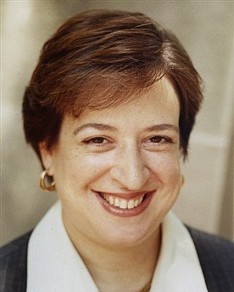
When President Obama nominated Elena Kagan to replace John Paul Stevens on the Supreme Court, the major rationale offered was that Kagan would be a "consensus builder" able to sway conservative justices (especially Anthony Kennedy) in a progressive or at least moderate direction.

Now that Kagan's first term on the Court is over, it's a good time to assess how that rationale is playing out. Today's Washington Post includes a graphic indicating what percentage of time each justice agreed with the others. Let's look at what percentage of the time each conservative justice agreed with Kagan:

*Roberts: Agreed with Kagan 69% of the time.
*Alito: Agreed with Kagan 67% of the time.
*Thomas: Agreed with Kagan 65% of the time.
*Scalia: Agreed with Kagan 69% of the time.
*Kennedy: Agreed with Kagan 71% of the time.

Contrast those figures with the amount of time each of the liberal justices agreed with Kagan:
*Ginsburg: Agreed with Kagan 90% of the time.
*Breyer: Agreed with Kagan 88% of the time.
*Sotomayor: Agreed with Kagan 94% of the time.

What these numbers suggest is that Kagan, at least at this early point in her tenure, is a reliable liberal vote on the Court. There's very little evidence to suggest that, so far at least,  she holds sway with any of the conservative justices in any meaningful sense.

The crucial case testing Kagan's consensus building abilities was the recent one that gutted Arizona's public campaign finance law. Two elements of that case should be troubling for those hoping that Kagan will be the Court's consensus builder.

First, the 5 conservatives took a very, to put it charitably, "novel" approach to the First Amendment in holding that using public money to "level the playing field" in political campaigns; i.e. guaranteeing MORE SPEECH in the campaign, somehow places a "burden" on a privately financed candidate. If Kagan could not persuade a "moderate" like Justice Kennedy to see the fallacy in that kind of reasoning, it does not bode well for other cases that will come before the Court.

Second, in Kagan's career before her appointment to the Court she was somewhat of a First Amendment scholar. That she could not move ONE of the conservative justices in an area that is her expertise seems to suggest it's highly unlikely she will be able to do it in other areas.

During the Kagan confirmation period, Salon's Glenn Greenwald argued forcefully that if Obama was looking for a consensus builder who could sway conservatives, Diane Wood would be an excellent choice:

"Wood's ability to craft legal opinions to induce conservative judges to join her opinions is renowned, as is the respect she commands from them through unparalleled diligence and force of intellect."

In short, the results of her first term indicate that Elena Kagan will be a reliable liberal vote on the Supreme Court. Unfortunately, she was sold to the Congress and the American public as being able to do more than that. It's early and the jury is still out of course, but so far we have little evidence that Justice Kennedy is being moved by Kagan in any meaningful way.

Wednesday, June 01, 2011

Media Rants: On Heckling vs. Techling

On Hecklers vs. Techlers

Media Rants

By Tony Palmeri

Controversial public communicators on the Left and Right can always count on the presence of hecklers in the immediate audience. The World English Dictionary says that to heckle is “to interrupt (a public speaker, performer, etc.) by comments, questions, or taunts.”

For some social movements, heckling of political opponents is a prime political strategy. Peace Movement and Tea Party activists share little common ground, yet wreaking havoc at events via often hysterical heckling is a modus operandi of both. Since corporate media doesn’t commonly cover events absent some kind of caustic clash, who can blame activists for acting up?

Some minimize heckling as merely a blatant form of uncivil behavior. I think that’s too simplistic. Sincere hecklers view themselves as blowing the façade off of tightly controlled, propaganda driven events designed to showcase establishment speakers in the most favorable possible light. Almost all Tea Party heckling matches that pattern, as does the recent heckling at a San Francisco fundraiser of Barack Obama by supporters of the President upset with the Administration’s treatment of Private Bradley Manning, the soldier accused of aiding Wikileaks.

Sometimes heckling is quiet and clever. When Scott Walker tried to score public relations points at the annual Governor’s Fishing Opener on Lake Wissota, he was met by boaters carrying signs protesting his assaults on worker rights. News coverage mentioned the actions and message of the protesters, effectively blowing the Governor’s portrayal of himself as an “average guy gone fishin’” out of the water.

Whether one views heckling as a legitimate part of democratic participation or as an obnoxious invasion of peaceful events, its effects pale in comparison to disruptions made possible by digital technology. Modern public communicators need not fear heckling as much as “techling.”

I define techling as the secretive use of digital recording technology to produce “gotcha” moments for partisan political purposes. The “techler” usually hides his true identity from the target, edits recordings to showcase the target in the worst possible light, then feeds the recording(s) to a corporate media all too ready to consume. The end result is the discrediting and sometimes total destruction of an organization or person.

Right wing provocateur James O’Keefe is the crown prince of techling, using deceptive communication practices to undermine the credibility of a variety of left leaning outfits. O’Keefe’s greatest “success” was sparking a media feeding frenzy that led to the dismantling of the Association of Community Organizations for Reform Now (ACORN), an advocacy organization for persons of low and moderate income. O’Keefe and a female friend posed as pimp and prostitute, and secretly videotaped ACORN employees giving advice on how to break tax and other laws. The videos were fed to right wing media and played endlessly, picked up by the mainstream press, and led to the suspension of federal funding for the organization along with the loss of much private funding. Though full investigations in multiple states found no wrongdoing, the organization dissolved in 2010 because, as stated on the group’s website, “vindication doesn’t pay the bills.”

A local example of techling involves the case of UW Oshkosh Criminal Justice Professor Stephen Richards. Last month Dr. Richards was chastised for encouraging students to sign a recall petition against Republican State Senator Randy Hopper. In the secret recording of the class period, Dr. Richards is heard making his views on the Budget Repair Bill crystal clear. Though the recording had been made available to Republican operatives several months earlier, the release came after enough signatures had been collected to move forward with the recall election and after former Oshkosh Deputy Mayor Jessica King announced that she would run for the seat.

Republicans anxious to shift the focus away from Hopper’s rubber stamping of the Governor’s Budget Repair Bill quickly called for Richards’ resignation. Richards will survive the techling, though the fate of provocative teaching is less clear. Back in the day, a teacher’s major concern when preparing a lecture was “will this material provoke my students to think?” In the age of techling, the question becomes, “how will this material sound on the Charlie Sykes show?”

The Richards Affair provides us with a case study in how techling and the techler differ from heckling and the heckler. Let’s summarize the differences:

The heckler wants to disrupt the speaker in real time. The techler studiously avoids disrupting the speaker in the hope that he will say something incriminating.

The heckler wants to call attention to him or herself and/or a message and tries to provoke the speaker to debate. The techler hides in the shadows, refrains from stating views and wants to avoid debate.

The heckler wants to rattle the speaker. The techler wants to destroy the speaker.

The heckler is usually an activist. After the heckling is done, she will usually talk to the press to offer clarification and expanded remarks. The techler is a tool; he funnels audiovisuals to an ideological outfit (e.g. Fox News, Breitbart) and lets the outfit do the talking.

In short, heckling is a consequence of democracy; an urge to challenge the establishment and add more views into the public arena. Techling appears to have more in common with Stalinism; an attempt to destroy political opponents and remove voices from the public arena by any means necessary.

Tony Palmeri (tony@tonypalmeri.com) is a Professor of Communication Studies at UW Oshkosh.
Copyright 2011 Tony Palmeri All rights reserved.

Monday, May 02, 2011

Media Rants: Inside Looking Out

Inside Looking Out

Media Rants

by Tony Palmeri

Shortly after moving to Oshkosh in 1989 to teach at the university, a student asked me to grade the local media’s reporting on local politics. I gave them an “F,” and explained that corporate newspaper, radio and television coverage of influential people featured shallow, incomplete and biased coverage favoring establishment interests.

Rather than bitch and whine, I followed a path punk rocker Jello Biafra later referred to as “Don’t hate the media, be the media.” Throughout the 1990s and 2000s I helped produce and host independent television and radio public affairs programs along with a blog and this column.

In 2007 the path took a detour when I was elected to the Oshkosh Common Council. For the first time I’d have the opportunity to evaluate media from an “insider” perspective. In April of this year I lost the election for the office of Oshkosh Mayor and decided not to run for another Council term, so I’m an “outsider” again.

But I want to reflect on those four insider years. Bob McChesney’s great 1999 book Rich Media, Poor Democracy argued that in a Democracy, journalism has three major roles: accounting of people in power, diversity of opinion, and fact checking. From an insider’s perspective, what grade do I give the local mainstream media on each role?

Let’s start with the worst, television. In four years on the Council, the only stories that piqued the interest of TV news producers were those featuring nasty neighborhood conflicts, like controversies over deer culling or building a Muslim mosque. Modern TV “journalists” in smaller markets like the Fox Valley are usually charming and pleasant, but seem incapable of exploring anything in depth and appear to have zero interest in critical issues affecting the health of cities (e.g. budget intricacies, bureaucratic incompetence) that do not produce great visuals for the TV screen. Just awful.TV grades:

Accounting of People in Power: F
Diversity of Opinion: F
Fact Checking: F

Radio’s only marginally better. In many cities a locally originated talk radio call in program becomes a way for public officials to feel the pulse of the people, and also helps keeps them accountable. Charlie Sykes plays that role effectively on the Right in Milwaukee, and John “Sly” Sylvester does it well on the Left in Madison. Oshkosh has no local call in for politics, while syndicated call in programs tend to be nothing more than wingnut bloviation.

Commercial radio these days dedicates limited resources to local reporting. Consequently, listeners get little insight about local government actions. Bob Burnell’s “Morning News Focus” on WOSH occasionally challenges local officials to defend a position, and at least he does provide a discussion forum. But overall, radio’s mostly a non-entity when it comes to playing a meaningful role in building a healthy Democracy. What a waste of air. Radio grades:

Accountability of People in Power: F
Diversity of Opinion: D
Fact Checking: F

In Oshkosh, print media’s dominated by Gannett’s Oshkosh Northwestern. They have very little competition (the UW Oshkosh Advance-Titan, for example, did not cover the race for Oshkosh Mayor even though both candidates were campus professors!). That’s unfortunate because profit-driven print media have minimal motivation to pursue high standards of journalistic and editorial excellence when they are the only game in town.

The Northwestern does a decent job, in reporting and editorially, on open government issues. But other than that they exist essentially as establishment cheerleaders. Almost every thinking adult in Oshkosh senses the pull of a deeply entrenched old boy network in the way the city is managed and in the underperforming patterns of economic development, yet the press is just not willing or able to crack that nut with the rigor or persistence that could win them a Pulitzer Prize.

In my four years on the Council I never refused a request to talk to Northwestern journalists, and often had lengthy conversations with them in which I offered facts and opinions that ran counter to the establishment view of the issue at hand. Most of that would not make it into the paper, of course, due to what one reporter once communicated to me as a problem of “getting my vetters to accept this.” By “vetters,” he meant the old boys protecting the old boys. Surely not unique to Oshkosh, but not any less frustrating because of that. Newspaper grades:

Accountability of People in Power: D
Diversity of Opinion: C
Fact Checking: C

What about alternative media like blogs, public access television, and social media like Facebook and Twitter? At their best, newer media challenge business as usual while providing information and viewpoints the mainstream press can’t or won’t go near. At their worst, they are little more than hyper partisan forums for misinformation and (often anonymous) cheap shots.

There are too many alternatives to grade as a group, but for me the most valuable was and is Main Street Oshkosh (mainstreetoshkosh.com). That site kept me accountable during my elected official insider days NOT by insults or questioning my integrity, but by pushing me to become better informed.

From the inside looking out, mainstream journalism turned out to be as subpar as I thought it was from the outside looking in. Inside or out, I’ll keep doing my best to raise the media bar.

Monday, April 04, 2011

Media Rants: On Legacies; Ellis, Moore, and Us

Note: The Media Rant below was submitted to the SCENE before the controversy erupted involving UW Madison Professor William Cronon and the Wisconsin Republican Party's requests for his emails. Like Cronon's New York Times op-ed, mine makes use of a Joe McCarthy/Scott Walker analogy. I agree with Professor Cronon that "Scott Walker is not Joe McCarthy," though my piece argues that Mr. Walker has divided Wisconsin in ways that McCarthy could not have even dreamed. But I am less interested in Walker and McCarthy as much as how RESPONSES to divisive politicians build a legacy for the person(s) doing the responding. Read on for more.

On Legacies: Ellis, Moore, and Us

Media Rants

By Tony Palmeri

from the April 2011 edition of THE SCENE

America ain't broke! The only thing that's broke is the moral compass of the rulers
. Michael Moore in Madison, March 5th 2011

In office for barely several months, Governor Scott Walker’s already managed to divide our state in ways the late commie hunter Joe McCarthy could not. At least Tail Gunner Joe could be excused as a bumbling alcoholic or inevitable product of anti-Communist hysteria going on at all levels of the federal government in the 1950s. And when the cameras were off McCarthy befriended his political opponents; the New York Times reported recently that he would often have lunch with Milwaukee’s Socialist Mayor Frank Zeidler.

In contrast, Walker breaks bread with supporters or sycophants. He found 20 minutes for a phone chat with a person he believed to be billionaire Republican operative David Koch, yet could not find 20 seconds for any Democrat who could have helped resolve the impasse over the “Budget Repair” bill. The Washington Post’s Dana Milbank listened to the Koch call and heard in Walker an “unprincipled rigidity” that sees politics as tribal blood sport featuring a “never-ending cycle of revenge killings.”

One good thing about politicians like McCarthy and Walker is that they force people in a position to influence current events to show their true grit. Well known politicians, pundits, business leaders, educators, and others end up intentionally or unintentionally building an entire legacy around their response to the McCarthy or the Walker.

Republican Senator Margaret Chase Smith in 1950 stood up to McCarthy as she delivered her courageous “Declaration of Conscience.” She left a legacy of integrity, arguing that the Republican Party should never ”ride to political victory on the Four Horsemen of Calumny: Fear, Ignorance, Bigotry, and Smear.” (Someone needs to get that speech to Sarah Palin or Mike Huckabee, among others.).

Edward R. Murrow became an icon of American journalism as a result of his WW II radio broadcasts, but his 1954 defense of the right to dissent and denunciation of McCarthyite excesses solidified his legacy as a champion of free speech and free association. Of McCarthy, Murrow said that, “his primary achievement has been in confusing the public mind,” a statement that sounds eerily contemporary as we listen to Mr. Walker’s mantra that the reason the state is “broke” is because of public worker wages and benefits.

The controversy over the Governor’s curtailing of collective bargaining rights and balancing the budget on the backs of the middle class and poor represents a legacy producing moment. Democratic Senators left for Illinois to filibuster the legislation, while their GOP counterparts (with the exception of Dale Schultz) rubber stamped the governor or, like West Bend’s Glenn Grothman, served as his unofficial attack dog. I predict history will judge the Fab 14 more kindly than Walker groupie Glenn.

But I want to single two public figures out for special mention: Neenah Republican Senator Mike Ellis and film maker Michael Moore. Ellis lost, and Moore left, a populist legacy in the state of Wisconsin.

Mike Ellis, who served in the Assembly from 1970 to 1980 and in the Senate since 1982, was always known as an independent Republican. His strong stands against pay to play politics and for good government gave Republican Tommy Thompson heartburn. His ideas for dealing with the state’s structural deficit never included repealing the right of public employees to have a seat at the bargaining table. He’s truly been a source of provocative and often progressive policy ideas.

Until now. When the people most needed Mike’s voice to push an extremist governor to moderation, he chose to shut up. Worse, when he did speak he often spread the stale GOP party line: “pass the governor’s bill or lose 1,500 jobs.” A formerly principled reformer with a populist edge now leaves a legacy as a political hack. Saddest. Transformation. Ever.

In contrast, film maker Michael Moore came to Madison and passionately defined the moment for thousands of rally participants. He demonstrated, in a pointed and clear way, that the current attacks on workers because “we’re broke” represent merely a continuation of the same dynamic that gave us the taxpayer funded Wall St. bailout in 2008. He challenged the mainstream media to just once state a truism:

Right now, this afternoon, just 400 Americans, 400, have more wealth than half of all Americans combined. Let me say that again. And please, someone in the mainstream media, just repeat this fact once. We’re not greedy; we’ll be happy to hear it just once. Four hundred obscenely wealthy individuals, 400 little Mubaraks, most of whom benefited in some way from the multi trillion-dollar taxpayer bailout of 2008, now have more cash, stock and property than the assets of 155 million Americans combined.

The Milwaukee Journal Sentinel’s Politifact meter rated Moore’s claim as True. Unfortunately what’s also true is that mainstream media moguls have no intention of repeating Moore’s claim with a frequency that might make it as well known as Charlie Sheen’s Twitter stats or Lady Gaga’s new look.

Moore predicts that the people will fix the broken moral compass of the rulers and “steer the ship ourselves from now on.” That would be a noble legacy for our generation to leave.

Tony Palmeri is a Professor of Communication Studies at UW Oshkosh

Saturday, March 05, 2011

Media Rants: Scott Walker and the WI Media's View From Nowhere


Scott Walker and the Wisconsin Media’s View from Nowhere

Media Rants

By

Tony Palmeri

Back in January of 1991 I traveled to Milwaukee to participate in a protest against Bush #41’s invasion of Iraq. Thousands rallied. An hour into the event, less than a dozen counter protesters showed up to back Bush. I went back to Oshkosh and eagerly anticipated news of the event.

Watching the mainstream media coverage, a few things stood out. First, the protest event itself was framed as a kind of political Olympics, an arena battle between competing teams. Second, the reporters and editorialists situated themselves as being outside the arena; just spectators watching and commenting on the action. Third, the coverage seemed lazy; i.e. simple “here’s what team ‘A’ says about the claims of team ‘B’” as opposed to a systematic and rigorous search for the truth. Fourth, after concluding that both teams were “outside the mainstream,” the media referees announced their own “moderate” views that were supposedly “objective” and ruled by reason and common sense not found in the rhetoric of the passionate Olympic teams.

Media treatment of the revolt of large numbers of working Wisconsinites against Governor Scott Walker’s plan to decimate public sector unions reminds me of that war coverage. Bill Lueders of the Madison Isthmus sees the pattern in the Wisconsin State Journal’s editorializing: “Two days after saying that moves to strip the collective bargaining rights of almost all public employees ‘aren't justified,’ it now urged that this be done, albeit just for the next two years, until June 2013. It also opined, ‘The chaos we're experiencing in Wisconsin is simply the extreme manifestation of politics as usual,’ suggesting that all sides are equally to blame for their inability to let go of excessive partisanship.”

The local Oshkosh Northwestern has been more critical of Mr. Walker’s bill, including a fine February 15 editorial exposing its draconian and unfair features. But then on February 19th the paper went back to an “objective” stance and concluded that both Republicans and Democrats were at fault for practicing a “politics that push issues to the far edges of ideology.” Thank goodness the editorial writers are always so moderate and responsible. (Sarcasm intended).

Mainstream television and radio coverage of protest events is typically much worse than newspapers, and that’s certainly been the case in Wisconsin. From TV especially it’s almost impossible to tell who is telling truth in the conflict. Instead, the “objective” newscaster tells us what each side says, with sensational pictures as a backdrop.

New York University Professor of Journalism Jay Rosen refers to the dominant style of American journalism as “the view from nowhere.” When I first became aware of Rosen’s idea in the mid 2000’s I thought he was perfectly describing the coverage of that earlier Iraq War protest and virtually all other substantive issues. As we shall see, the idea captures what’s going on in the Wisconsin media’s construction of Scott Walker’s row with unions.

Influenced by philosopher Thomas Nagel’s book of the same title, Rosen describes three elements of the “View from Nowhere”:

In pro journalism, American style, the View from Nowhere is a bid for trust that advertises the viewlessness of the news producer. Frequently it places the journalist between polarized extremes, and calls that neither-nor position “impartial.” Second, it’s a means of defense against a style of criticism that is fully anticipated: charges of bias originating in partisan politics and the two-party system. Third: it’s an attempt to secure a kind of universal legitimacy that is implicitly denied to those who stake out positions or betray a point of view. American journalists have almost a lust for the View from Nowhere because they think it has more authority than any other possible stance.

I can guarantee you that the folks who run the Wisconsin State Journal and Oshkosh Northwestern, along with every other mainstream print and electronic news source in Wisconsin, would defend their reporting and editorializing as “balanced.” They would say something like, “pro Walker readers think we are too liberal. Pro union readers think we are too conservative. We must be doing our jobs very well if we offend every side of the political spectrum.”

In contrast Rosen says “The View from Nowhere . . . encourages journalists to develop bad habits. Like: criticism from both sides is a sign that you’re doing something right, when you could be doing everything wrong.” Allowing constant repetition of false or inaccurate claims is one of the worst characteristics of a View from Nowhere news operation.

To their credit, the Milwaukee Journal Sentinel tries to hold public figures more accountable with a “PolitiFact” section. Reporters research statements of public figures and rate them on a “Truth-O-Meter:” True, Mostly True, Half True, Barely True, False and “Pants on Fire” for utterly ridiculous statements.

The Governor’s political opponents have shown some blatant distortions in Walker’s rhetoric, and even the Journal Sentinel gave him a “pants on fire” rating for the claim that the budget keeps collective bargaining “fully intact.” Media still let Walker and his fans get away with that claim or variations on it.

All news outlets need a Truth Meter to apply not only to statements of public figures, but to their own reporting and editorializing.

Sunday, January 30, 2011

Media Rants: Censored in 2010, Part 2

Censored in 2010, Part 2

Media Rants

By Tony Palmeri

Last month I identified half of the top ten censored stories of 2010. They were: (10) BobFest Shutout Again, (9) Forever Censoring Howard Zinn and Chalmers Johnson, (8) The 2010 South African World Cup. Invictus in Reverse, (7) Obamacare Unconstitutional!!! (6) What did Bernie Sanders Say? Each story was underreported, ignored, misrepresented, or censored by corporate media in 2010.

And now the top 5.

No. 5: Beck and Byron. Jared Lee Loughner’s January Tuscon massacre sparked a wave of corporate media blathering about the role of heated political rhetoric in creating a climate conducive to pushing lunatics over the edge.

Unfortunately the blather featured too little substance delivered much too late. Months earlier, in July of 2010, deranged felon Byron Williams set out to assassinate San Francisco members of the ACLU and the obscure Tides Foundation. A traffic stop leading to a shootout between Williams and the Oakland police foiled the plot.

The story disappeared from the corporate media until October, when Williams in a jail cell interview with John Hamilton of Media Matters for America described how his actions were influenced by Fox News’ self-described “progressive hunter” Glenn Beck. Describing Beck’s conspiratorial TV rants (Beck had condemned the Tides Foundation 29 times before Williams’ action), Williams said that “I look at it more like a schoolteacher on TV, you know? . . . And it was the things that he did, the things he exposed, that blew my mind.”


Why did it take the efforts of relatively small, left leaning media watchdog organizations like Media Matters and Democracy Now! to do the work necessary to link Byron to Beck? Beck’s fantasizing about the death of his political opponents is something that requires repeated exposure and denunciation from more than just the political left. Thankfully, the New York Times finally got around to reporting on how Beck’s mindless assaults on activist professor Frances Fox Piven have put her life at risk. (http://www.nytimes.com/2011/01/22/business/media/22beck.html?_r=2)

No. 4: FBI Thwarts Own Investigation. Sometimes it seems as if salon.com’s Glenn Greenwald is literally the only journalist asking serious questions about the conduct of the so-called War on Terror. In November the FBI released an affidavit alleging that 19 year old Mohamed Osman Mohamud planned to detonate a bomb at a Christmas event in Portland.

As noted by Greenwald, mainstream media reporting on the event relied exclusively and uncritically on the FBI affidavit. Greenwald grants that it might turn out that the FBI lawfully foiled a nefarious act, “But it may also just as easily be the case that the FBI, as they’ve done many times in the past, found some very young, impressionable, disaffected, hapless, aimless, inept loner; created a plot it then persuaded/manipulated/entrapped him to join, essentially turning him into a Terrorist; and then patted itself on the back once it arrested him for having thwarted a 'Terrorist plot’ which, from start to finish, was entirely the FBI's own concoction. Having stopped a plot which it itself manufactured, the FBI then publicly touts, and an uncritical media amplifies, its ‘success’ to the world, thus proving both that domestic Terrorism from Muslims is a serious threat and the Government's vast surveillance powers, current and future new ones, are necessary.”

No. 3: War Disappears from 2010 Midterms. In a November Gallup Poll 68% of Americans said they were very (31%) or somewhat (37%) worried that the costs of war will make it difficult for the U.S. to address its domestic problems. That’s one reason it was shocking that Afghanistan and Iraq virtually disappeared as issues in the 2010 midterm elections, with Tea Party candidates like Ron Johnson allowed to pacify the press with Republican Party talking points. Shameful.

No. 2: Press Backs Away From Assange. Thanks to WikiLeaks, 2010 will go down as the year the first visible dent appeared in the armor of the military industrial complex. Yet as reported by McClatchy’s Nancy Yousseff, American journalists remain hesitant to defend WikiLeaks or its founder Julian Assange even though the survival of the First Amendment is literally at stake. Watching the mainstream American journalistic establishment bullied and intimidated by the Obama Administration on this matter is nothing short of sickening. To fight back, be sure to follow WikiLeaks on Twitter (http://twitter.com/wikileaks).

No. 1: Veterans For Peace Protest Outside White House. The mainstream press’ message to the oh so slightly dented military industrial complex seems to be, “don’t worry, we’ve got your back.” Case in point: More than 130 people, mostly war veterans, protested outside the White House in mid December. The event was completely censored in the corporate press. Former New York Times Pulitzer prize winning journalist Chris Hedges, a participant in the protest and author of the recently released Death of the Liberal Class, told Democracy Now’s Amy Goodman that the shutout was par for the course:

I think we’ve seen a kind of a withering of corporate media, including my own paper, the New York Times. As advertising rates decline and as circulation drops, they become even more craven in their service of the power elite and reportage that in no way offends the structures of power. So, you know, events like that one are nonentities for mainstream news organizations.

Friday, December 31, 2010

Censored in 2010, Part 1

Censored in 2010, Part 1

Media Rants

By

Tony Palmeri

From The January 2011 edition of THE SCENE

Annually since 1976, Project Censored has identified news stories "underreported, ignored, misrepresented, or censored in the United States." Censored 2011 (Seven Stories Press) cites the efforts of global leaders with the Shanghai Cooperation Organization to begin the process of replacing the dollar as the world’s reserve currency as the top censored story of 2010. The Project argues that “If the world leaders succeed, the dollar will dramatically plummet in value; the cost of imports, including oil, will skyrocket; and interest rates will climb.”

Inspired by the Project, every year I dedicate two columns to ranking what I see as the ten stories most censored during the year. An important recent study by worldpublicopinion.org, demonstrating that the mainstream press misinform voters, shows the importance of Project Censored style work. And now the censored stories:

No. 10: Bobfest Shutout Again. By now even the organizers of Ed Garvey’s annual September Fighting BobFest at the Sauk County Fairgrounds expect the event to be censored in the mainstream press. But the censorship was especially absurd in 2010 as the corporate press couldn’t wait to cover Tea Party rallies in every part of the state. A Tea Party rally in Racine attracted half as many attendees as BobFest on the same day, yet the latter still earned little press.

No. 9: Forever Censoring Howard Zinn and Chalmers Johnson. Especially since 9/11, mainstream media have agonized over the “why do they hate us” question. Networks and cable stations trot out establishment historians and pundits to assure us that for all its flaws, America is at the end of the day a force for good in the world. That comforting mythology was challenged for years by two great thinkers who passed away in 2010. Professors Zinn and Johnson were war veterans (Zinn a WW II bombardier, Johnson served in Korea) who, in the tradition of America’s greatest patriots, dared tell the truth about their country’s behavior around the world.

Zinn’s A Peoples’ History of the United States is required reading for anyone interested in an account of our past not clouded by narrow, nationalistic ideology. Johnson’s Blowback series chronicles and exposes the effects of militarism and empire building on our safety, freedoms, and economy. That the insights of Zinn and Johnson are regarded in the mainstream press not as starting points for additional investigations but as “alternative” and marginal is a testament to the great power of the press to blind the masses.

No. 8: The 2010 South African World Cup. Invictus in Reverse. Watching USA coverage of 2010’s World Cup in South Africa, you’d have thought that the obnoxious sounding plastic horn, the vuvuzela, was THE story of the event. Another view was presented by Dave Zirin, one of the few American writers to reveal the social consequences of the tournament for South Africa:

“The present situation in South Africa could be called ‘Invictus in reverse.’ For those who haven't had the pleasure, the film Invictus is about the way Nelson Mandela used sport, particularly the near all-white sport of rugby to unite the country after the fall of apartheid. The coming World Cup has in contrast, provoked the camouflage of every conflict to present the image of a united nation to the world . . . All of these steps: displacements, crackdowns on informal trade, even accusations of state-sponsored assassinations, have an echo for people from the days of apartheid. It's provoked a fierce, and wholly predictable resistance.”

Evidence of resistance was difficult to find in the US press, unless it was about resistance to the vuvuzela.


No. 7: Obamacare Unconstitutional!!! In December district court judge Henry Hudson (appointed by George W. Bush) ruled the individual insurance mandate of Obamacare to be unconstitutional. This was a top news story on virtually every network and cable television news program, front page above the fold in lots of mainstream newspapers, and all the buzz on talk radio. Politicians like Utah Republican Orrin Hatch, who supported the mandate in the 1990s, said the opinion was a “great day for liberty.”

I personally do not like the mandate or Obamacare in general, as I believe coercing people to purchase a defective product from the corrupt private insurance industry is immoral and wrong. But from a media criticism perspective, I found it extraordinary how the feeding frenzy over one judge’s opinion minimized (and in many cases flat out ignored) the fact that eleven challenges to the insurance mandate were dismissed by courts and in two others judges ruled the mandate to be constitutional.

No. 6: What did Bernie Sanders Say? Another December story was Vermont Senator Bernie Sanders’ filibuster against the Obama/Republican deal on extending the Bush tax cuts for the rich. Ralph Nader wrote that “Sanders tore the covers off an oligarchic driven Congress and a concessionary President with eight and a half hours of nonstop presentations of facts and figures and a plea for fairness and justice.” Absent in most coverage was any emphasis on what Sanders actually said in 9 hours; e.g. ExxonMobil paid no federal income taxes last year, made $19 billion in profits and somehow even managed to get a $156 million refund from Uncle Sam.

Next month: the top five censored stories of 2010.

Tuesday, November 30, 2010

The 2010 TONY Awards

There's only one TONY Award this year, and it's kind of an "award of distinction." Colin Crowley's done much admirable work around the globe. Read:

The 2010 TONY Awards

Media Rants

By Tony Palmeri

If ‘tis noble to think globally and act locally, then how much nobler still to travel the globe and act in some of the world’s most troubled localities?

If ‘tis true that if you’re not part of the solution you’re part of the problem, then how extremely valuable is he who opens our eyes to problems we never knew existed?

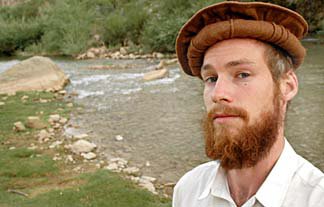
Those questions come to mind when I think of Colin Crowley, the recipient of the 2010 TONY Award for excellence in local journalism. In prior TONY Award columns, “local” literally meant working in Wisconsin. Colin Crowley hails from Oshkosh, though he’s not lived here since taking off for Afghanistan in 2005 to work as a video documentarian for Shelter For Life, International (then headquartered in Oshkosh).

So why should someone who calls Nairobi, Kenya home receive the 2010 TONY Award?

To answer that question requires a candid assessment of the state of news media today. Largely irrelevant in the lives of too many people, news media frustrate the hell out of the shrinking numbers of folks that rely on it to meet civic and personal needs. Becoming “relevant” invariably means catering to the lowest common denominator while cutting the budgets necessary to cover seriously domestic and foreign policy stories that matter. The result is devastating for “small-d” democracy. This critique isn’t new, but argued most cogently in Bob McChesney’s classic Rich Media, Poor Democracy (University of Illinois Press, 1999).

Colin Crowley holds a set of humane, “big picture” values that role model what journalism, corporate and independent, national and local, could be like if it could find a way to escape from the clutches of profit motive and the resulting pandering and pettiness. Though he no longer calls northeast Wisconsin home, Colin’s got a thing or two to teach us locals about what 21st century journalism could be.

In 2005 Colin kept the “Colin’s Story” blog to keep followers up to date on his Afghanistan work. I lost touch with him until May of this year, when we exchanged emails. I learned that since April of 2008 he’s been employed with the British NGO Save the Children UK (STC) as a multimedia officer. In that role he creates photo essays, makes videos, writes case studies, serves as a chaperone for international journalists when they visit STC programs, and contributes international media pieces on humanitarian crises.

Since 2008 Colin's covered China’s earthquake, Myannmar’s cyclone, a war in the Congo, cholera outbreak in Zimbabwe, food crises in Ethiopia and Northeast Kenya, the catastrophe in South Sudan, and Haiti right after the earthquake. I last heard from him in July as he documented a food crisis in Niger that received scant coverage in the US.

Because it conflicted with the Olympics in South Africa occurring simultaneously, Niger’s food crisis almost disappeared from the global media radar. For Britain’s Sky News, Colin worked on some of the only interviews and video footage of the crisis. STC UK reported a large spike in donations from the British public in the 24 hours following the broadcast. Colin says that “it’s a good feeling to think that this kind of reporting can make a bit of a difference.

Colin has become quite knowledgeable and articulate about the nature of the global food crisis. His analysis is hard to find in the mainstream press:

I don't think Americans realize how inefficiently their taxes are used when it comes to food aid. I can't tell you how ridiculous it feels to be standing in a World Food Program warehouse in Zimbabwe, Sudan, Northeastern Kenya, and other places and see tons and tons of bags of grain that was grown in Nebraska, Iowa, etc., and costs billions of dollars to transport while people all around are starving and local farmers are sitting on empty stores for a lack of fertilizer, modern farming tools, seeds, or irrigation systems. It invariably brings to my mind a seemingly simple question: ‘Rather than paying farm subsidies and shipping companies billions of dollars to grow this grain in the US and then transport it to Africa, couldn't we take a fraction of that money and just invest it into local agriculture?’”

Colin advocates replacing the current food aid system with one that many NGOs now endorse: simply provide cash to people to support local market. This would inject needed dollars into local economies and be much less expensive than traditional food aid programs. The problem, according to Colin, “is that it would threaten farm subsidies and profits of shipping companies.”

The human catastrophes covered by Colin Crowley exist largely because of lack of awareness. Awareness leads to outrage. Outrage leads to collective action. Collective action leads to social justice. The great tragedy of modern media is in its failure, in some cases purposeful failure, to use its remarkable powers of creating awareness for the common good.

Lewis Hine was an Oshkosh son whose photojournalism helped end the scourge of child labor in the early 20th century United States. For bringing the humanitarian spirit of Lewis Hine to a global level, Colin Crowley is the recipient of the 2010 TONY Award. You can congratulate him by making a contribution to Save the Children. (http://www.savethechildren.org/).

Note: Past TONY Award recipients can be found here, here, here, here, here, here, here, and here.

Saturday, October 30, 2010

Media Rants: Happy Anniversary to (Me)dia Rants

The following piece will appear in the November 2010 edition of The Scene.

Happy Anniversary to (Me)dia Rants

Media Rants

By Tony Palmeri

The first Media Rants column appeared in the August 2002 issue of The Scene. By my calculation, that makes this November column the 100th (!) rant. When the column debuted, I wasn’t sure I’d have the discipline demanded by 10 rants, let alone 100. But here we are, 8 years later, still trying to shed light on the ways in which corporate establishment media can, in the words of the late and great Madison Capital Times editor Bill Evjue, be “used to reduce the people to conformity and dumb acquiescence.”

Given that the New York Times, Washington Post, regional Gannett tabloids, radio and television outlets, or even alternative web sources aren’t exactly lining up to talk to me about this most momentous anniversary, I guess I’ll have to interview myself. So here’s a retrospective of sorts on the last 99 columns.

Question: How did the Media Rants column get started?

Answer: In the summer of 2002 then SCENE editor Tom Breuer called and asked if I’d be interested in writing for the paper. Back then I wrote a weekly electronic newsletter to accompany a television program called “Commentary” I hosted and produced with my heroes Doug Freshner and Jim Mather. Somehow Tom got on the newsletter email list, and he liked it enough that he thought I might be able to contribute something worthwhile to the Scene. The name “Media Rants” was Tom’s idea. The first column was a critique of the local press’ annual and shameful subservience to the Experimental Aircraft Association.

Question: What writers have influenced your thinking and style?

Answer: All conscientious media critics owe a debt to the late George Seldes. Probably the greatest investigative journalist in American history, Seldes in the 1940s published a newsletter called “In Fact” which is now widely regarded as the prototype for how to expose the shortcomings of the establishment press.

Given that Media Rants is a monthly essay, stylistically I’ve been guided by my favorite essayists. I respect and admire the rebel passion of Thomas Paine, the moral clarity of George Orwell, the principled prose of I.F. Stone, the sheer eloquence of Christopher Hitchens, the wisdom of James Baldwin ("I love America more than any other country in the world, and, exactly for this reason, I insist on the right to criticize her perpetually."), the unpredictability of Alexander Cockburn, the stinging humor of Molly Ivins and Maureen Dowd, and the in-your-face rhetorical flourishes of James Howard Kunstler. I’ve disagreed with each of these wordsmiths at various times yet stand in awe at their contributions to the craft of writing.

Question: Do you have any favorite Media Rants columns?

Answer: My favorites are the ones that make at least some minor contribution to our understanding of local history (“Press Coverage of McCarthy” from April of 2006; “Earth Day at 40” from April of 2010; “King Karma: Yesterday and Today” from March of 2003), challenge local and state establishment media to do better (“The Magruder Media’s Ethical Compass” from November of 2002; “Northeast Wisconsin’s Iron Triangle” from August of 2003; “It’s Not a Witch hunt if There’s a Witch” from June of 2004), counter the insane pro-war journalism of the last 8 years (“Will We Hear the Winter Soldiers?” from March of 2008; “Media AWOL on National Guard Coverage” from March of 2009), and take a stand for rational public discourse (“Fighting Reactionary Politics: Real Conservatives, Real Liberals, and Real Radicals Must Work Together” from April of 2005). I also look fondly on the tributes to Robert L. “Doc” Snyder and Doug Boone, and interviews with my friends Curt Andersen, Stephen Richards, Jo Egelhoff, and Ron Hardy.

Question: Most memorable Media Rants moment?

Answer: UW Oshkosh Professor of Political Science James Simmons found the essay “Deconstructing Don Kettl” (July 2004) interesting and asked me to publish a revised version of it in the Wisconsin Political Scientist Newsletter. The essay situated Professor Kettl, formerly of UW Madison and widely recognized as governor Tommy Thompson’s most revered academic, as a symbol of the extent to which UW profs had become tools of power rather than challengers to it. Some of Professor Kettl’s colleagues at UW Madison lambasted Dr. Simmons for publishing the piece, reducing it to nothing more than a cheap-shot personal attack. The irony was that the tone and vacuity of their complaint validated the thrust of the essay better than anything I could have said or written.

Question: What kind of response has Media Rants received over the years?

Answer: Though it’s now conventional wisdom to say “no one reads anything longer than a Facebook wall post anymore,” the fact that Media Rants does have an audience keeps me writing it. When the Appleton Public Library invited me to participate in a debate about the movie “Good Night and Good Luck” in 2006, I was pleasantly surprised at the number of people in attendance who recognized and appreciated the column. Media Rants columns also led to several invitations to lead discussions at the Harmony Café in Appleton, as well as numerous appearances on Wisconsin Public Radio.

Question: Any final thoughts?

Answer: I just want to thank everyone who has supported Media Rants over the years, especially those readers who take the time to offer constructive feedback. Many thanks also to Scene publisher Jim Moran and current editor Jim Lundstrom for making space every month.

Rant On!

Thursday, October 07, 2010

Two Screenings of "Mad City Chickens"

From citizen Dan Hoyt:

On behalf of the citizen group calling ourselves "Oshkosh Backyard Chickens" I would like to invite you to a free, public showing of the documentary film titled "Mad City Chickens".

This feature length production, with a total run time of 79 minutes, will be shown at the UW Oshkosh Reeve Union Theater on Friday, October 22 at 7:00 p.m. and again on Tuesday, October 26 at 3:00 pm. The times were chosen to allow for different schedules so the film would have opportunity for public viewing before the Oshkosh Board of Health meets on October 27th.

"Mad City Chickens" documents how the citizens of Madison, Wisconsin organized and worked to change their local ordinance to allow for "urban chickens" to be kept as pets. This film addresses all of the major concerns regarding "backyard" chickens including noise and enforcement issues among many other things.

Mr. Ronald Kean, the UW Extension Poultry Specialist, is interviewed in this film as are many local residents of Madison, a pet store owner and city officials. The film contains lots of great information, plenty of facts and a good dose of humor as well.

I encourage everyone to pick the time best for them and make a point of attending this free event. Also, please spread the word to your friends and neighbors as all are welcome. The Reeve Union theater, located on the 3rd floor of the student union on the UW Oshkosh campus, holds 196 people in comfortable, stadium style seating.

This event is being sponsored by the UW Oshkosh Student Environmental Action Coalition and (hopefully) many local businesses who would be happy to see chickens in Oshkosh.
For more information about this event contact me by reply email.

Thank you and I look forward to seeing you at the show!

Dan

Wednesday, October 06, 2010

Compulsory Voting on WPR Thursday Morning

I'll be on Wisconsin Public Radio Thursday morning at 6 a.m. (yikes!) talking about compulsory voting with Joy Cardin. http://www.wpr.org/cardin/

Thursday, September 30, 2010

Media Rants: For Compulsory Voting

The following piece appears in the October 2010 edition of The SCENE.

For Compulsory Voting

Media Rants

By Tony Palmeri

The day after the September primary, Gannett’s Appleton Post-Crescent reported that “A projected record turnout of voters in Tuesday's election never materialized as only about 1 in 5 eligible voters cast ballots.” The 19 percent turnout fell short of the Government Accountability Board’s 28 percent prediction, which would’ve been the highest since 1964.

Nationally, the professional punditocracy insists that Tea Party activism and anger at Obama energizes Republican voters. Yet “record” turnouts in partisan primaries remained abysmally low; in some states a whopping 10 percent participation. If turnout nationally in the November midterm elections reaches 50 percent, professional election watchers will consider that “high.”

Even though voting in presidential elections has been on the increase, the 61 Percent turnout that brought Barack Obama to the White House in 2008 still fell short of the 64 percent in 1908 that propelled portly William Howard Taft over Bible thumping William Jennings Bryan. Is it not astonishing that in 100 years we have never had more than 64 percent of eligible voters cast a ballot for the highest office in the land?

Let’s face it: voter turnout in the United States, the country calling itself the greatest representative democracy in the world, is an international embarrassment. Elected federal officials wield immense power, yet low vote totals rarely provide them with a clear mandate to govern in any particular policy direction. In some ways the situation is worse at the local level: officials who set your property tax rates, (de)fund your child’s school, and approve crazy corporate welfare schemes usually get elected on the strength of less than 20 percent voter turnout.

But the lack of a mandate to govern is only one negative effect of low turnout. Over the last 20 or 30 years we’ve seen the makings of something much more nefarious. The sophistication and refinement of market research techniques now allow political operatives on the Democratic and Republican sides to discover quite easily what the “likely voter” wants to hear, and then tailor messages to that group. In a system dominated by petty partisan political hacks, what candidates stand for is always secondary to the need to “get our voters to the polls.” The result, always, are campaigns long on schmoozing and short on issue specifics, with obnoxious telephone, Email, and snail mail reminders to “get out and vote” for candidates so tightly scripted they might as well be running for a seat on the screen actors’ guild board of directors.

The system of political hackery is aided and abetted by the fact that in the USA voting is conceived of not as a duty of citizenship, but as a civil right that adults can choose not to use. Unfortunately, the system of voluntary voting isn’t working; we need a dramatic rethinking of citizenship expectations.

Think about it: if a person responded to a jury duty summons by saying, “I don’t feel like serving, “ or “I don’t care about the justice system,” or “I’m not well informed,” or “I don’t like the prosecution or defense,” we would laugh. We compel people not only to serve on juries, but to educate their children, pay taxes, and even keep their lawns trimmed. Oddly, we don’t compel people to have to go out and vote in elections the results of which will determine what kind of justice, education, taxation, and public works programs we have.

More than 30 countries require citizens to vote. In places like Brazil and Australia, voter turnout is well over 90 percent and thus the results more accurately reflect the “will of the electorate.” In Brazil, President Luiz Inacio Lula da Silva comes from a personal background of extreme poverty and stands for a set of leftist ideals that make USA liberal Democrats look like Rush Limbaugh. Right wing, corporatist leaders can and do get elected in places with compulsory voting (Silvio Berlusconi in Italy is one example), but at least no one can argue it’s because voters stayed home. In the USA, they merely need to spend lots of cash hiring field organizers, make large media buys to propagate mindless advertisements, and pay for other “get out the vote” activities.

The major arguments against compulsory voting are that it infringes on liberty, “ignorant” people will be forced to vote, and that there’s no one worth voting for. Let’s address each in turn.
First, non-voting has infringed on our liberties much more than a compulsory voting system ever could. The greatest assaults on our liberties, from the Espionage Act of World War I to McCarthy era mania to the post 9/11 homeland security excesses, were all put in place by elected officials who had no clear electoral mandate.

As for “ignorant” voters, they exist prominently in our current system. A compulsory system of voting results in more issue based elections; perhaps we’d see a drop in ignorance.

For voters who feel there is no one worth voting for, commentators from Ralph Nader on the left to the editorial page of the Wall St. Journal have argued that there ought be a “none of the above” option on the ballot. I agree.

It will probably be years before we see a serious discussion of compulsory voting. Until then, please VOTE!

Wednesday, September 22, 2010

The Joys of Teaching

One of the great joys of teaching is the experience of reading critical commentary written by former students. We (teachers) usually don't know if the student was already an astute critical thinker before enrolling in our classes, but we like to tell ourselves that the classes had something to do with the former student's current critical faculties.

What's even better is when a former student demonstrates that he or she has the "lights on" even when there's no homework assignment. That is, the critical mindset has become a distinct part of their persona.

I thought about all this an hour ago when an email came in from a former student who is now in her first semester of graduate school at Marquette. Here's part of her brief email:

Last week, I had the opportunity to attend a conference here in Milwaukee featuring several famous speakers: Steve Forbes, Laura Bush, Colin Powell, and Rudy Giuliani. Fascinating to say the least, and a case study on how resting solely on one's perceived ethos is devastating to a decent speech. If I may, I'll just give you my tongue-and-cheek summaries: Laura read from a manuscript, trying hard to convince us that she & George are normal people who wear fuzzy slippers, drink coffee, and write their memoirs, all while reassuring themselves they made 100% justifiable decisions while in office. Steve Forbes tried hard to convince the audience that socialism is inherently evil, while generic, wealthy Republican interests are universal interests in America. Powell & Giuliani's speeches groaned with anecdotes and were boringly uncontroversial. I know you have more experience talking and listening to politicians than I do. Perhaps I was expecting too much?

No, I don't think she was expecting too much. In fact, I'd say her "tongue in cheek" observations are more on-point than 99 percent of what we get from the professional punditocracy. She's clearly a very good "crap detector." Good for her, good for society at-large, and a good feeling to know that I might have had some minor role in motivating her to think critically about public discourse.