Sunday, June 04, 2006

Young Turks: Diebold Fails A Test

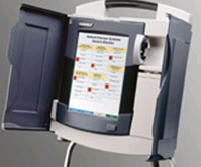
In this Young Turks interview, political correspondent Michael Shure talks about his experience in trying to vote early in a California congressional primary between challenger Marcy Winograd and incumbent Jane Harman. Shure voted on a touch screen Diebold machine; when the ballot showed the congressional race, the candidate name on the screen was congressman Henry Waxman, who is running unopposed in another district!

California allows early voting, and so the error was caught a week before next Tuesday's official primary date. Shure describes how the poll worker cancelled out the vote with the press of a button and allowed him to redo the entire ballot. How many voters would have just assumed that Waxman was the correct choice on the screen? How can voters be sure the "glitch" has been fixed?

Just one more example of why touch screen voting machines need to be retired until the myriad of problems they exhibit are worked out.

Media Rants: Say NO to Black Boxing Fox Valley Elections


The June Media Rants column can be found here.

Saturday, June 03, 2006

No More Anonymous Comments On T2T

From now on anyone wishing to post on this blog must register first. I am doing this for two reasons. First, I am just sick of the constant cheap shots taken at my friend Cheryl Hentz. It's one thing to disagree with a person on issues, but most of the comments aimed at Cheryl are just mindless personal attacks. Some of you really do need to get a life.

Second, many people I respect have told me that the anonymous mindlessness not only discourages participation, but also makes it difficult to read the blog. My hope was that the mindless folks would just disappear, but alas it was not to be.

Radio Commentary: Hentz/Palmeri/Roberts Discuss Five Rivers

Friday evening was the last "Wild Eyed Radio" with Bob Roberts. For around the last year, Radio Commentary has been a part of Wild Eyed. Bob and I planned to close out both shows on our own, but I happened to get a call from Cheryl Hentz during the broadcast and we ended up doing about a 20 minute interview. In it, Cheryl discusses a disturbing conversation she had shortly before the interview with councilwoman Meredith Scheuermann. The interview can be found here.

On the Eye on Oshkosh website (registration required), Cheryl has raised a host of important questions that need to be answered, including:

  • What is the exact wording of that provision and where is it spelled out in the term sheet? I have copies of what are supposedly both term sheets, though they look more like outlines of something than anything else and don't contain much, if any, legal specificity.
  • The term sheet was modified in March of this year. Did the modifications include that same provision and if so, where can it be found?
  • Who decides if the term sheet has "substantially" changed or not? Jackson Kinney? Warren Kraft? Richard Wollangk? All of the above? and wouldn't you think that a contractor underwriting some or all of the very project they're going to work on is a substantial change?
  • There's been a lot of talk about "pay as you go" TIFs and those which are "direct pay." It's been well-documented that the "pay as you go" better protects taxpayers' interests. If this doesn't come back before the council, who decides which pay option developer Tom Doig and his friends get? Jackson Kinney? Richard Wollangk?
  • Exactly how much of this project is C.D. Smith financing and why would a contractor finance a project like this? You'd think they'd want to MAKE money, not just break even. If they're underwriting it, where and how do they make a profit and how much of the grant money do they get?
  • If C.D. Smith is getting some or all of the grant money available for this project, what is to prevent them from stopping the project partway through - basically taking the money and running? We've certainly seen other companies take our money and run, or have we forgotten Wisconsin Automated a few years ago? Different circumstances true, but the Common Council at the time operated on information given to them by Jackson Kinney and we all see where that ended up. I do not believe Mr. Kinney is as careful as he should be OR he simply doesn't have the taxpayers' best interests in mind.
  • How did C.D. Smith automatically become the contractor on this project? It is being built in a TIF district with a lot of TIF money being funneled into it. Where is the competitive bidding on the job or is this yet another project where the public will be told bids can be waived? If so, I would like someone in the Attorney General's office or State Legislature to explain to us under what conditions bids ARE necessary.

Friday, June 02, 2006

Was the 2004 Election Stolen?

Robert F. Kennedy Jr. thinks so, as he argues in the latest Rolling Stone.

"American history is littered with vote fraud -- but rather than learning from our shameful past and cleaning up the system, we have allowed the problem to grow even worse. If the last two elections have taught us anything, it is this: The single greatest threat to our democracy is the insecurity of our voting system. If people lose faith that their votes are accurately and faithfully recorded, they will abandon the ballot box. Nothing less is at stake here than the entire idea of a government by the people. "

Certainly not an endorsement of Diebold touch screen machines!

Five Rivers: No City Council Approval?

Here are a few disturbing lines from this morning's paper:

"It's likely that Castle and his six city council peers will not be asked to approve any formal Five Rivers development agreement.

Kinney said the term sheet, approved last fall, contained a provision that authorizes city staff to ink the formal agreement and move on. That is, if nothing within the term sheet substantially changes, requiring council reconsideration."


Preventing the city council from approving the development agreement is a way to keep the public shut out of the process. That's unconscionable, and should be rejected in the strongest possible terms by the city council.

Meanwhile C.D. Smith Construction, Tom Doig's financial savior, are quite the players in Madison. They know how to grease palms for no-bid contracts; their executives once gave Tommy Thompson $37,000 in one day.

Thursday, June 01, 2006

Carol Owens' Cell-Phone Conniption

Or is it just brainless homophobia? Read Rep. Mark Pocan's blog and decide for yourself. This is what we have representing us in the Fox Valley:

"But State Rep. Carol Owens, one of the more conservative members of the GOP caucus, saw it as an opportunity to bash me. Carol, ah, doesn’t apparently like 'gay' people. And to her, I’m one big homo. Carol won’t even ride the elevator with me. Too bad for Carol." --Mark Pocan

Northwestern Editorial: County shouldn't rush to purchase voting machines

In a surprisingly coherent editorial this morning, thankfully devoid of suggestions of a "conspiratorial" mindset among electronic voting critics, the Northwestern said that "Winnebago County's rush to judgement to purchase touch screen voting machines is a disservice to citizens with grave concerns about the technology."

Wednesday, May 31, 2006

Democracy Now! on Diebold Security Flaws

Amy Goodman conducts an outstanding interview with two guests who have knowledge of the security problems of Diebold touch screen voting machines. Bruce Funk, County Clerk in Emery County, Utah for 23 years, was fired from his job after he commissioned an investigation of the Diebold machines. David Dill is a professor of computer science at Stanford and founder of verifiedvoting.org.

More detail about Bruce Funk's Utah odyssey can be found here. Note that the Diebold TSX model for which he discovered massive problems is the same one proposed for Winnebago County. Scary.

County Board: Taking the Public out of the Public Hearing

The attempt to have a public hearing on the issue of touch screen voting technology in Winnebago County has taken a turn for the worse. After the full Board could not muster up enough votes to accept voting machine grant money, County Board Chair David Albrecht asked the Judiciary Committee to discuss the issue. Then it was announced that the Judiciary and Information Systems Committees would hold a public hearing on June 14th at the Coughlin Center at 6 p.m.; then the meeting was moved to the County Courthouse as a full county board meeting.

Today we read that the meeting now begins at 5 p.m., with the county supervisors having the opportunity from 5-6 to test the Diebold machine in question. No other vendor has been invited to the meeting. I assume the public can speak at 6 p.m. See Jef Hall's perspective on this.

Having supervisors practice using the machine will prove nothing, of course. The issue here is not how the Diebold machine performs during PR demonstrations. The issue is whether the Help America Vote Act requires states and localities to purchase voting technology that comes with well documented security flaws.

In Colorado, a Denver law firm is planning a lawsuit to block nine counties and the state from purchasing electronic voting machines. Citizens in other states are pursuing similar actions. If Wisconsin election officials continue to ignore the mountain of evidence indicating that electronic voting systems are not yet ready for prime time elections, lawsuits will be filed here too.

Tuesday, May 30, 2006

House May Grow To 437

According to the Boston Globe (registration may be required), there's a strong chance that after the 2010 census the US House of Representatives will increase in size from 435 to 437. The additional two seats would be a voting member for the Washington, D.C. area (an addition that has been shamefully long overdue), and another representative for Utah (to pacify Republicans since the DC seat would almost certainly be a Democratic one).

The 437 members would still be a ridiculously small number for a country the size of the United States. We have been at 435 since 1911 (except for 1959-1963 when the size increased to 437 because of Hawaii and Alaska), when the nation's population was around 100 million.

Each member of congress today represents, on average, anywhere from 450,000 to 800,000 constituents. That's absurd, and makes a mockery of the entire idea of representative democracy. As I said in a previous post: "Contrast that with the United Kingdom, which has a population of just under 59 million yet 646 members of the House of Commons. Germany has a population of around 80 million with a 603 member Bundestag (parliament). The United States has a population of about 282 million with a 435 member House of Representatives. Do US citizens get better representation from their relatively small legislature than the British and Germans get from their large parliaments? I don't think anyone can say "yes" to that with a straight face."

Monday, May 29, 2006

Washington Post: Debating the Bugs of High Tech Voting

The Washington Post is one of the few mainstream media outlets to take the issue of voting machine security seriously. The May 30th edition includes an article summarizing (registration may be required) some of the key issues. Some excerpts:

The latest dispute occurred several weeks ago after it was discovered at a test in Utah that someone with a reasonable knowledge of computer code could gain access to and tamper with the system software on a popular brand of voting machine manufactured by Diebold Election Systems . . .

Many of the criticisms of voting technology were originally dismissed as exaggerations promulgated by partisans displeased with election results. But the criticisms have been viewed with increasing gravity as prominent computer scientists have rallied behind them . . .

Unlike many colleagues in his field, Michael I. Shamos, a computer science professor at Carnegie Mellon University who has worked on election issues for about 20 years, has not generally been seen as a friend of the activists.

In 2004, they assailed Maryland's decision to buy Diebold touch-screen machines and asked a court to stop the state from using them. Shamos testified that with a few additional steps, the machines could be used without problem, and the court agreed.

Now, Shamos wonders. He is confident in his testimony and believes most security holes can be plugged. But he wonders whether Diebold cares enough about security and the sanctity of elections.

"There's a broader philosophical question that's been worrying me more and more lately," Shamos said. "What are these companies really doing? They don't seem to have embraced the seriousness with which people in this country take their elections. It's been kind of an adversarial thing where companies want to make profits, and they just haven't spent enough time and energy designing secure systems."

Note: The article neglects to point out that Maryland's House of Delegates voted 137-0 to suspend electronic voting and go back to paper ballots.

Garbage: An Iraqi Perspective

I am opposed to the imposition of a garbage fee in Oshkosh and hope citizens can find a way to get it repealed. That topic generates lots of emotion and verbal sniping in town. Imagine how petty that sniping would sound to people living in Iraq:

Garbage chokes the city of 4.5 million people. Trash collection is erratic or nonexistent, depending on which part of the city you live in. Insurgents use heaps of garbage to hide roadside bombs. More than 300 garbage collectors have been killed in Baghdad in the past six months, city officials say. Insurgents target them because they work for the government.

"Once we hoped to plant gardens in the medians and on street corners; now we throw our garbage there," said a Sunni woman who lives in the affluent western Jihad district. (The Chronicle agreed not to identify the woman and other Iraqis interviewed for this story because they feared for their safety.)

Garbage clogs sewage pipes, causing raw sewage to overflow into the streets and fill the air with the stench of decay. In the Shiite slums of Sadr City in northeastern Baghdad, residents live in dwellings made of bits of corrugated metal, chunks of concrete and rusted oil canisters. Snowy white egrets skim the surface of putrid, greenish-black pools of sewage in the streets.

More on the terrible living conditions in Iraq can be found here.

Sunday, May 28, 2006

Bruce Schneier: The Problem With Electronic Voting Machines

Internationally renowned security technologist Bruce Schneier's 2004 essay on "The Problem With Electronic Voting Machines" does an excellent job of summarizing the issue.

Meanwhile in Ashville, North Carolina: "The Buncombe County Board of Commissioners on Tuesday rejected a staff recommendation to buy touch-screen voting machines, with four of the five members saying they don't believe voters would have confidence in the machines." Looks like at least 4 elected officials in the country have some common sense.

No Recount: York County, PA candidate trusts accuracy of electronic voting machines

Check out this story from the York County (PA) Daily Record for an example of how the myth of electronic voting accuracy can be used to discourage a candidate from asking for a recount. Republican Larry Homsher lost by only 9 votes in a primary race for state representative. He told the newspaper that if the county was still using lever-operated machines, he would have asked for the recount. Then he got hit with the myth: "But Homsher said he met with county elections director John Scott. And he walked away convinced that the voting office's procedures, combined with the accuracy of the computerized voting machines that made their debut in York county this month, were efficent enough to ensure an accurate result - even down to the single digit margin."

York County uses the Sequoia AVC Edge touch screen electronic voting machine. Voter's Unite provides a partial list of docmented failures of that technology. Let's hope for York County that the alleged winner of the primary, Karen Emenheiser, is more adept at doing homework than Mr. Homsher.

I purposely said "alleged winner;" as long as electronic voting remains open to software manipulation, and as long as voter verified paper audit trail requirements for these machines remain inadequate, it is impossible to have complete trust in the outcome of elections using the technology.

Friday, May 26, 2006

Dan Rylance on Last Radio Commentary

Radio Commentary will be on hiatus for the summer, and maybe even longer. The final interview was conducted tonight with regular guest Dan Rylance. That interview can be found here. We talk about a variety of local issues including the recent school board recount election, the Miller's Bay Pier, the garbage tax, and many others.

Hentz: Rescind Pier Decision

Cheryl Hentz argues (registration required) that the Oshkosh Common Council should rescind its earlier, not adequately discussed decision to place a donated pier in Miller's Bay. Since the Otter Street Fishing Club refuses to budge on the choice of location (even though Michael Burayidi's report demonstrates beyond a reasonable doubt that that the New York Ave. location would be a disaster), rescinding the decision is now the only way to get the pier built in a more suitable area.

More information about this issue can be found in the Miller's Bay Archive.

Thursday, May 25, 2006

Touch Screen Recount Procedures + Security Recommendations

2005 Wisconsin Act 92 describes, among other things, recount procedures to be used with electronic voting machines. Try to imagine this procedure in actual practice such as that which occurred during the recent school board recount:

(4) If a valid petition for a recount is filed under s.9.01 in an election at which an electronic voting system was used to record and tally the votes cast, each party to the recount may designate one or more persons who are authorized to receive access to the software components that were used to record and tally the votes in the election. The board shall grant access to the software components to each designated person if, before receiving access, the person enters into a written agreement with the board that obligates the person to exercise the highest degree of reasonable care to maintain the confidentiality of all proprietary information to which the person is provided access, unless otherwise permitted in a contract entered into under sub. (5).
(5) A county or municipality may contract with the vendor of an electronic voting system to permit a greater degree of access to software components used with the system that is required under sub. (4).

Really builds voter confidence, eh?

Meanwhile when the State Elections Board approved the use of the Diebold touch screen machines, they also approved five security recommendations:

1. Memory cards shall have a permanent serial number assigned.
2. Once a memory card is programmed for an election, it should be immediately inserted into its assigned unit and sealed with a serialized, tamper-evident seal.
3. The municipality should maintain a written log that records which memory cards and which serialized tamper-evident seals are assigned to which units.
4. Prior to any ballots being cast on any unit, the integrity of the tamper-evident seal must be verified by the chief election inspector before opening the compartment containing the memory card and unit power switch.
5. The municipal clerk should maintain a written log that records the chain of custody of each memory card and unit from the point of programming the memory card for use in the election through the official canvass.

Imagine a recount in which any one or more of the security recommendations were not followed properly? Would the public have confidence that the final outcome was the correct one? I think not.

Wednesday, May 24, 2006

Young Turks: Interview with Steve Levy about unreliable voting machines

Check out this Young Turks interview with Steve Levy of Newsweek. Levy is the author of a recent article on security problems associated with Diebold touch screen voting technology. The most important point he makes in the interview and in the article is that the voting public will never trust touch screen technology. He also makes a great point about the need to maintain public control of public elections.

It's the money, stupid: Brown County Dem Chair Endorses $teve Kagen

Republican Congressman Mark Green's run for governor has opened up his 8th congressional district seat. The Republican candidate to replace him will likely be current assembly speaker John Gard. Democratic challengers are former Brown County Executive Nancy Nusbaum, allergist Steve Kagen, and consultant Jamie Wall.

Brown County Democratic chair John Baraniak has personally endorsed Steve Kagen, even though a poll conducted by national Democratic pollster The Mellman Group (and not paid for by any of the candidates) showed Nusbaum as the only Democrat beating Gard (43-38). The pollsters said that all three Democratic candidates could beat Gard, though Nusbaum enjoys better name recognition and "surprising strength among independents."

The Mellman Group findings make Baraniak's endorsement of Kagen, at this stage at least, puzzling. All poll data should be taken with a grain of salt, but the Fairbank poll cited by Baraniak showing Kagen with a commanding lead is saltier than Mellman because it was done FOR Kagen. Baraniak also cites Kagen's "energy, resources, and campaign team" as reasons for his support. Those of us who are recovering Democrats recognize that as code for "he's got money and will spend what it takes to win." Kagen, an allergist, started his campaign by donating $1 million of his personal fortune to it.

The Democratic Party chair can endorse anyone he wants, but it sure looks as if he is drawn not to Steve Kagen, but to $teve Kagen. Nancy Nussbaum has great name recognition, campaign experience, and a record of governing. No doubt the Dem chair would have supported a Nu$$baum against Kagen.